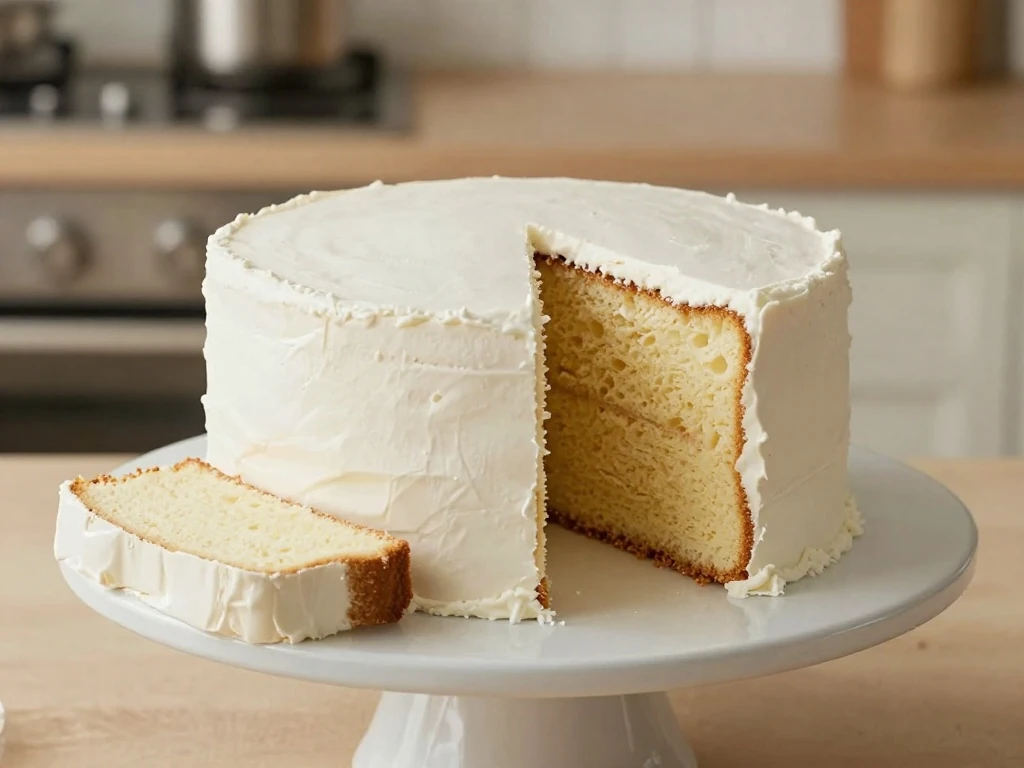
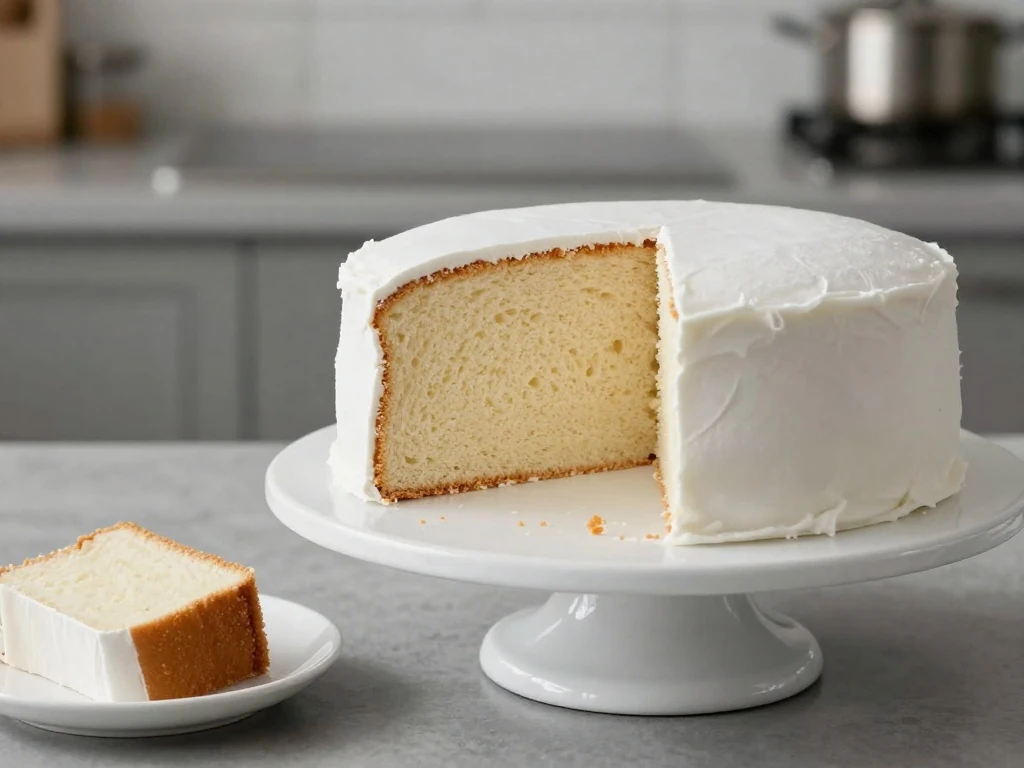
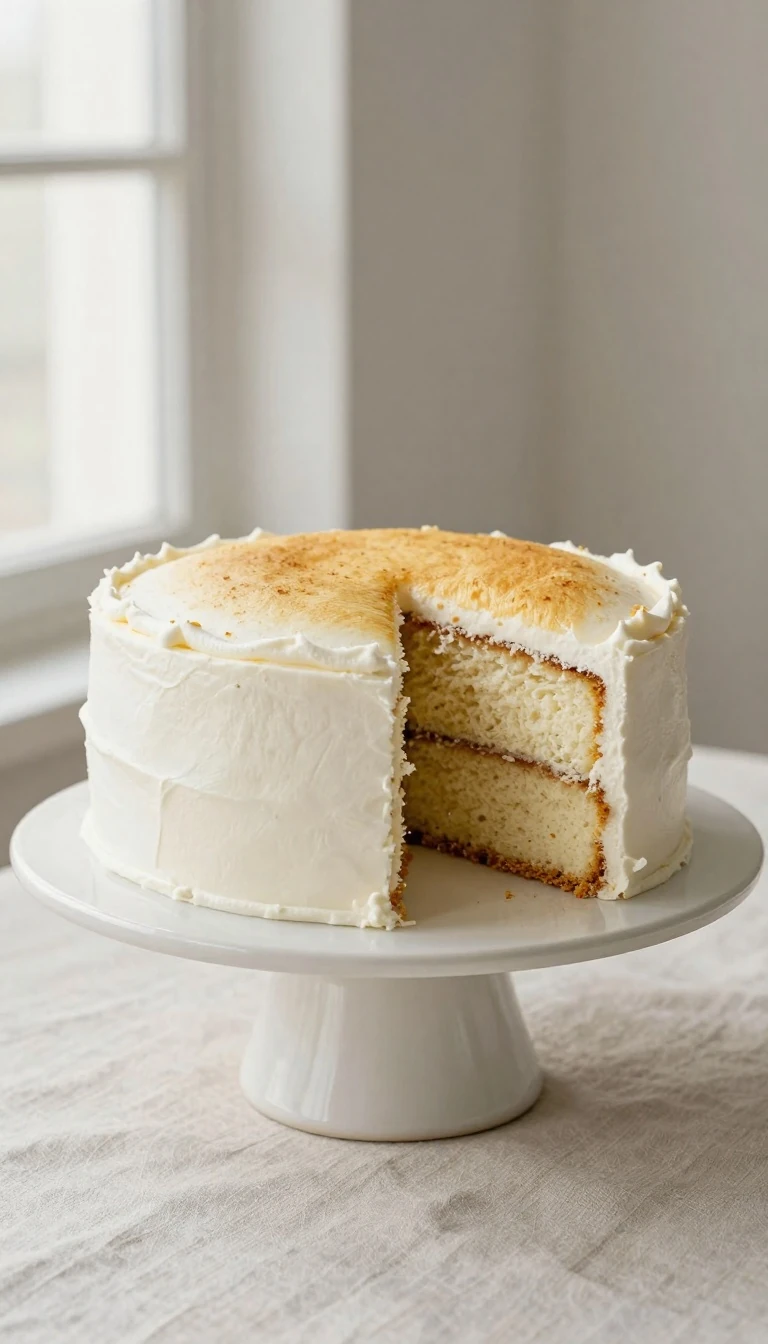
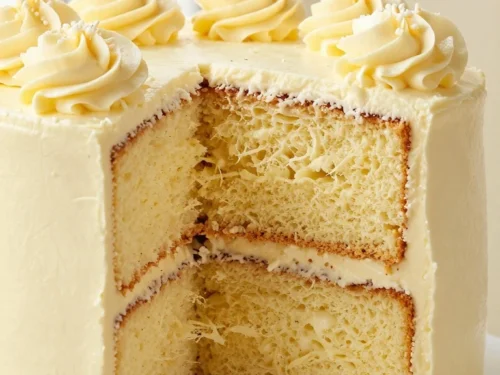
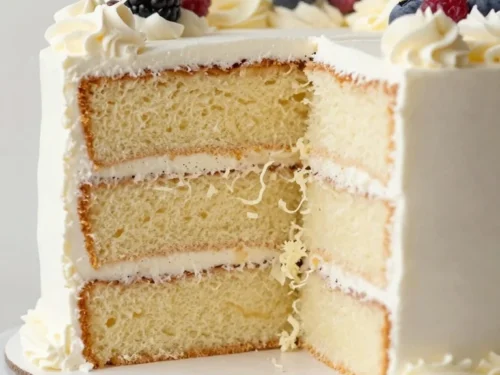
This easy white cake recipe makes one tender 9-inch round cake in about 40 to 50 minutes, including 10 minutes of preparation and 30 to 40 minutes of baking. Made with everyday ingredients such as butter, sugar, eggs, flour, baking powder, vanilla, and milk, it is a reliable homemade dessert for birthdays, afternoon treats, or simple family dinners.
Every slice is soft, lightly sweet, and delicately flavored with vanilla, with a fine crumb that is delicious on its own or ready for frosting. The method is straightforward: cream the butter and sugar, add the eggs, alternate the dry ingredients with milk, and bake until the center is set and a toothpick comes out clean or with a few moist crumbs.
There is something wonderfully comforting about a plain white cake made from scratch. It has a delicate vanilla aroma, a tender center, and a lightly golden edge that makes every bite feel familiar and special.
This recipe is also flexible enough for many occasions. Serve it with fresh fruit, add a favorite frosting, or enjoy a warm slice with tea or coffee when you want a simple homemade dessert without a complicated ingredient list.
If you enjoy light, simple cakes, our airy sponge cake is another lovely recipe to keep nearby for celebrations and afternoon baking.
Ingredients You’ll Need
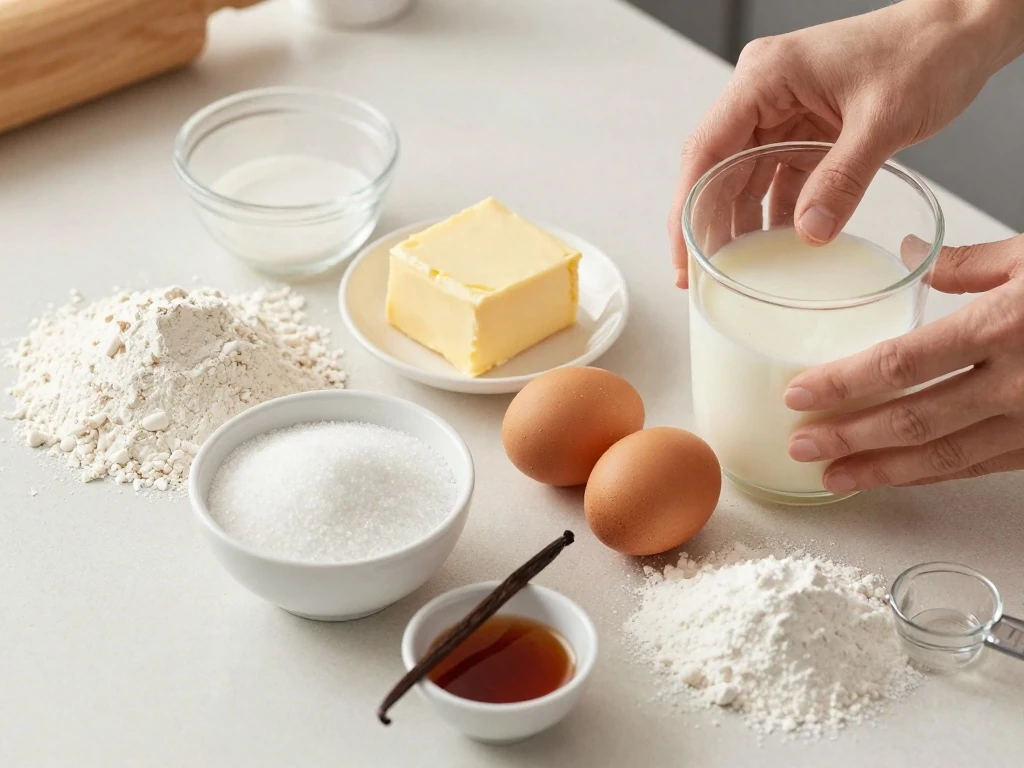
The ingredient list is short, but each item contributes to the cake’s texture and flavor. Measuring accurately and preparing the ingredients before mixing will help the batter come together quickly.
Granulated sugar: Provides sweetness and helps create a delicate crumb when creamed with the butter.
Unsalted butter: Adds richness and a soft buttery flavor. Let it soften at room temperature so it creams properly.
Eggs: Add structure, moisture, and richness. Room-temperature eggs blend more easily into the butter mixture.
Vanilla extract: Gives the cake its gentle, classic flavor.
All-purpose flour: Forms the body of the cake. Spoon it into a measuring cup and level it rather than packing it down.
Baking powder: Helps the batter rise as it bakes.
Milk: Loosens the batter and contributes moisture. Room-temperature milk mixes more evenly.
How to Make It Step-by-Step
Step 1: Heat the oven to 350°F (175°C), then grease and flour a 9-inch cake pan. Coating the pan helps the cake release cleanly after cooling, while the flour gives the batter extra protection against sticking.
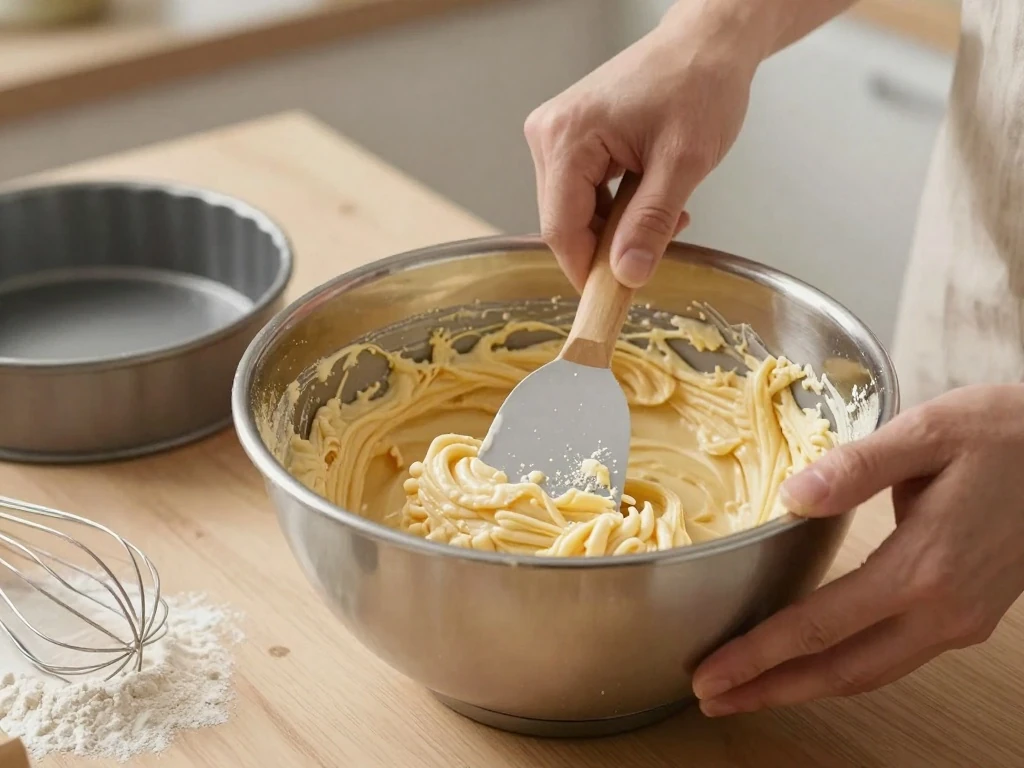
Step 2: Place the softened butter and sugar in a mixing bowl and cream them until light and smooth. This mixing stage helps distribute the sugar through the butter and gives the finished cake a lighter texture.
Step 3: Beat in the eggs one at a time, mixing after each addition. Add the vanilla extract once the eggs are incorporated, scraping the sides of the bowl if needed so the mixture stays even.
Step 4: Whisk the flour and baking powder together in a separate bowl. This spreads the baking powder through the flour so the cake rises consistently rather than developing concentrated pockets of leavening.
Step 5: Add the dry ingredients to the butter mixture in portions, alternating with the milk. Begin and finish with the dry ingredients, and mix only until no visible streaks of flour remain.
Step 6: Pour the batter into the prepared cake pan and smooth the top with a spatula or the back of a spoon. A level surface encourages the cake to bake evenly from edge to center.
Step 7: Bake for 30 to 40 minutes, beginning to check near the 30-minute mark. The cake is ready when the top is lightly golden and a toothpick inserted into the center comes out clean or with a few moist crumbs.
Step 8: Let the cake cool briefly in the pan before transferring it to a wire rack. Allow it to cool completely before frosting, since warm cake can soften or melt a frosting layer.
Pro Tips for a Tender Cake
Softened butter is important because cold butter will not cream smoothly with the sugar. It should feel pliable when pressed but should not be melted or oily.
Room-temperature eggs and milk are useful for an evenly mixed batter. If the ingredients are very cold, the butter mixture may look curdled, although the cake can still bake successfully.
The most important mixing rule is to stop as soon as the flour disappears. Excess mixing develops more gluten, which can leave a white cake dense, chewy, or less tender than intended.
Do not wait for a deeply browned top before testing for doneness. This cake should be lightly golden, and overbaking is the most common reason a white cake turns dry.
Frosting and Serving Ideas
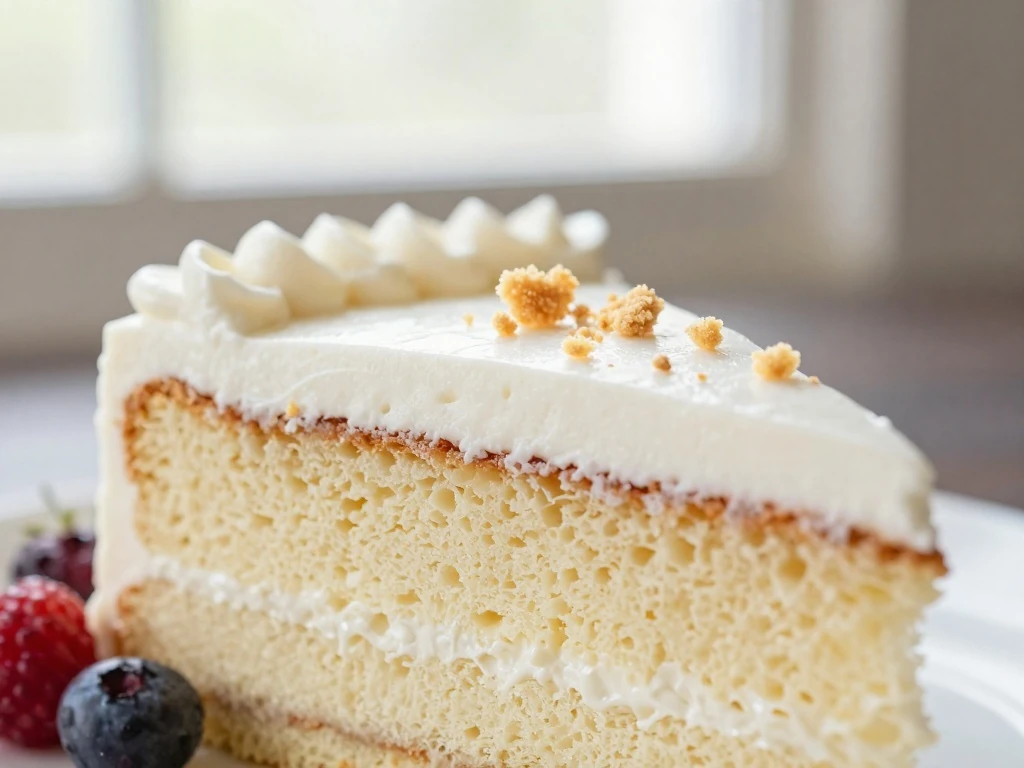
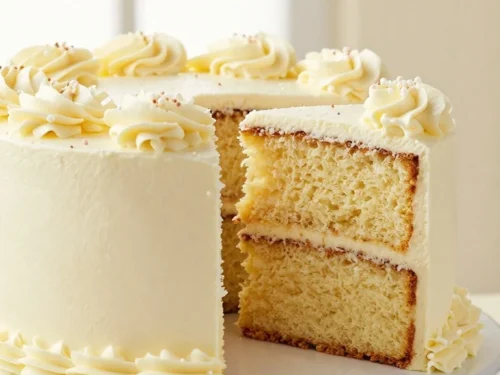
This cake has a gentle flavor that works with nearly any topping. A simple vanilla frosting keeps the presentation classic, while whipped cream and fresh berries make the cake feel light and suitable for warm-weather gatherings.
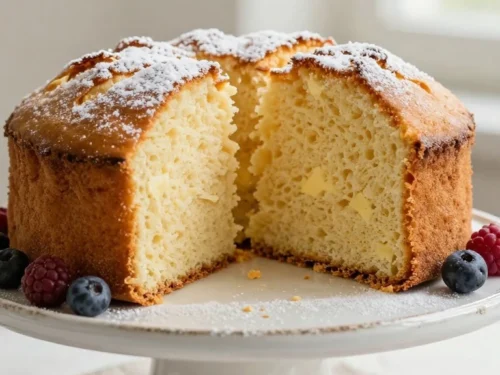
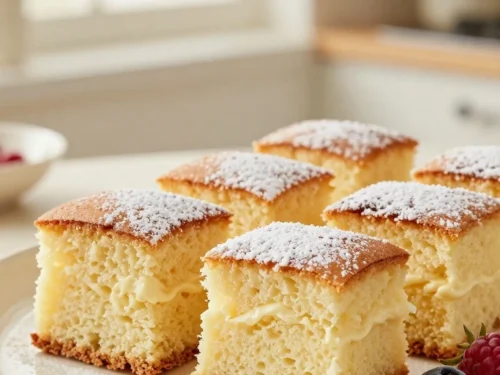
For a polished finish, cool the cake fully, spread frosting across the top, and add a few crumbs or thin fruit slices. For a casual dessert, serve each slice plain with a dusting of powdered sugar or a spoonful of fruit preserves.
For another fruit-forward option, take a look at our easy banana cake, which brings a naturally sweet, comforting flavor to the dessert table.
Storage and Make-Ahead Advice
Once completely cool, keep the unfrosted cake covered at room temperature for a short period so it stays protected from dry air. If the cake is frosted with a topping that requires refrigeration, store it in the refrigerator according to the frosting’s needs.
For the best texture, let a chilled slice sit briefly at room temperature before serving. This allows the butter in the crumb and frosting to soften, making each bite more tender and flavorful.
The cake is also a good make-ahead choice because it can be baked before a gathering and decorated after it has cooled. Always cool it fully before wrapping or frosting to prevent trapped steam from making the surface sticky.
Common Questions
Can I bake this in a different pan? The tested quantity is intended for one 9-inch round cake pan. Changing the pan size can affect the cake’s depth and baking time, so watch the visual signs of doneness carefully if you use another pan.
Why did my cake turn out dense? Dense texture often comes from overmixing after the flour is added, using butter that was too cold to cream properly, or measuring too much flour. Mix gently and stop immediately when the batter is combined.
Can I frost the cake while it is warm? Wait until the cake is completely cool. Frosting a warm cake can melt the topping and cause it to slide rather than stay in a neat layer.
If you want a cake with a slightly richer, more celebratory style, our white velvet cake is a delicious next recipe to try.
Easy White Cake Recipe
This tender vanilla white cake uses simple pantry ingredients and bakes into one 9-inch round cake. Serve it plain, dusted with sugar, or topped with your favorite frosting.
Heat the oven to 350°F (175°C). Grease and flour one 9-inch cake pan.
Cream the softened butter and sugar together until the mixture is light and smooth.
Beat in the eggs one at a time, then mix in the vanilla extract.
Whisk the flour and baking powder together in a separate bowl.
Add the dry ingredients to the butter mixture in portions, alternating with the milk. Mix only until the batter is combined.
Pour the batter into the prepared pan and smooth the top.
Bake for 30 to 40 minutes, checking near the 30-minute mark, until the top is lightly golden and a toothpick inserted in the center comes out clean or with a few moist crumbs.
Cool the cake briefly in the pan, then transfer it to a rack to cool completely before frosting or serving.
Notes
Use softened butter and room-temperature eggs and milk for a smoother batter. Stop mixing as soon as the flour disappears, since overmixing can make the cake dense or chewy. Begin checking near 30 minutes because overbaking is the most common cause of a dry white cake.
Final Thoughts
This easy white cake recipe proves that a small list of familiar ingredients can create a beautiful dessert from scratch. The soft vanilla crumb, lightly golden top, and simple preparation make it a dependable choice whenever you want a homemade cake without a long project.
Take your time with the butter and sugar, use room-temperature ingredients when possible, and check the cake early so it does not overbake. Once cooled, serve it plain or finish it with frosting, fruit, or powdered sugar for a sweet treat that fits almost any occasion.