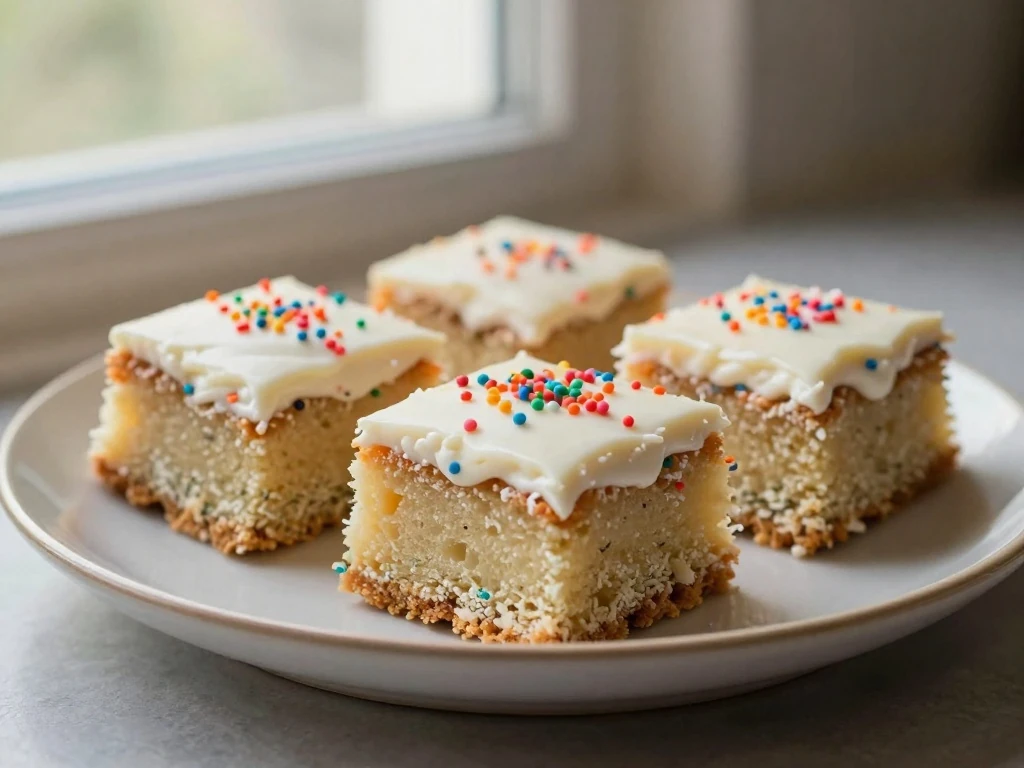
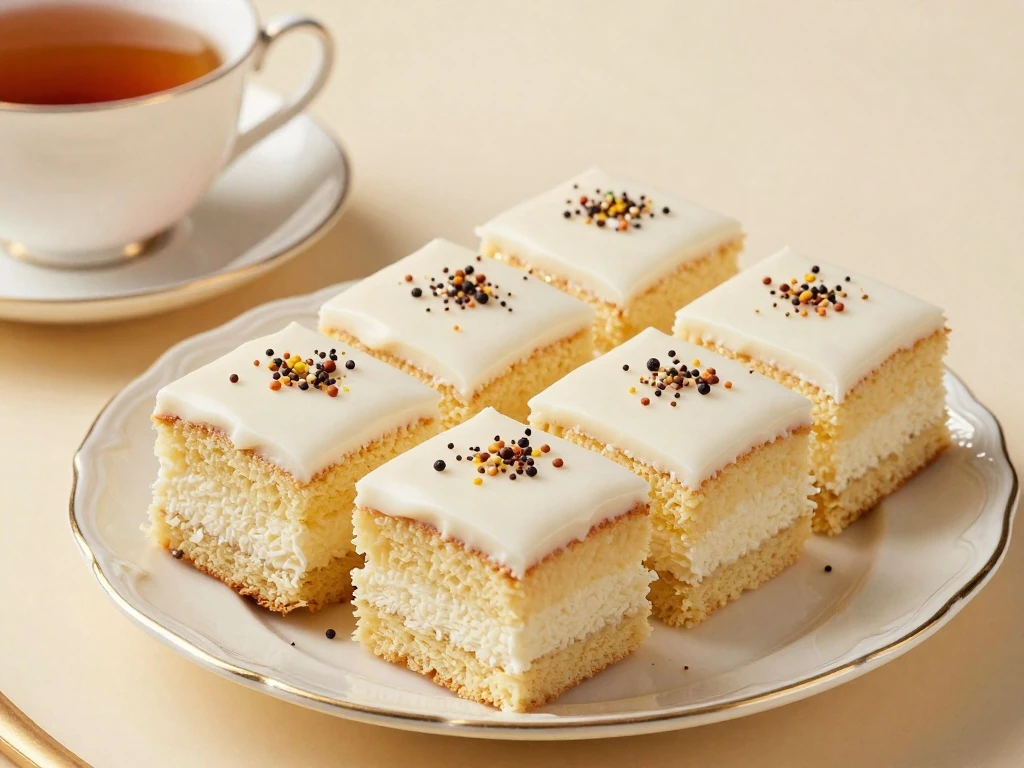
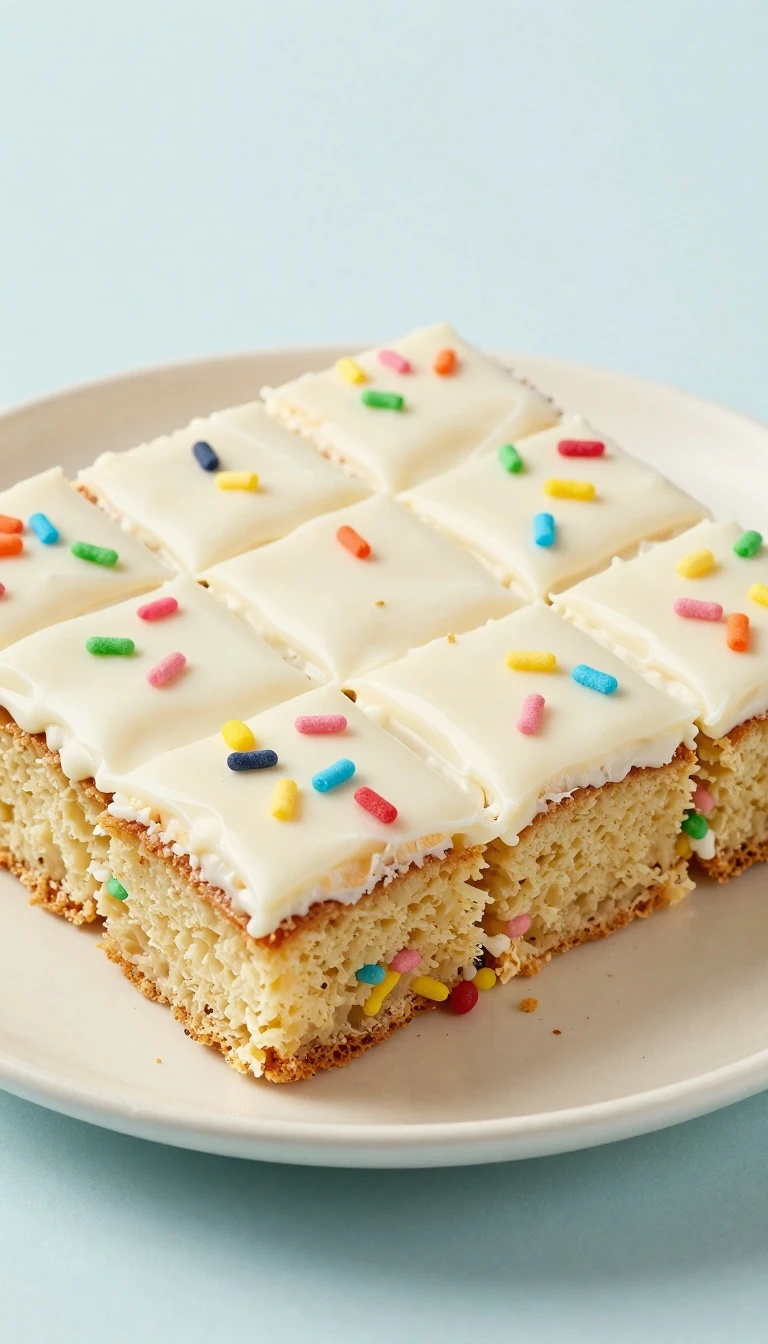
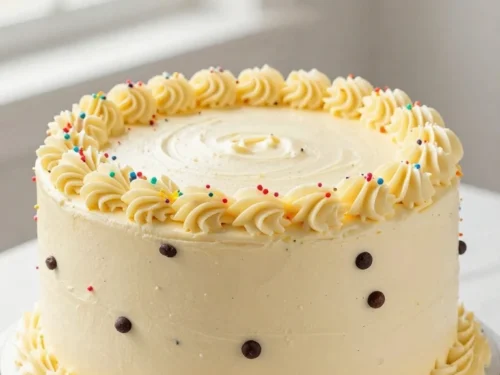
This classic school cake recipe makes a soft, buttery British traybake topped with thick white icing and colorful sprinkles. Made with 200 g each of butter, caster sugar, and self-raising flour, plus four eggs, it bakes in a 20 cm square tin in approximately 20–25 minutes.
The finished cake is light, tender, and gently sweet, with a creamy vanilla-like butter flavor from the simple sponge and a smooth, sugary topping that sets into the familiar school-dinner finish. Cut it into small squares for parties, afternoon tea, lunchboxes, or a nostalgic bake with a cup of tea.
There is something wonderfully comforting about a classic school cake. It does not depend on complicated fillings, specialist equipment, or elaborate decorating skills; the charm comes from a tender sponge, a simple white icing, and a cheerful scattering of sprinkles.
The sponge uses equal quantities of butter, caster sugar, and self-raising flour, making it easy to remember and reliable to prepare. The small amount of milk loosens the batter, helping it spread neatly across the tin and bake into a soft, even layer.
This is also a forgiving cake for family baking. Children can help add the sprinkles, while adults can handle the hot tin and make sure the icing has the right consistency.
If you enjoy nostalgic fruit-based bakes as well, our cherry cake is another lovely choice for afternoon tea.
Ingredients You’ll Need
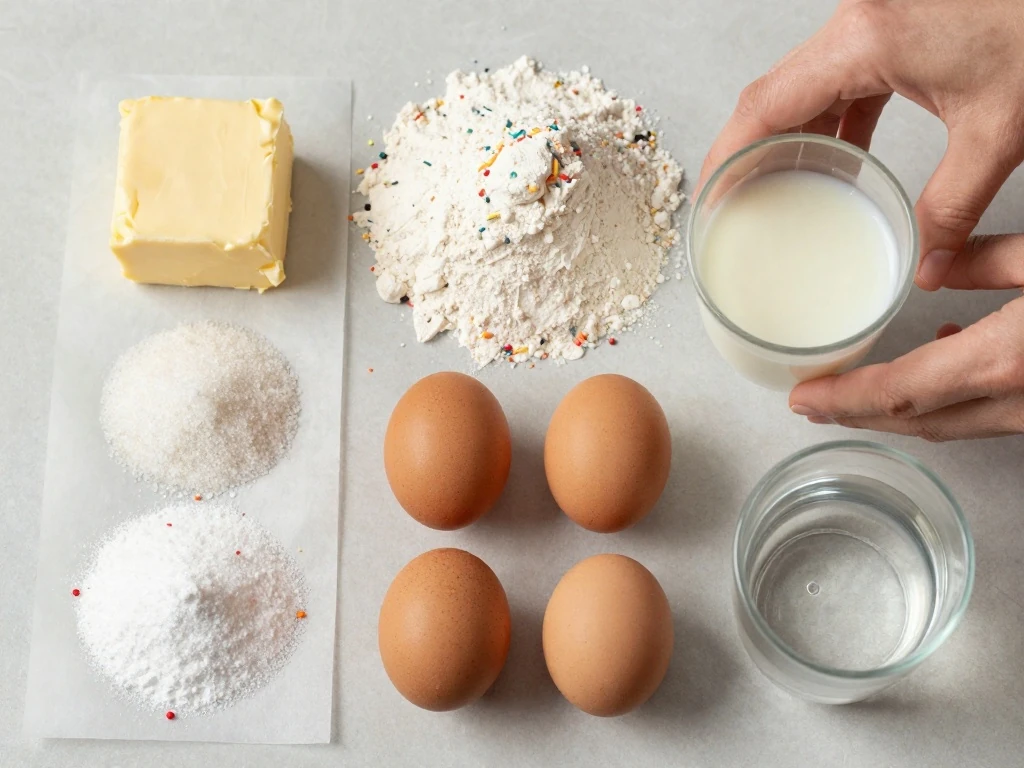
The ingredient list is short, but each item has a useful role in the finished cake. Softened unsalted butter creams smoothly with the sugar, while four large eggs provide richness and structure.
200 g unsalted butter: Bring it to a soft, spreadable texture before mixing.
200 g caster sugar: Its fine texture blends quickly into the butter.
4 large eggs: Use room-temperature eggs when possible for an evenly mixed batter.
200 g self-raising flour: This supplies the main structure and some of the lift.
1 teaspoon baking powder: The extra raising power helps create a light sponge.
2 tablespoons milk: This gives the batter a soft, dropping consistency.
200 g icing sugar and 2–3 tablespoons water: Together, these make the traditional water icing.
Hundreds and thousands: Add them while the icing is wet so they stick firmly.
You will also need a 20 cm square baking tin and baking parchment. Weigh the ingredients carefully, as accurate proportions help the cake rise evenly and keep its soft crumb.
How to Make It Step-by-Step
Step 1: Heat the oven to 180°C conventional, 160°C fan, or Gas Mark 4. Grease a 20 cm square baking tin and line it with baking parchment, leaving a little overhang to make lifting the cooled cake easier.
Step 2: Place the softened butter and caster sugar in a large mixing bowl. Beat them until pale, fluffy, and noticeably lighter in texture, scraping the bowl once or twice so no firm butter remains around the edges.
Step 3: Add the four eggs one at a time, beating well after each addition. If the mixture begins to look curdled, add a spoonful of the flour and continue mixing; this helps bring the batter back together.
Step 4: Fold in the self-raising flour and baking powder with a spatula or large metal spoon. Mix in the milk until the batter is soft and drops easily from the spoon, taking care not to overmix.
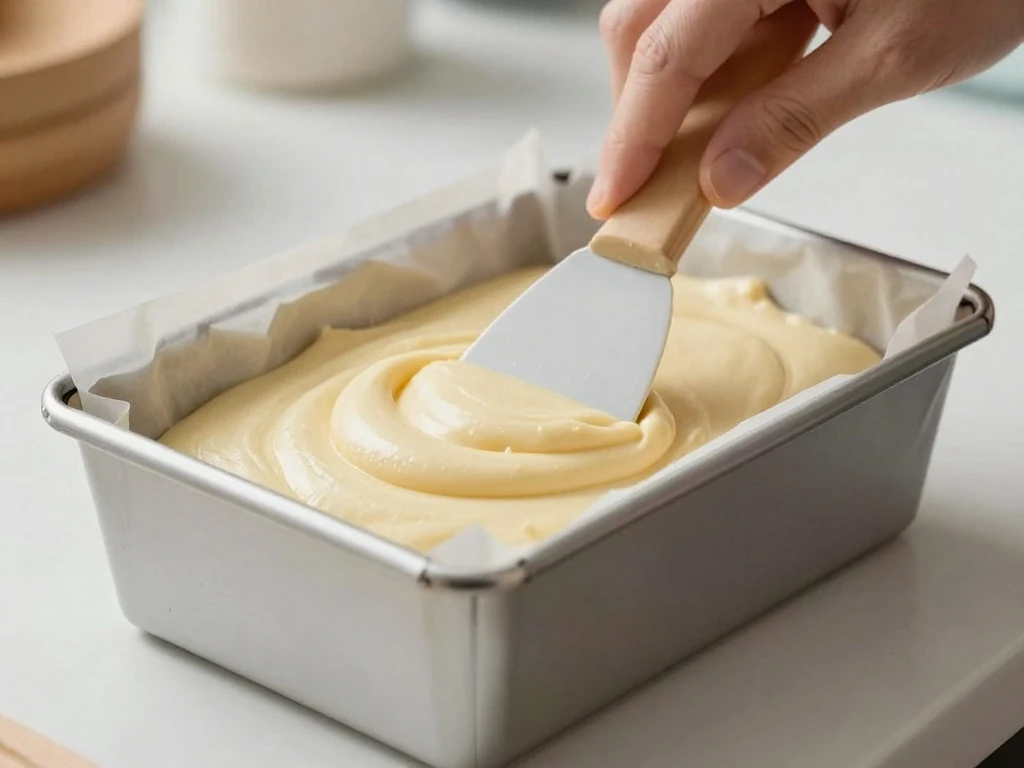
Step 5: Spoon the batter into the prepared tin and spread it evenly into the corners. Level the surface with the back of a spoon or a small offset spatula so the cake bakes to an even thickness.
Step 6: Bake for approximately 20–25 minutes, until the sponge is risen and golden. Insert a skewer into the centre; the cake is ready when the skewer comes out clean or with only a few dry crumbs.
Step 7: Leave the cake in the tin for several minutes after removing it from the oven. Transfer it to a rack and let it cool completely before preparing the icing, because a warm sponge can make the topping melt or turn patchy.
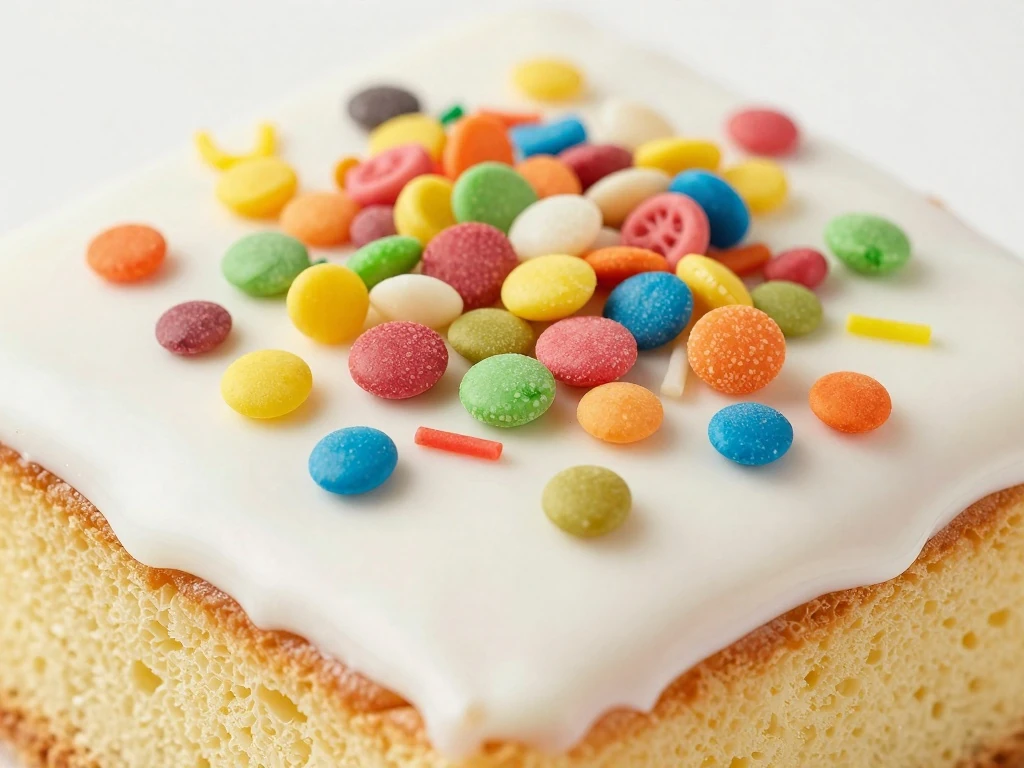
Step 8: Put the icing sugar in a bowl and gradually add enough water to make a thick but spreadable icing. Smooth it right to the edges of the cooled cake, scatter over the sprinkles immediately, and allow the icing to set before cutting into squares.
Pro Tips for the Best School Cake
Softened butter is one of the most important details in this recipe. It should yield when pressed, but it should not be oily or melted, as melted butter will not cream properly with the sugar.
Room-temperature eggs also help the mixture stay smooth. Add them gradually rather than all at once, and always scrape the bowl between additions to keep the batter evenly blended.
When folding in the flour, use gentle movements and stop as soon as no obvious dry patches remain. Overmixing can make the sponge heavier, while a light touch helps preserve the air created during creaming.
For the classic school-dinner appearance, spread the icing all the way to the edges and sprinkle generously while it is still wet. If the icing feels too stiff, add water a few drops at a time; if it becomes too loose, stir in a little more icing sugar.
For another warmly spiced baking idea, you can also try our spiced chai cake. It has a different flavor profile, but it makes the same kind of welcoming teatime treat.
Cooling, Icing, and Cutting
Letting the cake cool fully is not a step to rush. The sponge needs time to settle, and the icing needs a cool, firm surface so it can remain bright and smooth instead of sinking into the crumb.
Use the parchment overhang to help move the cake from the tin once it has rested for several minutes. Place it on a wire rack, and do not add the icing until the base is completely cool to the touch.
Once decorated, allow the icing to set before slicing. A sharp knife makes tidy squares, and wiping the blade between cuts helps keep the white icing clean.
Serving and Storage Suggestions
Serve the cake as neat squares with tea, coffee, or a cold glass of milk. Small pieces are ideal for parties and lunchboxes, while larger squares make a satisfying afternoon treat.
Keep the finished cake covered at room temperature so the sponge remains soft. It is best enjoyed once the icing has set, and the sprinkles will stay crisp when the cake is protected from moisture.
If you like colorful, old-fashioned desserts, our Jello cake is another bright option to add to a family baking list.
Classic School Cake Recipe
A soft British school-cake traybake made with a simple buttery sponge, water icing, and colorful sprinkles. It is easy to bake, simple to decorate, and best served in neat squares.
as neededHundreds and thousands or other cake sprinkles
Method
Step-by-Step
Heat the oven to 180°C conventional, 160°C fan, or Gas Mark 4. Grease and line a 20 cm square baking tin with baking parchment.
Beat the softened butter and caster sugar together until the mixture is pale and fluffy. Scrape down the sides of the bowl so the ingredients mix evenly.
Add the eggs one at a time, beating well after each addition. If the mixture begins to curdle, add a spoonful of the flour before continuing.
Fold in the self-raising flour and baking powder, then mix in the milk. Stop as soon as the batter is soft and has a dropping consistency.
Spread the batter evenly into the lined tin and level the surface. Bake for approximately 20–25 minutes, until risen and golden.
Test the centre with a skewer; it should come out clean when the cake is ready. Leave the cake in the tin for several minutes, then transfer it to a rack to cool completely.
Mix the icing sugar with enough water to create a thick but spreadable icing. Spread it over the completely cooled cake, taking it right to the edges.
Add hundreds and thousands or other cake sprinkles while the icing is still wet. Allow the icing to set before cutting the cake into squares.
Notes
Use softened butter and room-temperature eggs for a lighter sponge. Cool the cake completely before icing so the topping does not melt or become patchy. Store covered at room temperature and cut into squares once the icing has set.
Final Thoughts
This classic school cake recipe proves that a few familiar ingredients can create a truly memorable bake. The buttery sponge is light without being fussy, the water icing adds a pleasant sweetness, and the sprinkles provide the cheerful finish that makes every square instantly recognizable.
For the best result, take care with the creaming stage, add the eggs gradually, and bake until the centre is fully set. Most importantly, cool the cake completely before icing and decorate while the topping is still wet.
Once the icing has set, cut the traybake into squares and serve it at room temperature. It is a simple, reliable recipe with plenty of nostalgic appeal, and it is just as welcome at a children’s party as it is beside a traditional afternoon cup of tea.