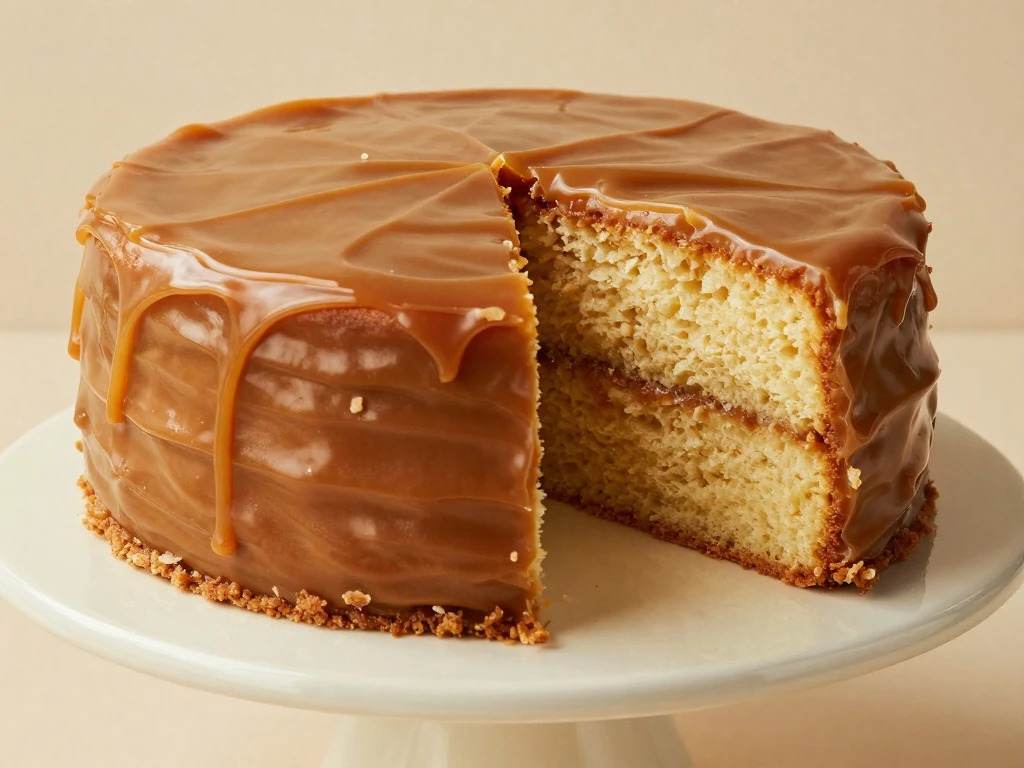
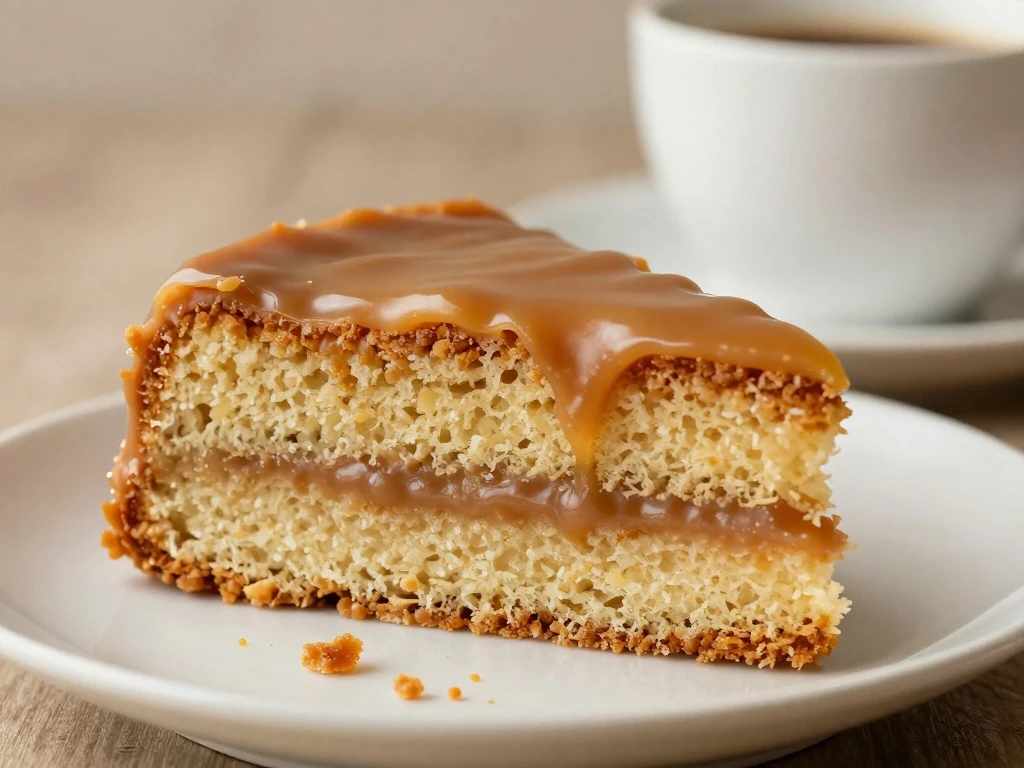
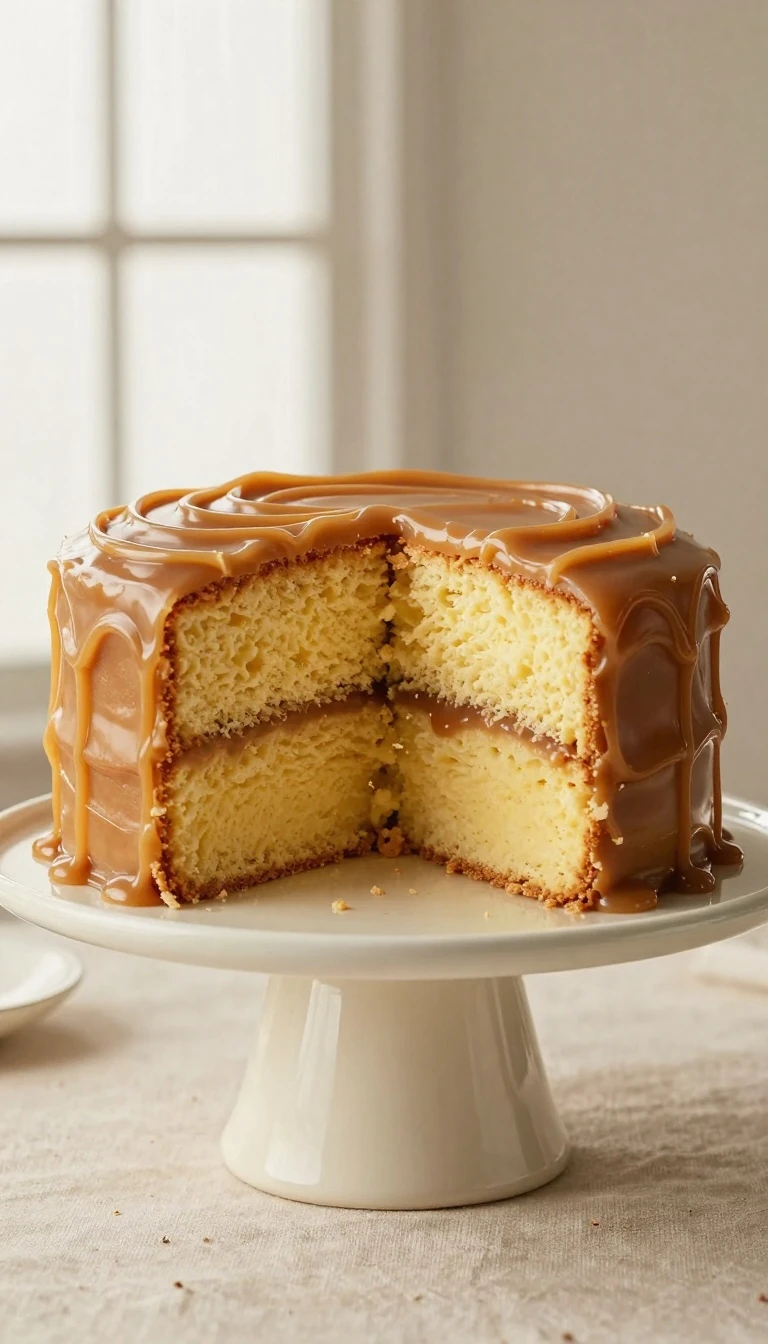
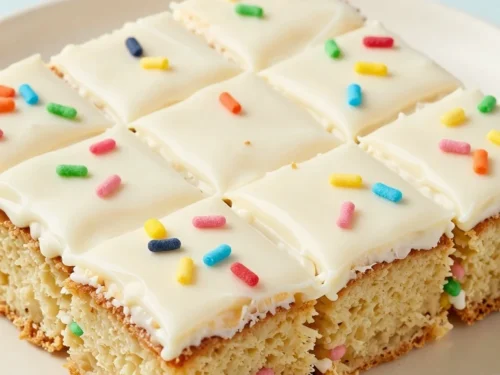
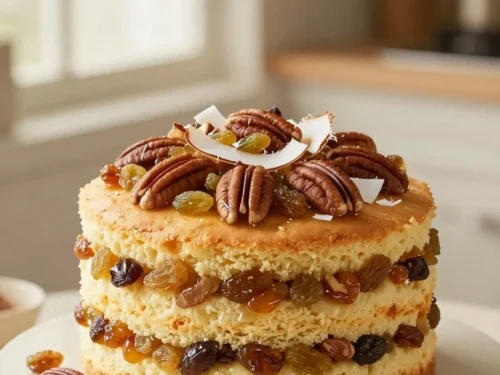
This classic caramel cake recipe makes two tender 9-inch yellow butter cake layers covered in rich, cooked brown-sugar caramel frosting. The cake takes about 30–40 minutes to prepare, bakes in 25–30 minutes, and serves approximately 10–12 people once cooled, frosted, and assembled.
Each bite combines buttery vanilla cake with a deep, creamy caramel topping that sets into a soft, fudgy finish. The frosting is cooked to the soft-ball stage, so a candy thermometer helps you achieve the traditional Southern texture without ending up with icing that is runny, hard, or grainy.
Classic caramel cake is the kind of dessert that feels instantly familiar: soft yellow cake, warm vanilla flavor, and a generous coating of buttery brown-sugar icing. Unlike a plain buttercream cake, the frosting is cooked first, giving it a more concentrated caramel taste and a slightly fudgy texture as it cools.
This recipe keeps the process traditional while making it manageable in a home kitchen. Two 9-inch layers provide plenty of cake for 10–12 servings, and the finished dessert is impressive enough for a celebration without requiring decorative piping skills.
Texture: Tender, moist cake with a creamy caramel coating.
Flavor: Buttery vanilla balanced by brown sugar and a touch of salt.
Timing: Plan on about 2 1/2–3 hours, including cooling and assembly.
Best occasion: Birthdays, family gatherings, holidays, and classic Southern dessert tables.
If you enjoy traditional cakes with straightforward ingredients, you may also like this simple four-ingredient cake for an especially easy baking project.
Ingredients You’ll Need
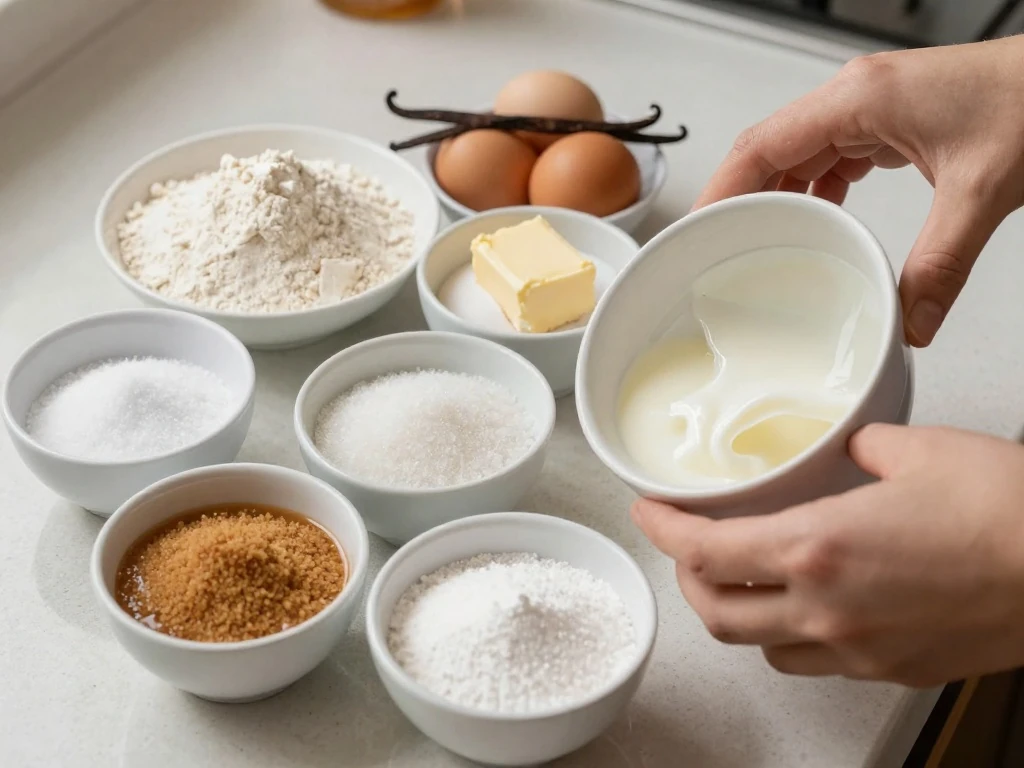
The cake begins with all-purpose flour, baking powder, fine salt, softened unsalted butter, granulated sugar, four eggs, vanilla extract, and whole milk. Room-temperature dairy and eggs blend more evenly, which helps create a smooth batter and a light, tender crumb.
For the frosting, use unsalted butter, packed light brown sugar, evaporated milk or heavy cream, salt, vanilla, and 3 1/2–4 cups of sifted confectioners’ sugar. Evaporated milk gives the icing a classic Southern character, while heavy cream makes it especially rich and silky.
Measure the flour carefully, preferably by weight or by spooning it into a measuring cup and leveling it.
Pack the brown sugar firmly into its measuring cup so the caramel has the proper sweetness and moisture.
Sift the confectioners’ sugar before adding it to the cooked mixture to prevent lumps.
Have the cake layers, serving plate, spatula, and frosting tools ready before making the icing.
How to Make It Step-by-Step
Step 1: Heat the oven to 350°F (175°C). Grease two 9-inch round cake pans, line the bottoms with parchment, and lightly flour the sides so the baked layers release cleanly.
Step 2: Whisk the flour, baking powder, and salt together in a medium bowl. This distributes the leavening and seasoning evenly before they are added to the wet ingredients.
Step 3: Beat the softened butter and granulated sugar for 3–5 minutes, until the mixture is pale and fluffy. This creaming step incorporates air, so do not rush it or use cold butter.
Step 4: Add the eggs one at a time, beating well after each addition, then mix in the vanilla. Scrape the bowl once or twice so the butter mixture stays evenly blended.
Step 5: Add the dry ingredients in three additions, alternating with the milk in two additions. Begin and end with the dry ingredients, mixing only until the batter comes together to avoid developing too much gluten.
Step 6: Divide the batter evenly between the prepared pans and smooth the tops. Bake for 25–30 minutes, checking for centers that spring back lightly and a toothpick that comes out clean or with a few moist crumbs.
Step 7: Let the cakes cool in the pans for 10 minutes. Turn them out onto wire racks and leave them there until completely cool, because warm cake can soften or melt the frosting.
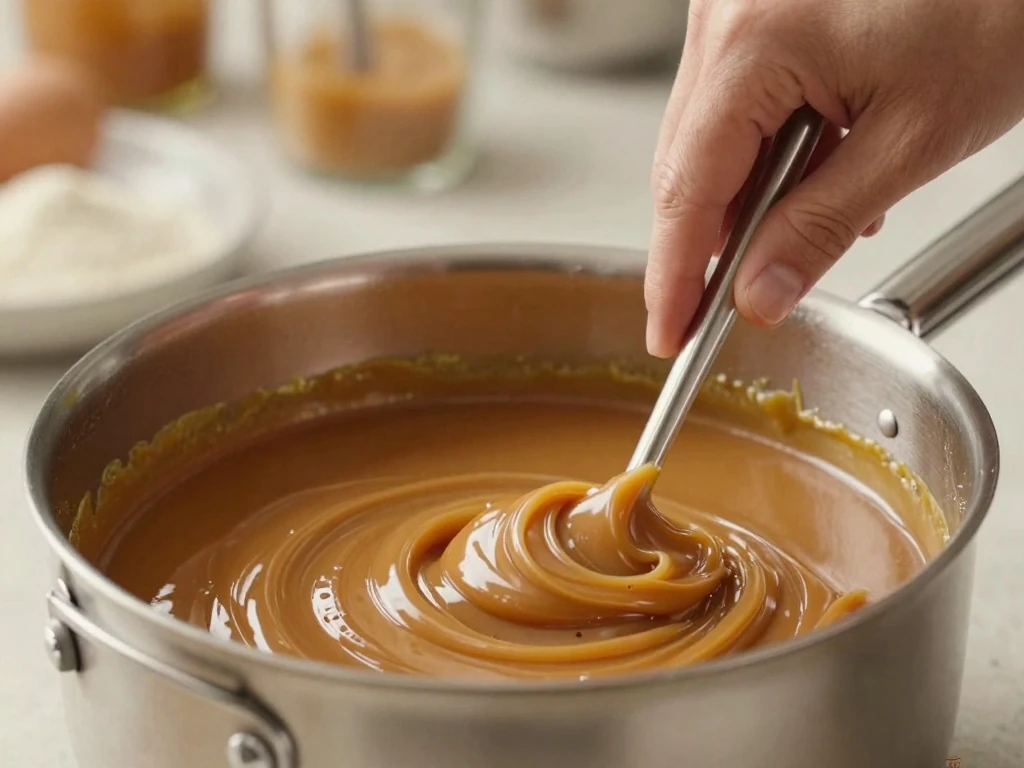
Step 8: Begin the caramel icing by melting the butter in a heavy saucepan over medium heat. Add the brown sugar, evaporated milk or cream, and salt, then bring the mixture to a steady boil while stirring frequently.
Step 9: Cook the caramel until the sugar is fully dissolved and the mixture reaches approximately 234–238°F (112–114°C), the soft-ball stage. Without a thermometer, this generally takes about 3–5 minutes of boiling, but a thermometer gives more dependable results.
Step 10: Remove the saucepan from the heat and stir in the vanilla. Cool the mixture for about 15–20 minutes, until it is warm rather than hot, so the confectioners’ sugar thickens the icing without melting excessively.
Step 11: Gradually beat in 3 1/2–4 cups of sifted confectioners’ sugar. Stop when the frosting is thick enough to spread but still soft, remembering that it will continue to firm as it cools.
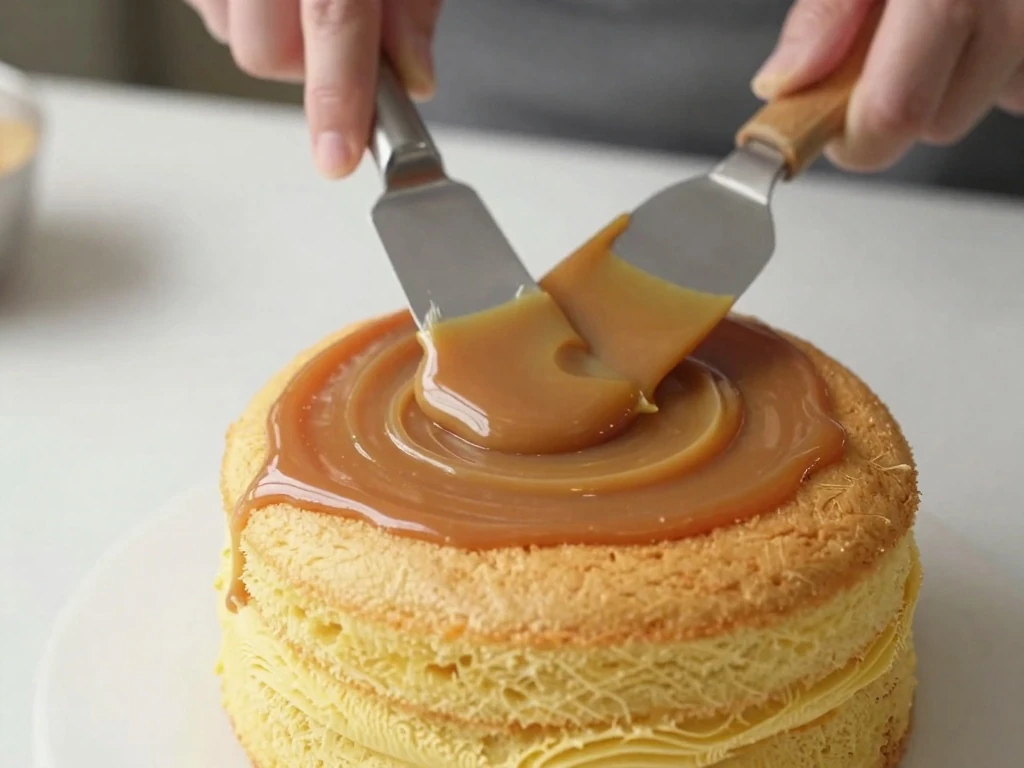
Step 12: Set one cake layer on a serving plate and spread it with frosting. Add the second layer, frost the top and sides quickly, and loosen the icing with 1–2 teaspoons of warm milk or cream if it becomes too stiff.
How to Get the Best Caramel Frosting
The frosting is the defining feature of this cake, so temperature matters. Undercooked icing may remain loose and slide from the cake, while overcooked caramel can become hard or grainy once it cools.
A candy thermometer should be placed in the saucepan without touching the bottom. Watch the mixture closely as it approaches 234–238°F, and remember that the frosting must be used while warm and spreadable.
Do not wait for the icing to cool completely before adding the confectioners’ sugar. Once it starts to set, work quickly with a flexible spatula, spreading the frosting from the center outward and down the sides.
For another tender, moist cake idea with a gentle tang, see this moist Greek yogurt cake. It has a different flavor profile but is just as welcome with coffee or tea.
Pro Tips for a Tender Cake
Use room-temperature ingredients: Soft butter creams properly, and room-temperature eggs and milk help the batter stay smooth.
Avoid overmixing: Once the flour is added, mix only until no dry streaks remain.
Check the layers early: Ovens vary, so begin testing near the 25-minute mark.
Cool completely: Frosting a warm layer can cause sliding, melting, and uneven coverage.
Trim if desired: For a very smooth finish, use a serrated knife to trim any domed tops once the layers are fully cool.
Prepare for speed: Keep the spatula and serving plate nearby before starting the icing.
Storage, Serving, and Variations
Cover the finished cake and keep it at room temperature for up to 2 days in a cool kitchen. For longer storage, refrigerate it, then let it sit at room temperature before serving so the caramel frosting softens and the cake tastes tender.
Serve slim wedges because the cooked caramel icing is rich. A cup of black coffee, unsweetened tea, or cold milk makes a pleasing contrast to the sweet brown-sugar frosting.
For a three-layer version, published recipes generally increase the cake batter by about 50 percent and use three 8-inch pans. This recipe is written specifically for two 9-inch layers, so do not change the pan size without adjusting the batter quantity and baking time.
If you prefer a bright citrus dessert for another occasion, our lemon cake recipe offers a refreshing change from this deeply buttery caramel version.
Classic Caramel Cake
A tender two-layer butter cake covered with cooked brown-sugar caramel frosting. This traditional Southern-style dessert serves 10–12 and is ideal for birthdays, holidays, and Sunday suppers.
Heat the oven to 350°F (175°C). Grease two 9-inch round cake pans, line the bottoms with parchment, and lightly flour the sides.
Whisk together the flour, baking powder, and salt. In a separate bowl, cream the softened butter and granulated sugar for 3–5 minutes, until pale and fluffy.
Add the eggs one at a time, beating well after each addition, then mix in the vanilla. Add the dry ingredients in three additions, alternating with the milk in two additions, and mix only until combined.
Divide the batter between the prepared pans and smooth the tops. Bake for 25–30 minutes, until the centers spring back lightly and a toothpick comes out clean or with a few moist crumbs.
Cool the cakes in their pans for 10 minutes, then turn them out onto wire racks. Cool completely before beginning the frosting.
Melt the butter in a heavy saucepan over medium heat, then add the brown sugar, evaporated milk or cream, and salt. Bring the mixture to a steady boil, stirring frequently, and cook to approximately 234–238°F (112–114°C), the soft-ball stage.
Remove the caramel mixture from the heat and stir in the vanilla. Let it cool for about 15–20 minutes, until warm rather than hot.
Gradually beat in the sifted confectioners’ sugar until the icing is thick and spreadable. Use it immediately because cooked caramel icing firms quickly as it cools.
Place one cake layer on a serving plate and spread it with frosting. Add the second layer, then frost the top and sides, working quickly; if the icing becomes too stiff, beat in 1–2 teaspoons of warm milk or cream.
Notes
Bring the butter, eggs, and milk to room temperature for the best cake texture. A candy thermometer is strongly recommended for the frosting. Store the covered cake at room temperature for up to 2 days or refrigerate for longer storage, allowing slices to soften before serving.
Final Thoughts
This classic caramel cake rewards careful timing with a dessert that tastes wonderfully old-fashioned. The tender butter cake is simple and dependable, while the cooked brown-sugar frosting supplies the rich caramel flavor and soft, creamy finish that make Southern caramel cake so memorable.
Give the layers plenty of time to cool, use a thermometer for the icing whenever possible, and assemble the cake while the frosting is still warm enough to spread. Once sliced, it makes a generous centerpiece for a family meal and a truly satisfying homemade dessert.