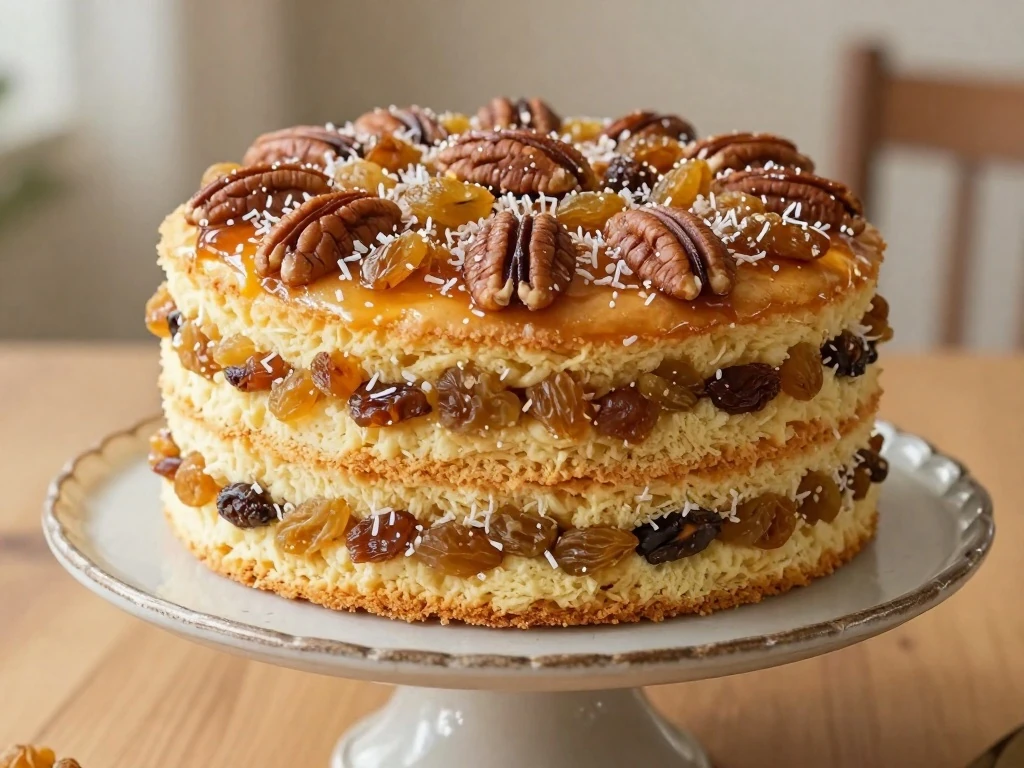
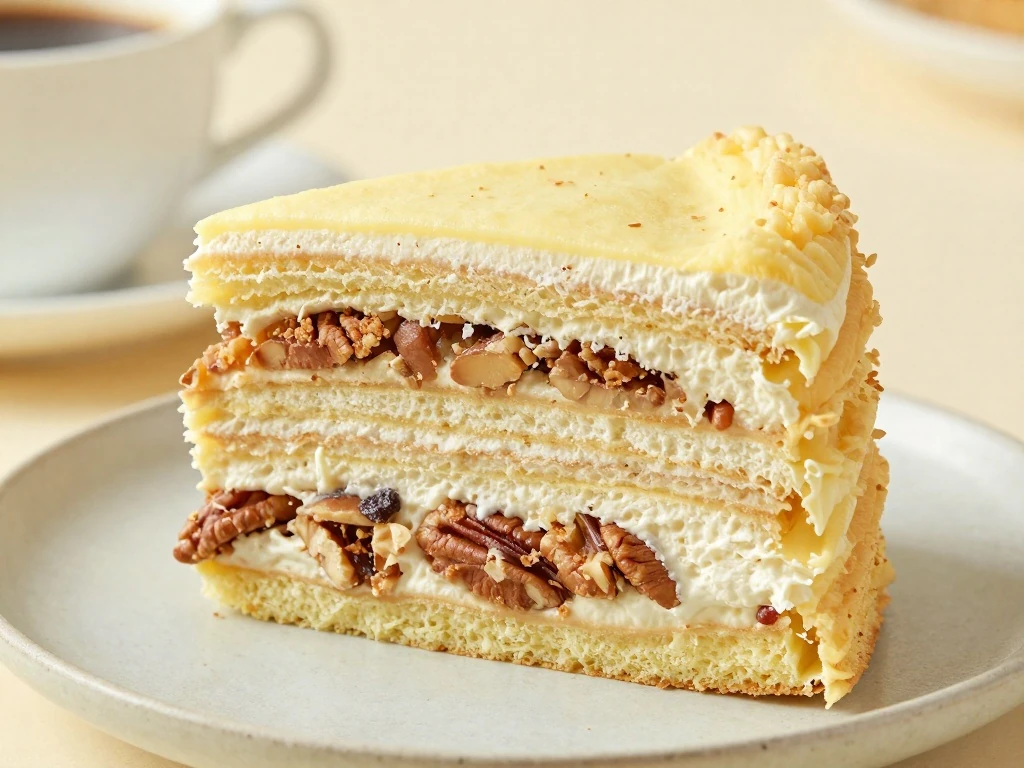
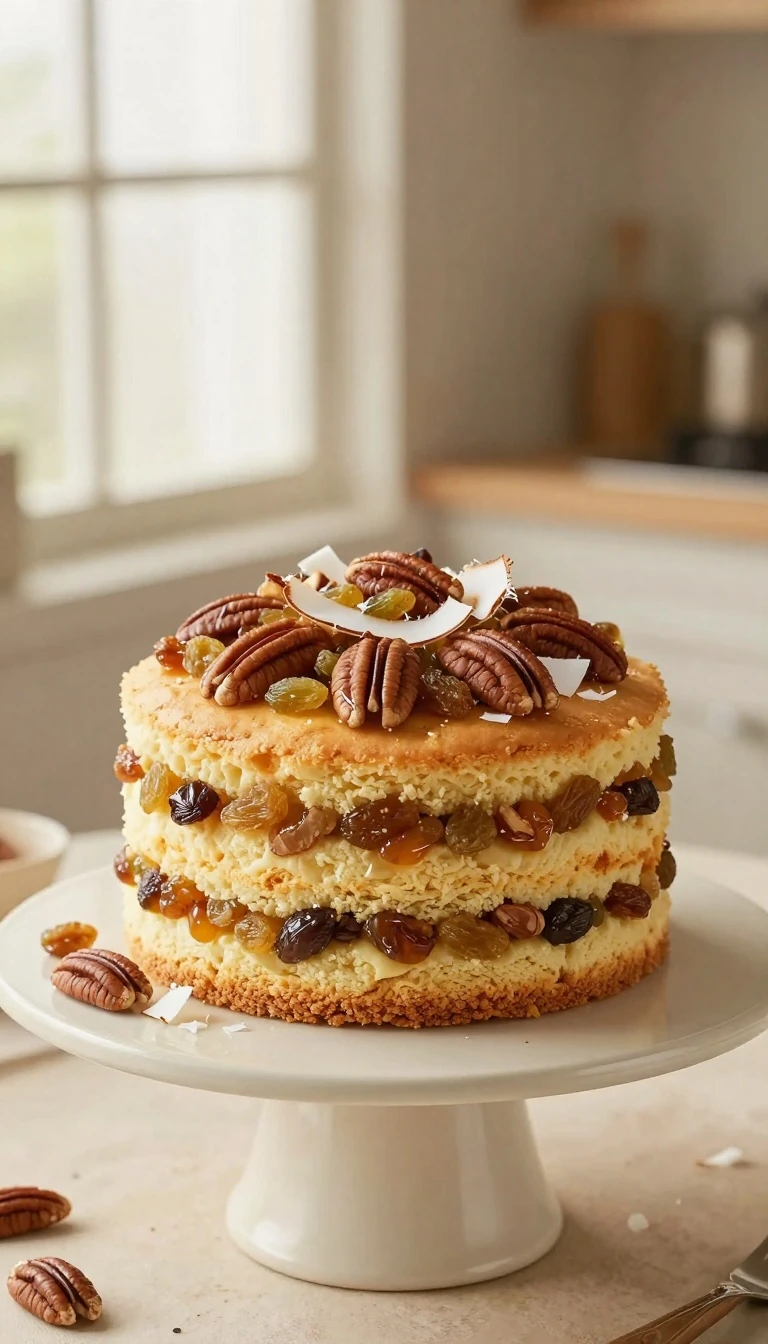
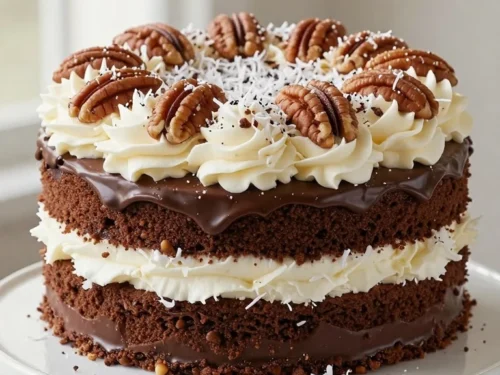
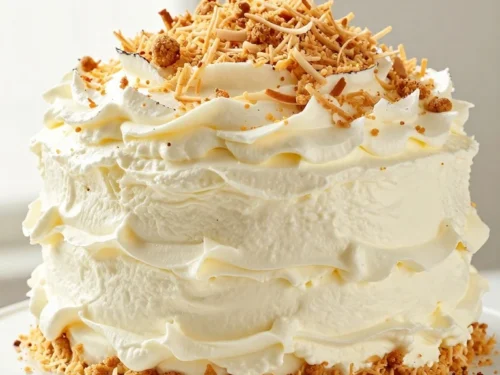
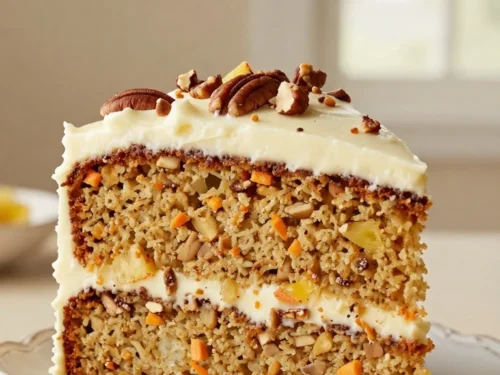
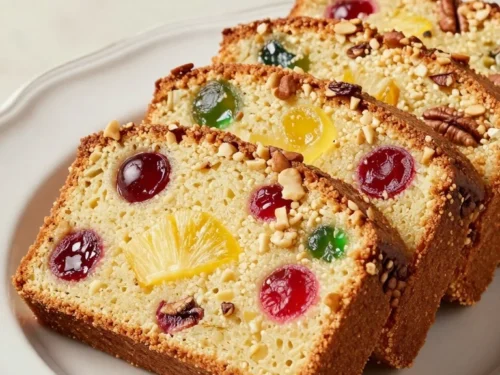
This Japanese Fruit Cake Recipe makes one impressive three-layer, 9-inch cake filled with raisins, sweetened coconut, and pecans. Although it is called Japanese cake in many Southern kitchens, this dessert is generally considered a Southern American specialty rather than a traditional Japanese dessert. The cake takes about 35–45 minutes to prepare, 25–30 minutes to bake, and approximately 2½ hours overall when cooling and assembly are included.
Each tender buttermilk cake layer has a gentle buttery sweetness, while the cooked filling brings a rich, chewy contrast from the raisins and coconut and a deep nutty flavor from the pecans. The finished cake is often left unfrosted around the sides, allowing the rustic layers and generous topping to take center stage. For another soft, moist dessert, you can also browse this moist yogurt cake for a different style of homemade baking.
Japanese fruit cake is a wonderful choice when you want a dessert that feels festive without requiring a smooth, perfectly frosted finish. The three layers create a beautiful height, but the cake remains rustic and welcoming because the filling is spooned over the top and allowed to show along the edges.
The cake itself is tender rather than heavily spiced. Buttermilk gives the crumb a pleasant softness and mild tang, while butter, vanilla, pecans, raisins, and coconut provide plenty of flavor without a separate frosting.
The cooked filling is the signature feature. It has a rich, spoonable consistency and settles into the cake as it rests, giving each slice a mix of fluffy crumb, chewy fruit, tender coconut, and crunchy nuts. If you enjoy moist cakes with a soft, delicate crumb, you may also like this simple Greek yogurt cake.
Ingredients You’ll Need
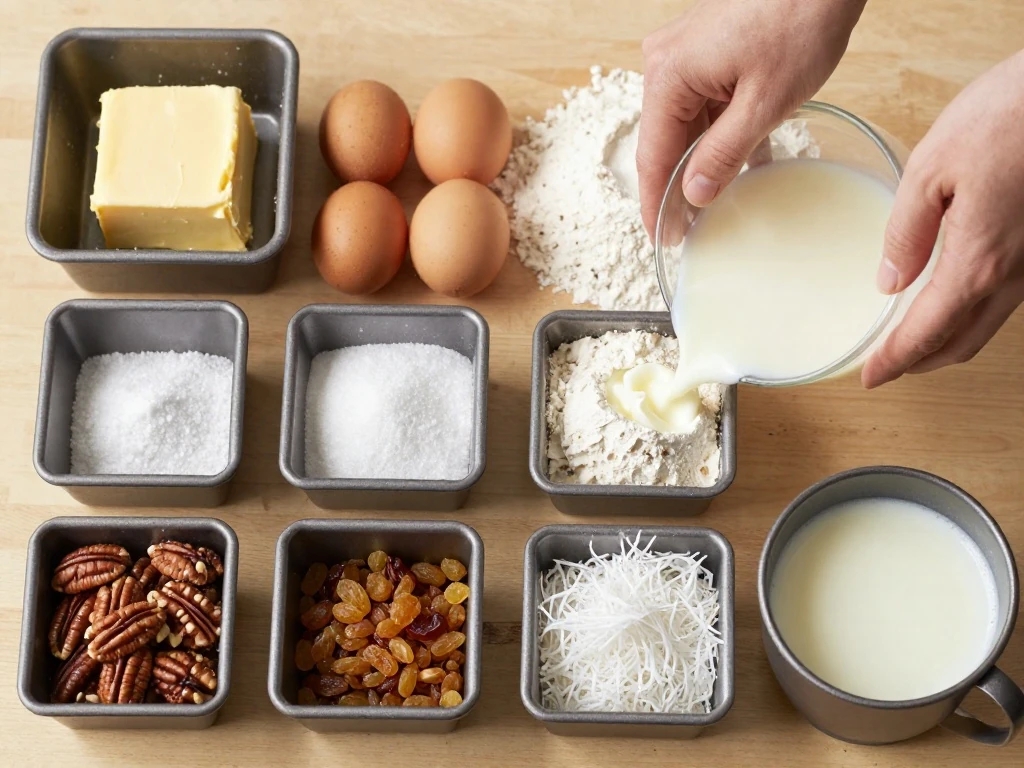
Set out the cake ingredients before mixing, and allow the butter and eggs to reach room temperature. Soft butter creams more evenly with the sugar, while room-temperature eggs blend into the batter without making it look curdled.
Butter and sugar: One cup of softened unsalted butter and two cups of granulated sugar form the rich, sweet base.
Eggs and vanilla: Four large eggs add structure, and one teaspoon of vanilla rounds out the flavor.
Flour, baking soda, salt, and buttermilk: These ingredients create a tender cake with gentle lift and a balanced taste.
Pecans, raisins, and coconut: One cup of each goes into the batter, with another cup of each reserved for the filling.
Filling ingredients: Evaporated milk, butter, and sugar cook with the fruit, coconut, and pecans to create the soft topping between the layers.
Finely chop the raisins for both the batter and filling. Smaller pieces distribute more evenly and prevent long, sticky strands from making the layers difficult to slice.
For comparison, a soft sour cream cake uses a different dairy ingredient and has its own classic texture, but this recipe depends specifically on buttermilk and baking soda.
How to Make It Step-by-Step
Step 1: Heat the oven to 350°F (175°C) so it is fully ready when the batter is mixed. Grease three 9-inch round cake pans thoroughly, then line the bottoms with parchment to make releasing the delicate layers easier.
Step 2: Place the softened butter and sugar in a large mixing bowl and cream them for 3–5 minutes. The mixture should look lighter in color and fluffy, with the sugar worked into the butter rather than sitting in dry pockets.
Step 3: Add the room-temperature eggs one at a time, beating well after each addition. Stir in the vanilla once the eggs are incorporated, scraping the sides of the bowl so the mixture stays uniform.
Step 4: In a separate bowl, whisk the flour, baking soda, and salt together. Add this dry mixture to the butter mixture in three additions, alternating with the buttermilk, and mix only until no obvious streaks of flour remain.
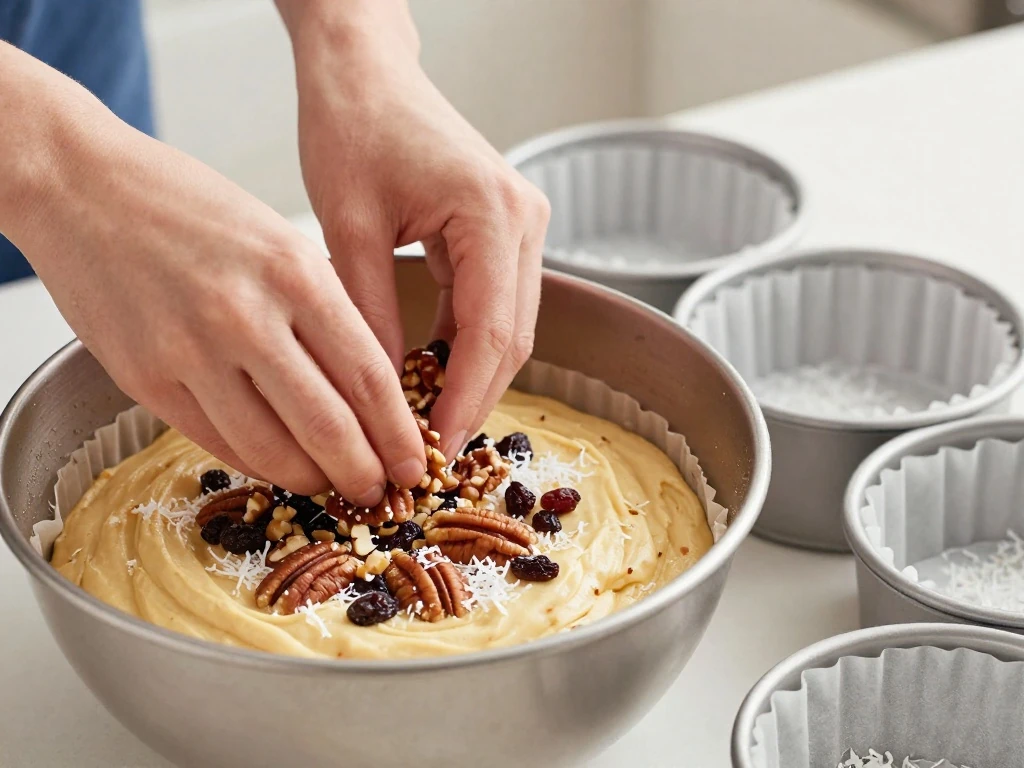
Step 5: Fold in the finely chopped pecans, raisins, and sweetened shredded coconut with a spatula. Gentle folding keeps the batter from becoming overmixed and helps distribute the fruit and nuts throughout all three layers.
Step 6: Divide the batter as evenly as possible among the three prepared pans. Bake for 25–30 minutes, checking near the end of the baking time; the centers should spring back lightly and a toothpick should come out with a few moist crumbs.
Step 7: Leave the baked layers in their pans for about 10 minutes so they can firm up slightly. Turn them out onto cooling racks, remove the parchment, and allow them to cool completely before adding the filling.
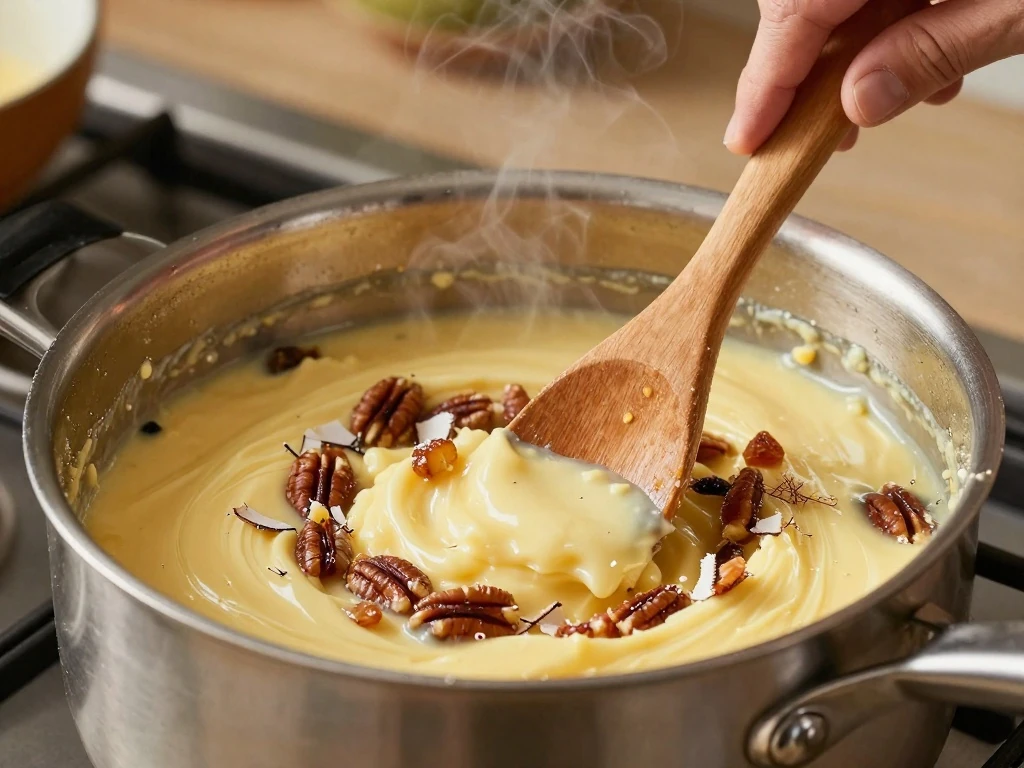
Step 8: Make the filling by combining the sugar, evaporated milk, and butter in a saucepan over medium heat. Stir constantly until the butter melts and the mixture reaches a gentle simmer, then cook for approximately 5–7 minutes, stirring frequently until it is slightly thickened.
Step 9: Remove the saucepan from the heat and stir in the chopped pecans, raisins, and coconut. Let the filling cool until thick but still pliable; it will continue to firm as it reaches room temperature.
Step 10: Put the first cake layer on a serving plate and spread approximately one-third to one-half of the filling over it. Add the second layer, repeat the filling, place the final layer on top, and spread the remaining filling over the cake’s surface.
Step 11: Allow the completed cake to stand for several hours, preferably overnight. This resting time lets the filling settle slightly into the crumb and makes the cake easier to slice neatly.
Making the Filling the Right Consistency
The filling should be cooked long enough to become slightly thickened, but it should not be treated like a hard caramel. Stirring frequently prevents scorching and keeps the evaporated milk, butter, and sugar together as they warm.
Do not spread the filling while it is hot. Hot filling can soften the cake layers and cause them to slide, especially when the cake is tall; cooling gives it the body needed to stay in place.
A good finished consistency is thick enough to mound softly on a spoon but pliable enough to spread with the back of a spoon or a small offset spatula. If it becomes very firm as it cools, give it a gentle stir before assembling.
Pro Tips for Tender Layers
Measure carefully: Weighing the flour is helpful, or spoon it into measuring cups and level the tops instead of scooping directly from the bag.
Avoid overmixing: Once the flour and buttermilk are combined, stop mixing as soon as the batter is smooth enough to fold.
Divide evenly: Use a kitchen scale if available so all three layers finish at a similar thickness and bake at the same rate.
Watch the toothpick: A few moist crumbs are ideal. A completely dry toothpick can mean the cake has baked longer than necessary.
Cool completely: Warm layers are fragile and can absorb or push around the filling before the cake is ready.
Use finely chopped add-ins: Small pieces of raisins, pecans, and coconut make each bite balanced and help the cake cut cleanly.
Some family versions place the raisins, pecans, and coconut in only two cake layers and leave one layer plain. This recipe follows the commonly repeated approach of folding the fruit, coconut, and pecans into all three layers, creating an evenly textured slice.
Storage, Slicing, and Serving
For the cleanest slices, refrigerate the assembled cake overnight. The cool temperature firms the filling and allows the layers to settle, but let the cake come close to room temperature before serving so the crumb and filling are pleasantly tender.
Keep the cake covered while refrigerated to protect it from drying and from absorbing other food aromas. Because the filling contains butter and evaporated milk, chilling is a practical choice for storing the finished dessert.
Use a sharp serrated knife and gentle sawing motions when cutting. Wipe the blade between slices for tidy layers, especially if you are serving the cake at a gathering.
Serve each piece as it is, since the cake already has a rich topping rather than a traditional side frosting. A cup of coffee, black tea, or lightly sweetened tea makes a natural partner for the buttery pecans and chewy raisins. For a brighter fruit-forward option to add to your baking plans, see this moist lemon cake.
Japanese Fruit Cake Recipe
A Southern-style three-layer cake made with buttermilk, pecans, raisins, and coconut, finished with a warm, buttery fruit-and-nut filling. The cake is best prepared ahead so the filling can settle into the layers.
Heat the oven to 350°F (175°C). Grease three 9-inch round cake pans and line the bottoms with parchment.
Cream the softened butter and granulated sugar for 3–5 minutes, until light and fluffy. Beat in the eggs one at a time, mixing well after each addition, then stir in the vanilla.
Whisk together the flour, baking soda, and salt. Add the dry mixture to the butter mixture in three additions, alternating with the buttermilk, and mix only until combined.
Fold in the finely chopped pecans, raisins, and coconut. Divide the batter evenly among the prepared pans.
Bake for 25–30 minutes, until the centers spring back lightly and a toothpick inserted in the middle comes out with a few moist crumbs. Cool in the pans for about 10 minutes, then turn the layers onto racks and cool completely.
For the filling, combine the sugar, evaporated milk, and butter in a saucepan over medium heat. Stir constantly until the butter melts and the mixture reaches a gentle simmer.
Cook the filling for approximately 5–7 minutes, stirring frequently, until slightly thickened. Remove from the heat, stir in the pecans, raisins, and coconut, and cool until spreadable.
Place one cake layer on a serving plate and spread approximately one-third to one-half of the filling over it. Add the second layer and repeat, then top with the final layer and spread the remaining filling over the top.
Let the assembled cake stand for several hours, preferably overnight, before slicing. Refrigerate it overnight for the cleanest cuts, then bring it close to room temperature before serving.
Notes
Chop the raisins fairly finely so the layers are easier to cut. Do not spread the filling while hot because it can soften or slide the cake layers. The filling thickens as it cools.
Final Thoughts
This Japanese Fruit Cake Recipe is a memorable Southern dessert built from simple pantry ingredients and patient preparation. Three tender buttermilk layers are joined by a cooked filling of buttery pecans, raisins, and coconut, creating a cake that is both homey and celebration-worthy.
The most important details are easy to remember: chop the raisins finely, mix the batter only until combined, cool the layers completely, and wait until the filling is thick but spreadable. Giving the assembled cake several hours, ideally overnight, lets the flavors settle and makes every slice more cohesive.
Whether you are preserving a family tradition or trying this classic for the first time, serve it in generous wedges with the filling visible on top. Its rustic appearance, tender crumb, and rich fruit-and-nut center make it a dessert guests will talk about long after the last slice is gone.