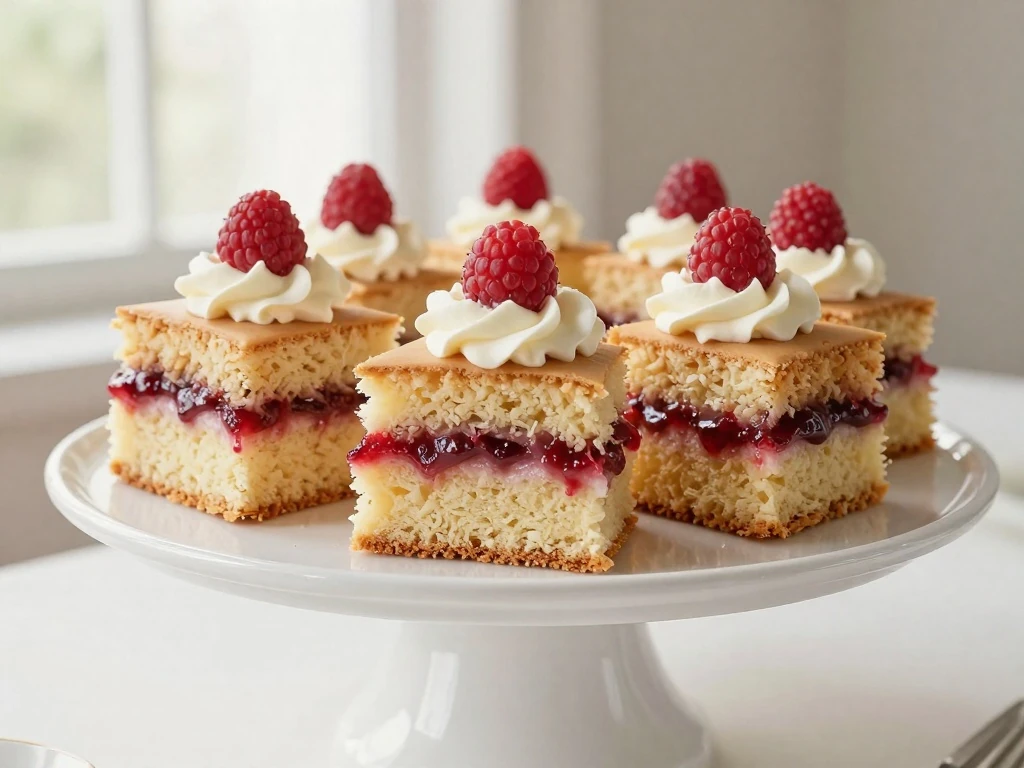
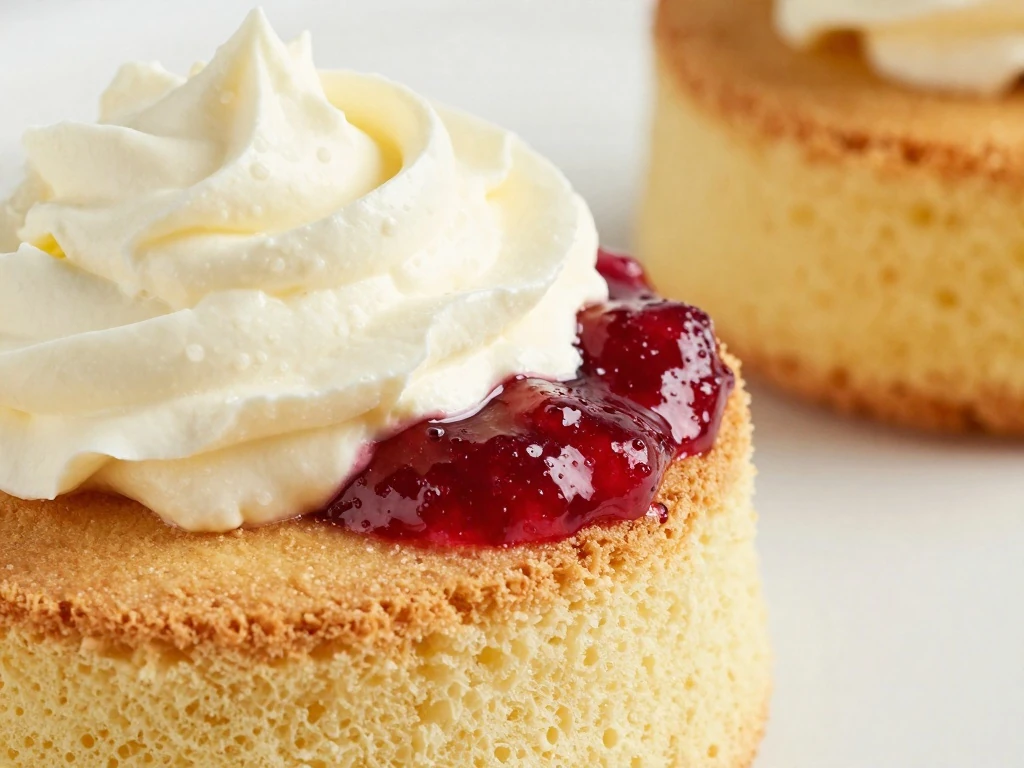
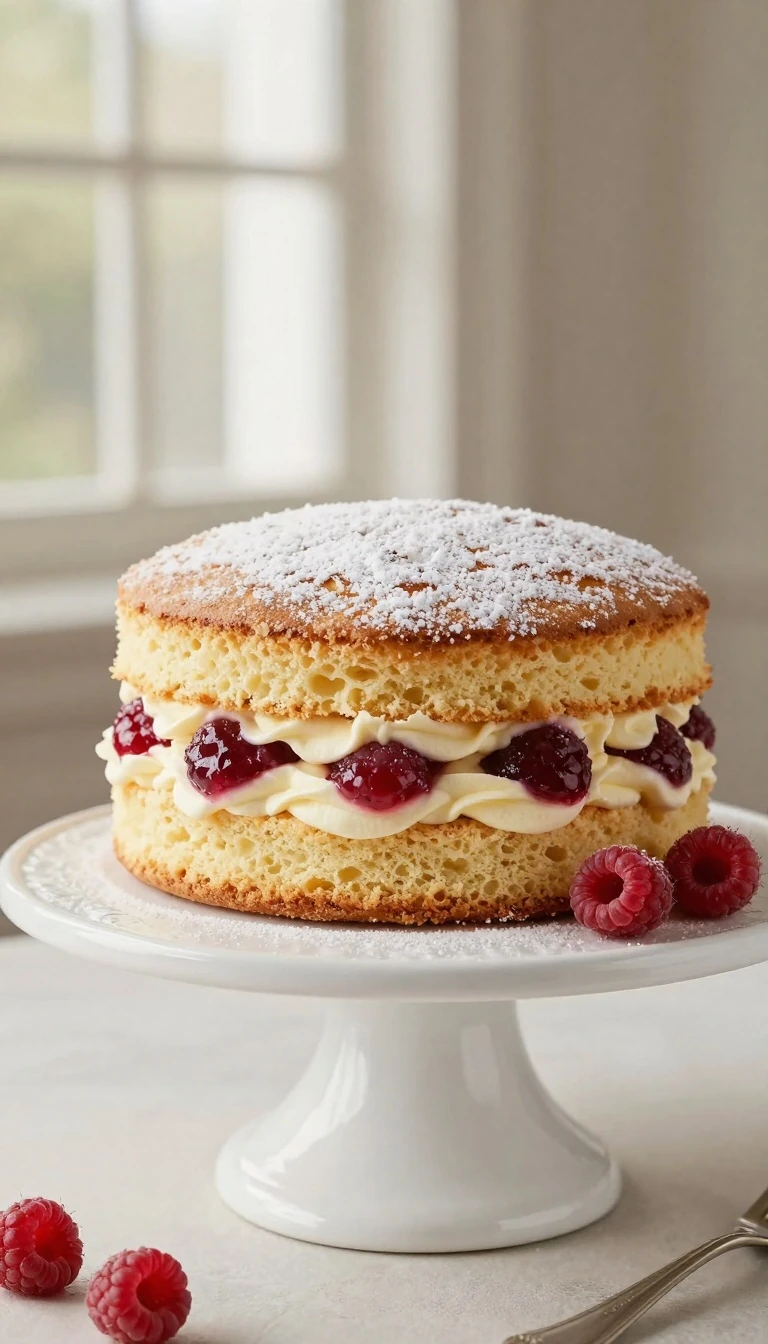
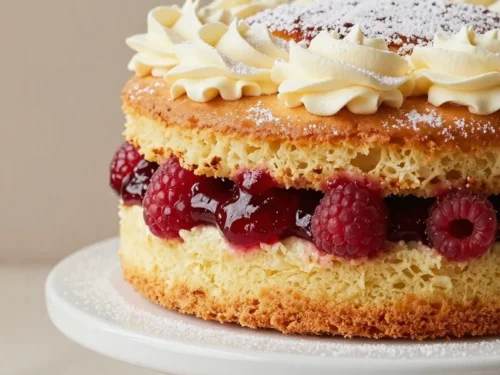
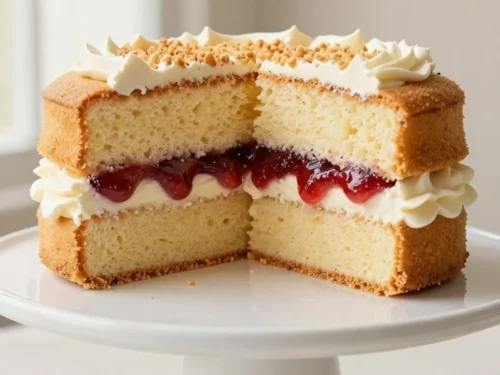
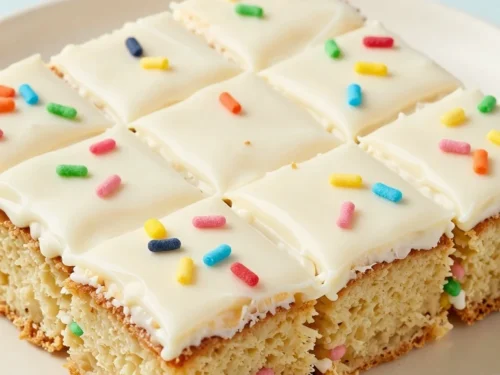
This classic Victoria Sponge Cake recipe makes one light, golden two-layer cake in two 20cm (8-inch) sandwich tins. It uses equal weights of butter, caster sugar and self-raising flour, plus four eggs, baking powder and a little milk, then finishes with raspberry or strawberry jam, whipped cream and a dusting of icing sugar.
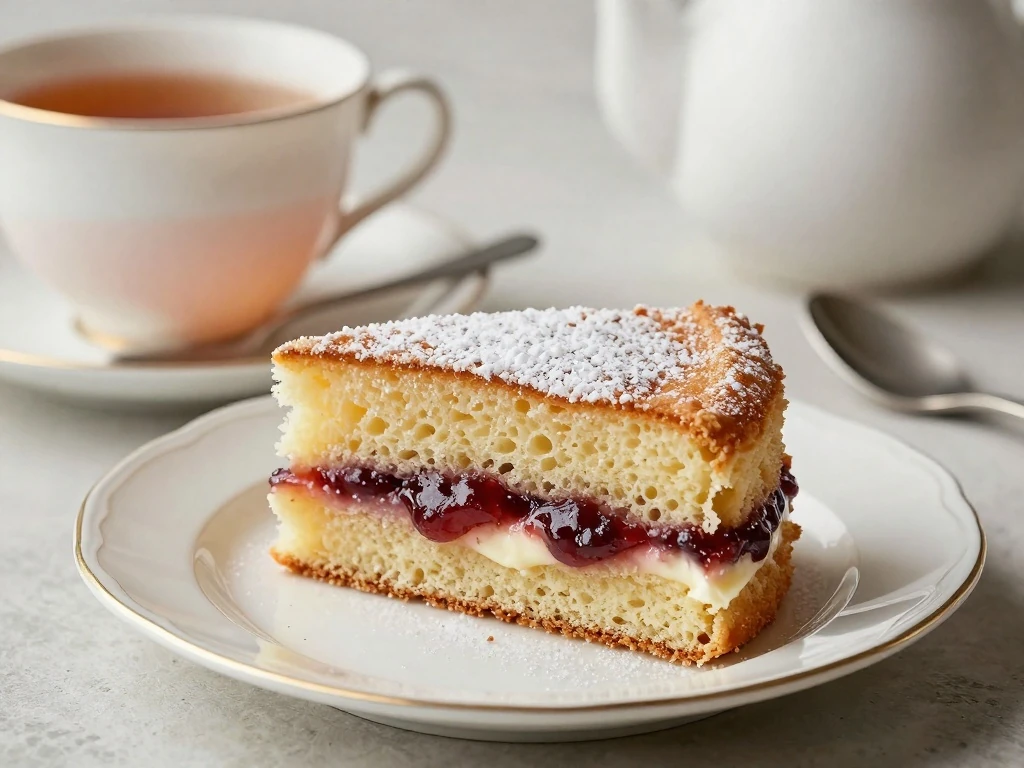
Every slice has a tender, buttery crumb, a gentle vanilla aroma and a sweet-tart jam centre balanced by cool, fluffy cream. Ready in approximately 1 hour to 1 hour 30 minutes including cooling and filling, this traditional British cake is a dependable choice for afternoon tea, birthdays and relaxed weekend baking.
Victoria sponge is one of the most pleasing cakes to make because its ingredient list is short, its method is familiar and its flavour is wonderfully balanced. The equal-weight formula gives you a soft, buttery crumb that is sturdy enough to hold jam and cream without becoming heavy.
This cake also suits almost any occasion. Serve it in neat wedges for afternoon tea, make it for a family celebration or bake it simply because a warm kitchen and a fresh sponge make an ordinary day feel special.
Light, tender and gently buttery crumb.
Traditional raspberry or strawberry jam filling.
Whipped cream for a fresh, soft centre.
Simple ingredients that are easy to measure accurately.
One 20cm two-layer cake serving about eight people.
Ingredients You’ll Need
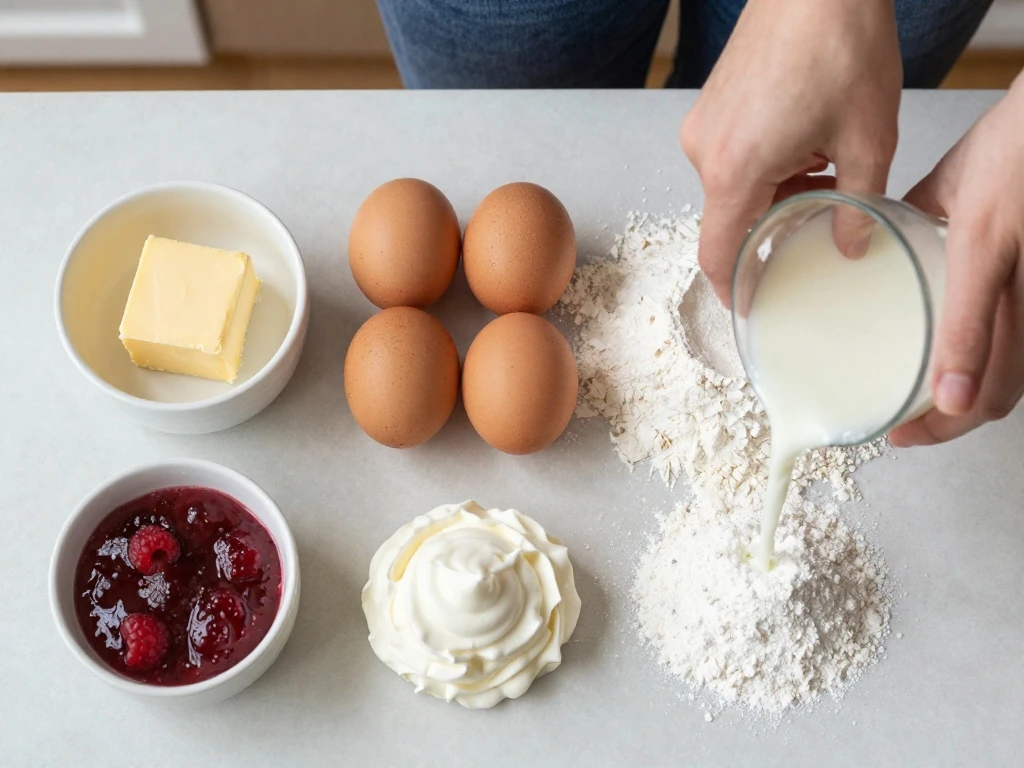
The heart of the recipe is 200g each of softened unsalted butter, caster sugar and self-raising flour. This equal-weight approach is central to a classic Victoria sandwich and rewards careful weighing.
You will also need four large eggs, preferably at room temperature, two teaspoons of baking powder and two tablespoons of milk. One teaspoon of vanilla extract adds a warm aroma, while a pinch of salt can sharpen the flavour if you are using unsalted butter and flour.
For the filling, choose four to six tablespoons of raspberry or strawberry jam and 150ml double cream, whipped until it holds soft, billowy peaks. Raspberry jam is especially traditional, but strawberry gives the cake a lovely familiar sweetness too.
Equipment and Timing
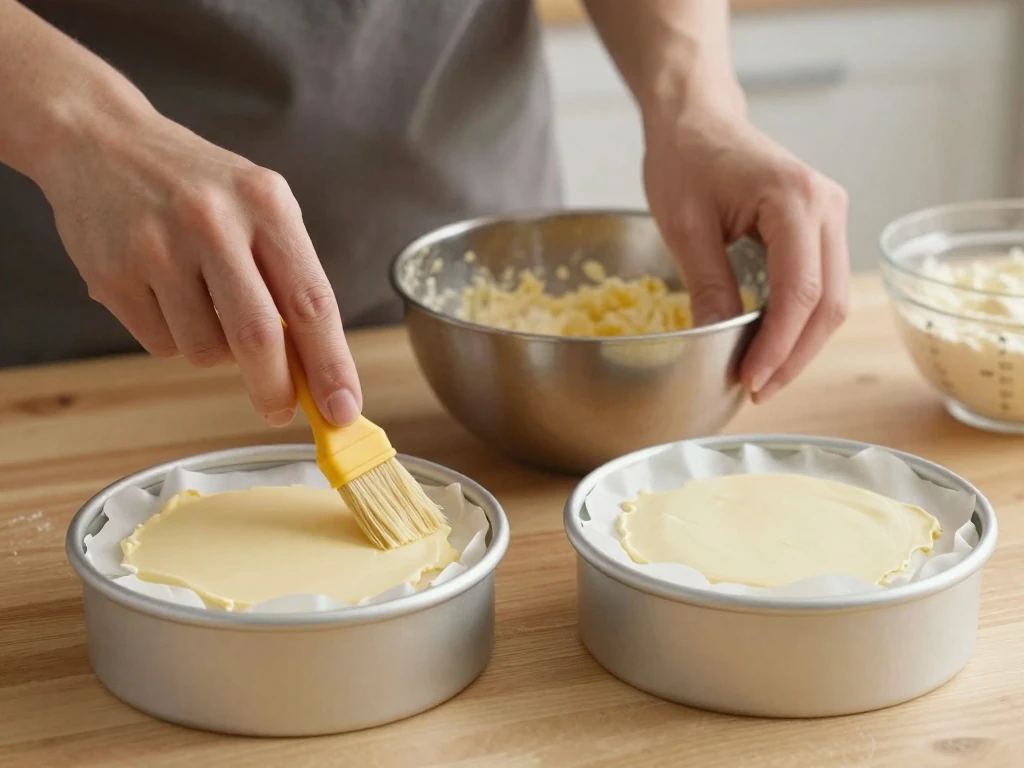
Prepare two 20cm (8-inch) round sandwich tins by greasing them and lining their bases with baking parchment. The tins should be the same size so the layers bake evenly and fit together neatly.
Heat the oven before mixing the batter to 180°C conventional, 160°C fan or Gas Mark 4. Allow 15-20 minutes for preparation, 20-25 minutes for baking and another 30-45 minutes for cooling and filling.
The total time is approximately 1 hour to 1 hour 30 minutes. Do not rush the cooling stage, since cream or buttercream can soften and slide if it meets a warm sponge.
How to Make It Step-by-Step
Step 1: Heat the oven to 180°C conventional, 160°C fan or Gas Mark 4. Grease and line the bases of two 20cm (8-inch) round sandwich tins, making sure the parchment lies flat so the baked layers release easily.
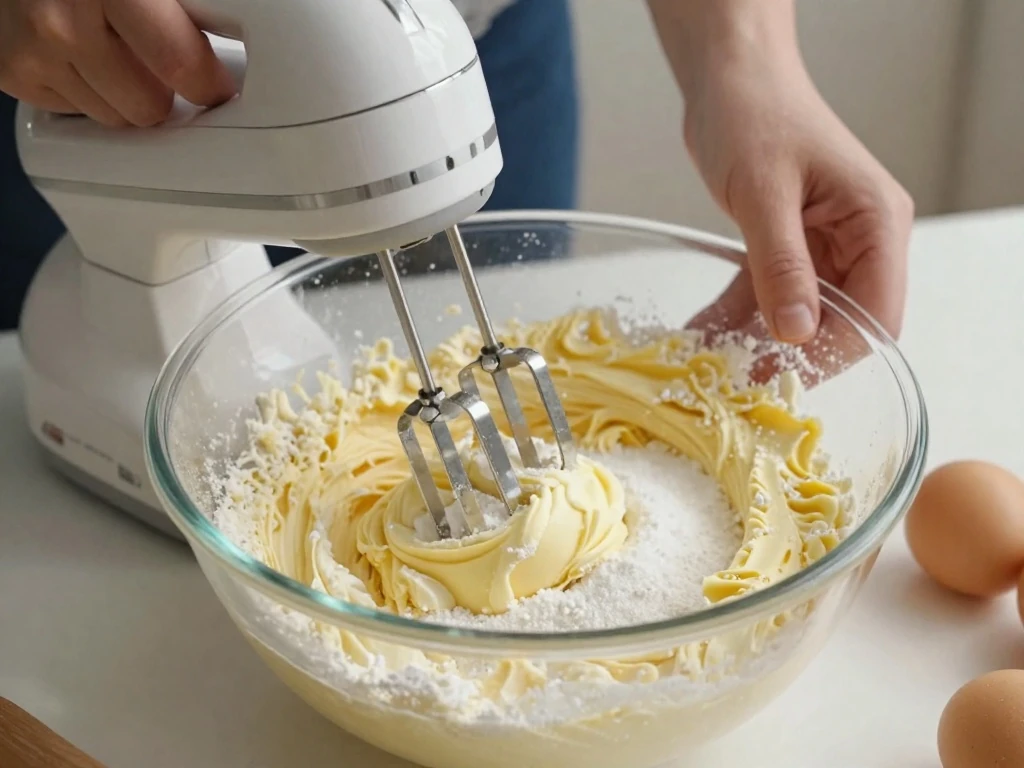
Step 2: Place the softened butter and caster sugar in a large mixing bowl and beat until very pale, light and fluffy. Scrape down the sides of the bowl once or twice so every part of the mixture is evenly creamed.
Step 3: Beat the eggs separately in a jug or small bowl. Add them gradually to the butter and sugar, mixing well after each addition; if the mixture begins to curdle, add a spoonful of the measured flour to bring it back together.
Step 4: Sift the self-raising flour and baking powder into the bowl, adding a pinch of salt if desired. Fold with a large spoon or spatula using gentle turns, stopping as soon as no obvious streaks of flour remain.
Step 5: Stir in the milk and vanilla extract with only a few careful movements. The finished batter should be soft enough to drop from the spoon, but do not keep mixing after the milk and vanilla have disappeared.
Step 6: Divide the batter evenly between the two prepared tins and level the tops. For especially even layers, weigh the filled tins or divide the batter by spoonfuls with care before placing them in the oven.
Step 7: Bake for 20-25 minutes, until the sponges are risen, golden and springy in the centre. Test with a skewer, which should come out clean, and avoid opening the oven during the early part of baking.
Step 8: Leave the cakes in their tins for about 5 minutes, then turn them out onto a wire rack. Remove the parchment and cool the layers completely, with the flattest layer selected for the top if one sponge has risen slightly higher.
Step 9: Spread the jam over one cooled sponge, taking it close to the edge but leaving a little room so it does not squeeze out excessively. Add the 150ml whipped double cream in an even layer, then place the second sponge on top.
Step 10: Finish with a light or generous dusting of icing sugar just before serving. Use a sharp serrated knife to cut clean wedges and reveal the jam and cream centre.
Pro Tips for a Light Sponge
Room-temperature ingredients make a noticeable difference. Soft butter blends more easily with the sugar, while room-temperature eggs help the mixture emulsify properly instead of becoming lumpy and uneven.
Accurate weighing is important because this cake depends on its equal-weight structure. If your eggs are unusually large, crack them into a bowl and check their total weight before deciding whether a small amount should be held back.
Take time with the first creaming stage. Beating the butter and sugar until pale and fluffy incorporates air, which supports the rise and helps create a delicate crumb.
Once the flour is added, gentle folding is the rule. Vigorous or prolonged mixing can develop the flour and leave the sponge dense, so stop as soon as the batter is smooth enough to divide.
Spread the batter evenly before baking and rotate neither tin during the early rise. If your oven has hot spots, check the cakes near the end of the stated baking time and swap positions only if needed.
Filling Variations and Serving Ideas
Raspberry jam is the classic choice, bringing a bright, slightly sharp note to the buttery cake. Strawberry jam is equally welcome and gives a softer, fruitier filling that children and adults often enjoy.
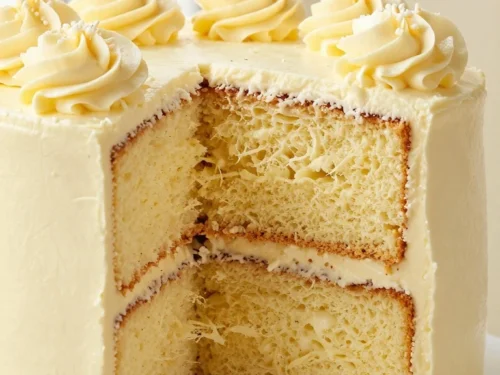
Whipped cream makes the finished cake light and fresh, but a traditional version may use jam alone. For a richer alternative, make buttercream with 100g softened unsalted butter, 175-200g sifted icing sugar, 1-2 tablespoons milk and 1 teaspoon vanilla extract.
For the best texture, spread the jam first and add the cream on top. Keep the cream layer even rather than excessively thick, since a balanced filling lets the sponge remain the star of every slice.
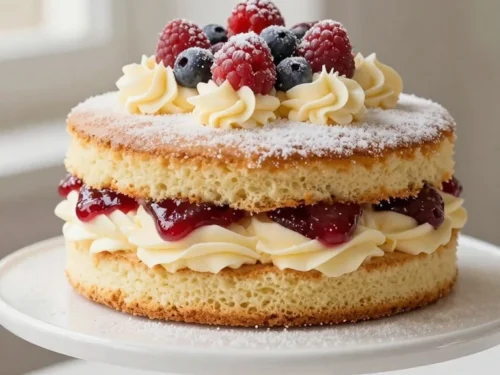
Serve the cake with tea, coffee or a glass of cold milk. A few fresh raspberries or strawberries may be added beside each slice, though the traditional icing sugar finish is all the decoration this cake truly needs.
Storage and Serving Advice
If filled with whipped cream, keep the cake covered and refrigerated, then bring it out briefly before serving so the sponge is not refrigerator-cold. It is best enjoyed fresh while the cream is soft and the crumb is tender.
An unfilled sponge can be cooled completely, wrapped well and kept at room temperature for a short period before filling. Store any leftovers in the refrigerator because of the cream, and use a covered cake container to protect the crumb from drying.
Do not reheat a cream-filled Victoria sponge. If you are using buttercream instead, allow a chilled slice to stand at room temperature for a little while so the filling softens naturally before eating.
Classic Victoria Sponge Cake
A light, buttery two-layer Victoria sponge filled with raspberry or strawberry jam and whipped double cream, then finished with icing sugar. This traditional equal-weight cake serves about eight people.
Heat the oven to 180°C conventional, 160°C fan or Gas Mark 4. Grease and line the bases of two 20cm (8-inch) round sandwich tins with baking parchment.
Beat the softened butter and caster sugar together until very pale, light and fluffy. This may take several minutes, and the mixture should look creamy rather than grainy.
Beat the eggs separately, then add them gradually to the butter mixture, mixing well after each addition. If the mixture begins to curdle, add a spoonful of the measured flour.
Sift in the self-raising flour and baking powder, adding the pinch of salt if using. Fold gently until just combined, then stir in the milk and vanilla without overmixing.
Divide the batter evenly between the prepared tins and level the surfaces. Bake for 20-25 minutes, until the cakes are risen, golden and springy in the centre, and a skewer inserted into a sponge comes out clean.
Leave the cakes in their tins for about 5 minutes, then turn them out carefully onto a wire rack. Allow both layers to cool completely before filling.
Spread 4-6 tablespoons of raspberry or strawberry jam over one cooled layer. Add the whipped double cream, place the second cake on top and dust with icing sugar before serving.
Notes
Use room-temperature butter and eggs for an even batter and good rise. Cool the sponge layers completely before adding cream or buttercream. For a buttercream filling, beat 100g softened unsalted butter with 175-200g sifted icing sugar, 1-2 tbsp milk and 1 tsp vanilla extract.
Final Thoughts
A classic Victoria Sponge Cake is proof that careful technique matters more than a long ingredient list. Creaming the butter and sugar thoroughly, adding the eggs gradually, folding gently and cooling the layers completely will give you the light, golden result this recipe is known for.
Fill it with traditional raspberry jam and whipped cream for a fresh afternoon tea cake, or choose strawberry jam or vanilla buttercream when you want a slightly different finish. Dust the top with icing sugar, slice generously and enjoy a timeless homemade favourite at its very best.