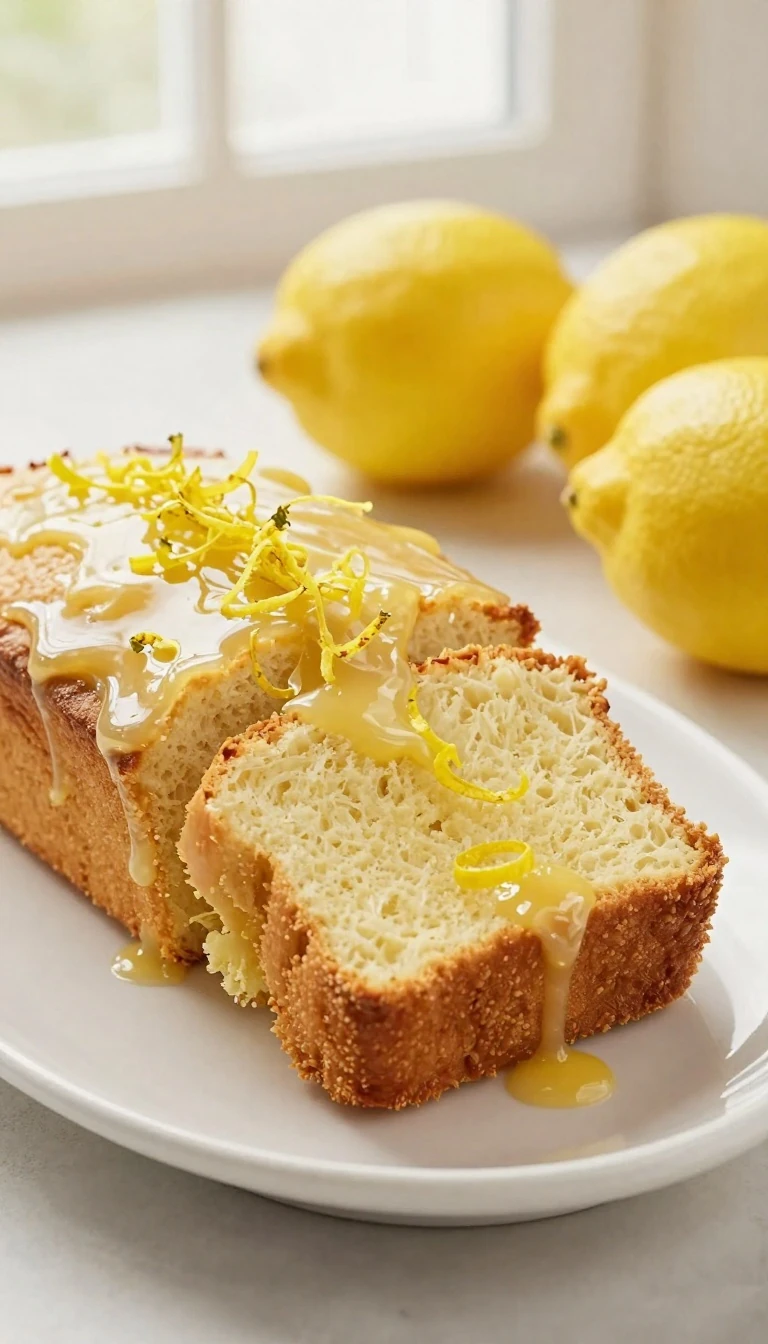
This Bright Lemon Loaf Recipe makes one tender, citrusy loaf in an 8 1/2 x 4 1/2-inch or 9 x 5-inch pan. The batter combines all-purpose flour, baking powder, eggs, neutral oil, Greek yogurt or sour cream, fresh lemon juice, and lemon zest, then bakes at 350°F (175°C) for 50 to 60 minutes before being finished with a simple lemon glaze.
Every slice has a soft, moist crumb, lively lemon aroma, and a sweet-tart glaze that sets into a delicate shell. Rubbing the zest into the sugar releases fragrant lemon oils, giving this easy fruit dessert a bright flavor that is especially welcome with coffee, afternoon tea, or a simple bowl of berries.
This loaf is the kind of bake that looks simple on the counter but tastes carefully considered on the plate. The crumb is soft without being fragile, the lemon flavor is clear without tasting harsh, and the thin glaze adds just enough sweetness to make every bite feel special.
Neutral oil keeps the texture moist for longer than many butter-based cakes, while Greek yogurt or sour cream adds richness and tenderness. Fresh zest supplies aromatic citrus oils, and lemon juice gives the batter and icing a crisp, natural tang.
The recipe also fits comfortably into an ordinary baking day. Prep takes about 15 to 20 minutes, the loaf bakes for 50 to 60 minutes, and the cooling period gives you time to wash the mixing bowls or prepare tea.
If you enjoy citrus desserts with a little more creaminess, you may also like our Italian lemon cream cake, which makes a lovely companion for a lemon-loaf baking weekend.
Ingredients You’ll Need
Gather the ingredients before you begin, and bring the eggs to room temperature. Room-temperature eggs blend more readily with the oil and yogurt, helping the batter come together evenly.
Flour, baking powder, and salt: These form the structure of the loaf and provide balanced seasoning.
Granulated sugar and lemon zest: The sugar sweetens the cake, while the zest perfumes it from the inside out.
Eggs: Three large eggs give the loaf structure, moisture, and a smooth batter.
Neutral oil: Canola or vegetable oil contributes a tender texture without competing with the lemon.
Greek yogurt or sour cream: Either option adds moisture and gentle richness.
Fresh lemon juice and vanilla: Lemon juice sharpens the flavor, while vanilla rounds out the citrus notes.
Confectioners’ sugar: This becomes the smooth, pourable glaze that crowns the cooled loaf.
Use fresh lemons for both the zest and juice. Bottled juice will not provide the same fragrant oils or clean, lively flavor, and the zest is one of the most important ingredients in this fruit-forward cake.
How to Make It Step-by-Step
Step 1: Heat the oven to 350°F (175°C), then grease your 8 1/2 x 4 1/2-inch or 9 x 5-inch loaf pan. Line it with parchment paper, leaving enough overhang to lift the baked loaf out without turning it upside down.
Step 2: Add the all-purpose flour, baking powder, and fine salt to a bowl and whisk until evenly distributed. This quick step prevents pockets of baking powder or salt from ending up in the finished crumb.
Step 3: Place the finely grated zest from two medium lemons into the granulated sugar. Rub the zest and sugar together with your fingertips until the mixture feels slightly moist and releases a vivid lemon fragrance.
Step 4: Whisk the eggs and lemon sugar until smooth and cohesive. Pour in the neutral oil, Greek yogurt or sour cream, lemon juice, and vanilla extract, then whisk again until the wet ingredients are well combined.
Step 5: Add the dry ingredients to the wet ingredients and fold gently with a spatula. Stop mixing as soon as no dry flour remains, because excess stirring can make the loaf heavy rather than tender.
Step 6: Scrape the batter into the prepared pan and smooth the surface. Bake for 50 to 60 minutes, starting to check at the 50-minute mark; the loaf is ready when golden and a skewer inserted in the center comes out clean or with a few moist crumbs.
Step 7: Leave the loaf in the pan for about 15 minutes after baking. Lift it out by the parchment and place it on a wire rack, then allow it to cool completely for about 1 hour so the crumb can finish setting.
Step 8: Stir the confectioners’ sugar with 1 1/2 tablespoons of lemon juice, adding up to 2 tablespoons as needed. The glaze should be thick but pourable; drizzle it over the fully cooled loaf and wait briefly for it to settle before slicing.
Pro Tips for the Brightest Lemon Flavor
The most useful technique in this recipe happens before the batter is mixed: rub the zest directly into the sugar. Lemon zest contains aromatic oils, and the gentle pressure of your fingers distributes those oils throughout the sugar so the finished loaf smells as bright as it tastes.
Grate only the colored outer skin of the lemon. The white pith underneath can taste bitter, so use a fine grater and rotate the fruit as soon as the pale layer begins to show.
Do not judge doneness by the color of the crust alone. Begin checking around 50 minutes, and if the top is becoming brown while the center still needs time, loosely cover the loaf with foil and continue baking.
Glazing temperature matters. A warm loaf can cause the icing to melt into the cake, while a completely cooled loaf keeps the glaze visible in pretty ribbons across the top.
For another fun way to use cake-inspired flavors at home, keep our easy cake balls recipe in mind for parties and leftover-dessert projects.
Serving Suggestions
Slice the loaf with a sharp serrated knife once the glaze has set. Serve it at room temperature with black tea, Earl Grey, coffee, or a spoonful of softly whipped cream.
Fresh berries make a natural partner for the lemon flavor. Raspberries are especially lovely, so our raspberry cake recipe is worth saving if you want another bright fruit dessert for the same brunch table.
For a simple presentation, arrange slices on a pale platter and add a few very thin lemon slices or curls of zest. Avoid adding too much garnish, since the glossy glaze and golden crumb should remain the focus.
Storage and Make-Ahead Advice
Keep the completely cooled, glazed loaf covered at room temperature for a short serving window, or refrigerate it when you need longer storage. If chilled, let slices sit at room temperature briefly before serving so the crumb softens and the lemon aroma becomes more noticeable.
You can bake the loaf ahead for gatherings and glaze it after it has cooled completely. For the cleanest slices, let the glaze set before wrapping or placing the loaf in an airtight container.
When preparing the loaf for transport, keep it on a flat surface and protect the glaze from contact with plastic wrap. The parchment overhang also makes it easier to lift the loaf from the pan without damaging its sides.
Bright Lemon Loaf Recipe
A moist lemon loaf made with fresh zest, lemon juice, Greek yogurt or sour cream, and a glossy lemon glaze. This recipe yields one loaf, about 10 slices.
1/2cup (120 ml)Neutral oil, such as canola or vegetable oil
1/2cup (120 g)Plain Greek yogurt or sour cream
1/4cup (60 ml)Freshly squeezed lemon juice
1teaspoonVanilla extract
Lemon Glaze
1cup (120 g)Confectioners' sugar
1 1/2-2tablespoonsFresh lemon juice
Method
Step-by-Step
Heat the oven to 350°F (175°C). Grease an 8 1/2 x 4 1/2-inch or 9 x 5-inch loaf pan and line it with parchment, leaving an overhang on the long sides.
Whisk the flour, baking powder, and fine salt together in a medium bowl. Set the dry mixture aside.
Rub the finely grated zest of two lemons into the granulated sugar with your fingers until the sugar feels slightly moist and smells strongly of lemon.
Whisk the eggs and lemon sugar until smooth. Add the neutral oil, Greek yogurt or sour cream, freshly squeezed lemon juice, and vanilla extract, then whisk until combined.
Fold the dry ingredients into the wet mixture just until no dry flour remains. Avoid overmixing so the finished loaf stays tender.
Transfer the batter to the prepared pan and smooth the top. Bake for 50 to 60 minutes, beginning to check at 50 minutes, until golden and a skewer inserted in the center comes out clean or with a few moist crumbs.
Cool the loaf in the pan for about 15 minutes, then use the parchment overhang to lift it onto a rack. Let it cool completely, for about 1 hour total cooling time, before glazing.
Mix the confectioners' sugar with 1 1/2 to 2 tablespoons of fresh lemon juice until thick but pourable. Drizzle the glaze over the cooled loaf and let it settle before slicing.
Notes
For a stronger lemon aroma, rub the zest directly into the sugar before adding the eggs. If the top browns before the center is finished, loosely cover the loaf with foil. Cool completely before glazing so the icing stays distinct rather than melting into the cake.
Final Thoughts
This Bright Lemon Loaf Recipe is a dependable fruit dessert with a generous lemon personality and a tender, moist center. The ingredient list is familiar, the method is approachable, and the zest-in-sugar technique gives the finished loaf a fragrance that feels far more luxurious than the effort required.
Give the loaf its full cooling time before adding the glaze, then slice it thickly and serve it with your favorite warm drink. Whether it is baked for a weekend breakfast, a spring gathering, or an afternoon craving, this golden loaf brings a cheerful burst of fresh lemon to the table.
For the best result, choose fragrant fresh lemons, avoid overmixing, check the center around 50 minutes, and let the icing remain a distinct finishing layer. Those small details are what turn a straightforward lemon cake into a memorable homemade treat.