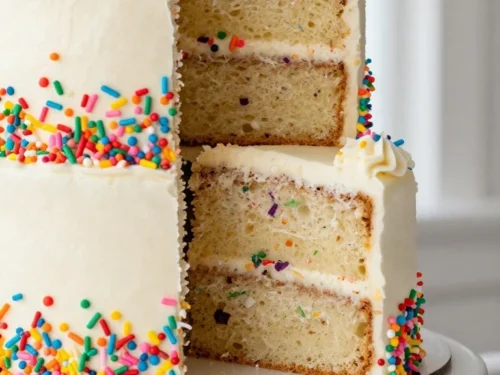
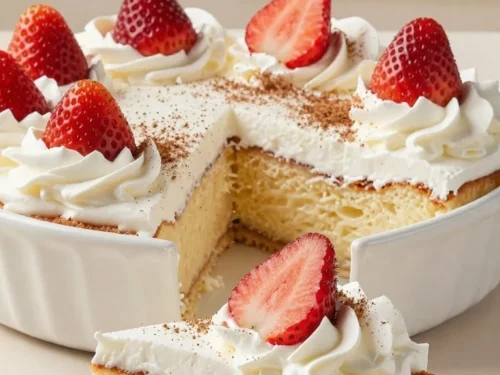
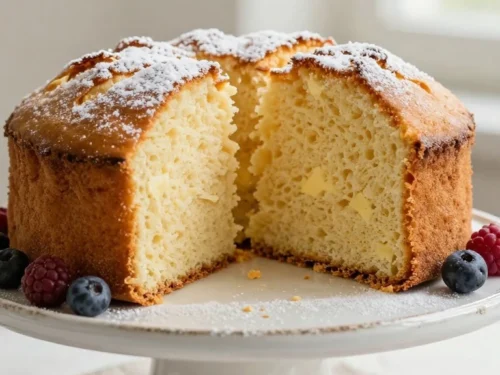
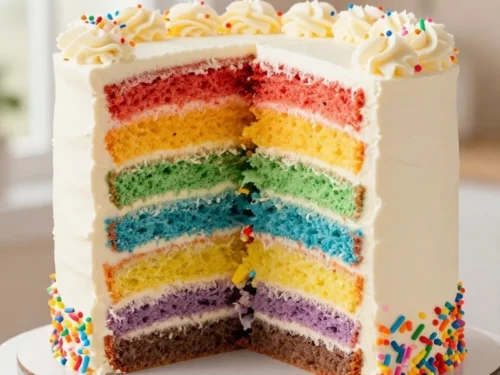
This easy vanilla cake recipe makes one tender, buttery, two-layer 8-inch cake in about an hour before frosting. The batter uses all-purpose flour, whole milk, softened butter, vanilla, and extra egg yolks for a soft crumb, while a simple vanilla buttercream provides the classic finishing touch.
Each slice is light but richly flavored, with a warm vanilla aroma, delicate golden edges, and a moist center that stays pleasant beneath frosting. It is a dependable choice for birthdays, afternoon tea, celebrations, or any time you want a homemade cake that looks special without requiring complicated techniques.
Jump to RecipeWhy You’ll Love This Recipe
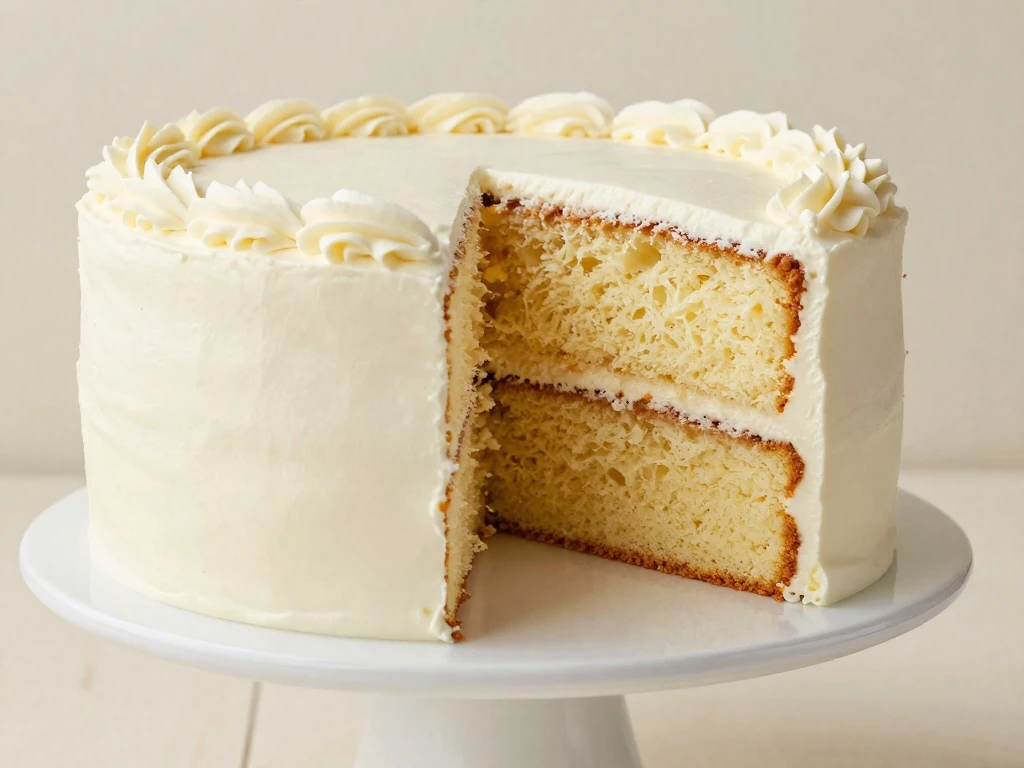
This is the kind of vanilla cake every home baker should have in their recipe collection. It is straightforward enough for a first layer cake, yet the finished result has the tender texture and polished appearance people expect from a bakery-style dessert.
The flavor is deliberately classic. Butter gives the crumb richness, whole milk keeps it soft, and a full tablespoon of pure vanilla extract makes the aroma noticeable without becoming overpowering.
Extra egg yolks add tenderness and a lovely golden color. They also help the cake feel moist and luxurious while keeping the ingredient list simple and familiar.
- Easy preparation: The batter comes together in one main bowl plus a small bowl for the wet ingredients.
- Reliable texture: The crumb is soft, light, and sturdy enough to stack and frost.
- Flexible serving: Make it for birthdays, showers, holidays, or casual weekend baking.
- Classic pairing: Vanilla buttercream lets the delicate cake flavor shine.
Ingredients You’ll Need
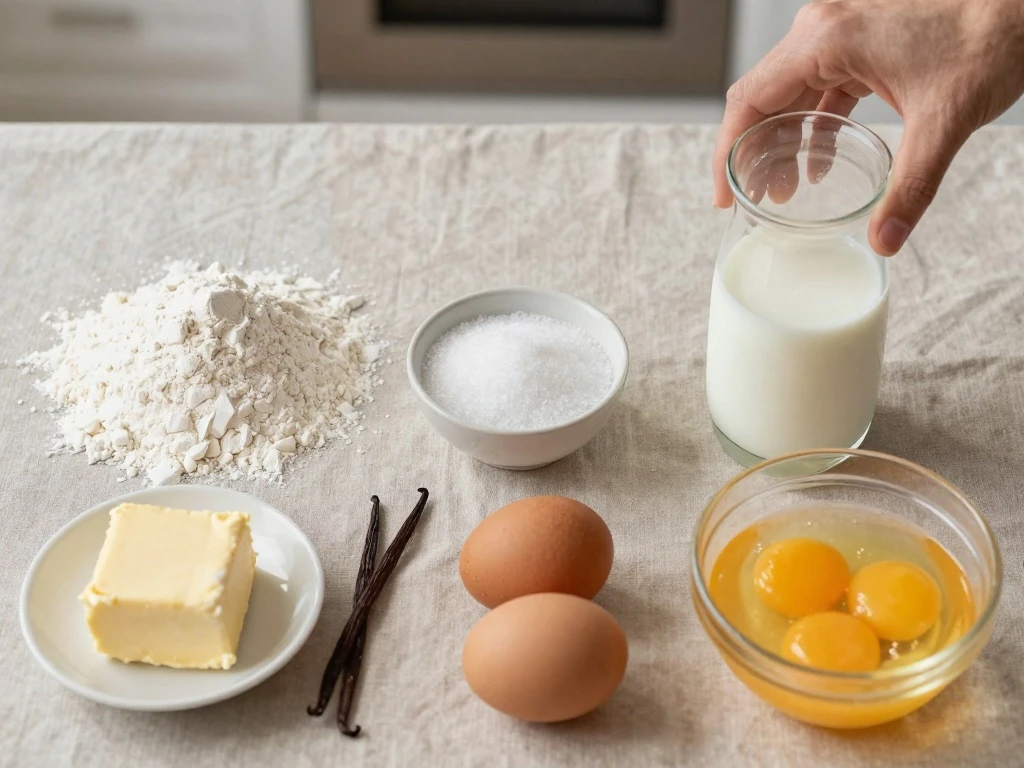
Measure 2 1/4 cups of all-purpose flour, about 270 grams, for the foundation of the cake. Weighing the flour is the most accurate option because too much flour can make the finished layers dry and heavy.
Granulated sugar provides sweetness and helps keep the crumb tender. Baking powder supplies the lift, while fine salt balances the sweetness and sharpens the vanilla flavor.
Use 1/2 cup, or about 113 grams, of unsalted butter softened to room temperature. It should feel pliable when pressed, but it should not be melted, oily, or so soft that it loses its shape.
Whole milk, two large eggs, and two large egg yolks should also be at room temperature. Matching the temperature of the ingredients helps the batter emulsify smoothly, which encourages even baking and a fine crumb.
Pure vanilla extract is the main flavoring, so choose one with a pleasant aroma. For the optional frosting, plan on softened butter, powdered sugar, vanilla, salt, and a small amount of milk or cream; the amount can be adjusted to reach a smooth, spreadable consistency.
How to Make It Step-by-Step
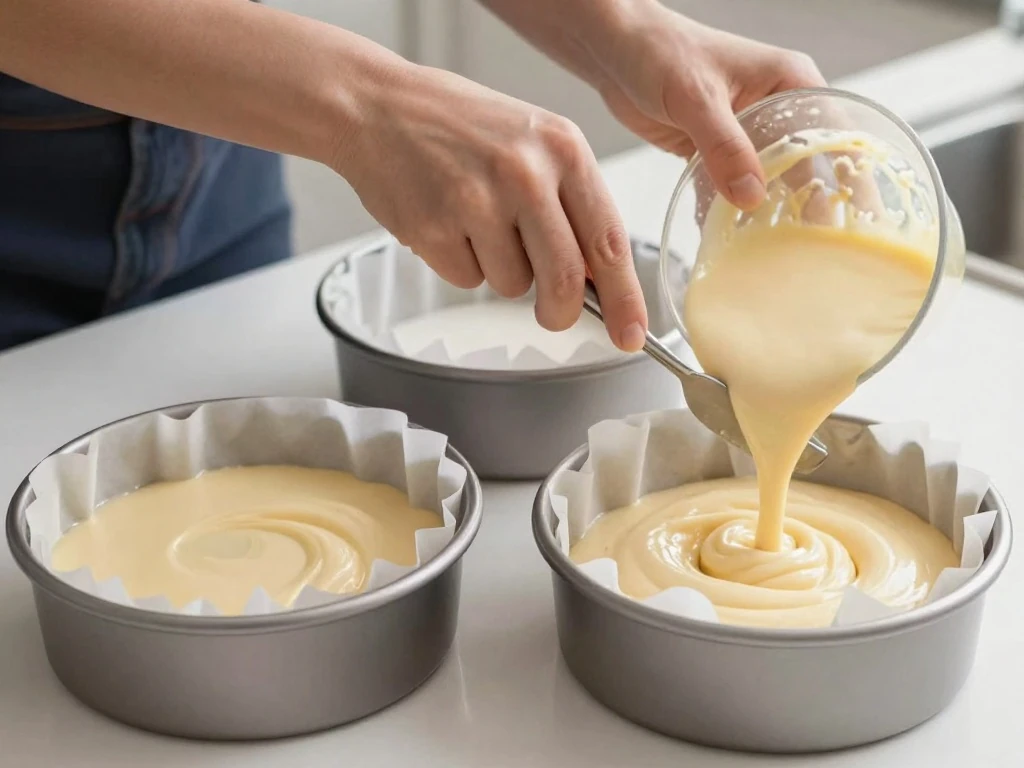
Step 1: Heat the oven to 350°F (175°C) and prepare two 8-inch round cake pans. Grease the pans thoroughly, then line their bottoms with parchment so the layers release cleanly after baking.
Step 2: In a large mixing bowl, whisk together the flour, granulated sugar, baking powder, and fine salt. Take a moment to distribute the baking powder evenly, since pockets of leavener can create uneven rising or bitter spots.
Step 3: Add the softened butter to the dry ingredients. Mix until the mixture resembles fine, moist crumbs, a texture that shows the butter has been distributed throughout the flour without creating large lumps.
Step 4: In a separate bowl, whisk the room-temperature milk, vanilla extract, eggs, and egg yolks until blended. The mixture should look uniform, with no visible streaks of egg white or yolk.
Step 5: Add the liquid mixture to the dry mixture in two or three additions. Mix just until the batter becomes smooth after each addition, scraping the bowl as needed, and stop promptly because overmixing can develop gluten and make the cake dense or chewy.
Step 6: Divide the batter evenly between the two prepared pans. Smooth the tops with a spatula so both layers bake to a similar thickness, then gently tap the pans once on the counter if you see any large air pockets.
Step 7: Bake the layers for 30-35 minutes. They are ready when the tops spring back lightly when touched and a toothpick inserted into the centers comes out clean or with a few moist crumbs.
Step 8: Let the cakes cool in their pans for about 10 minutes. Turn them onto wire racks, remove the parchment, and allow them to cool completely before frosting; warm cake can soften buttercream and make the layers slide.
Step 9: Prepare a simple vanilla buttercream by beating softened butter with powdered sugar, vanilla, and a little salt, adding a small amount of milk or cream until it reaches a smooth spreading consistency. Place one cooled layer on a serving plate, spread frosting over it, add the second layer, and cover the top and sides.
Pro Tips for a Tender Cake
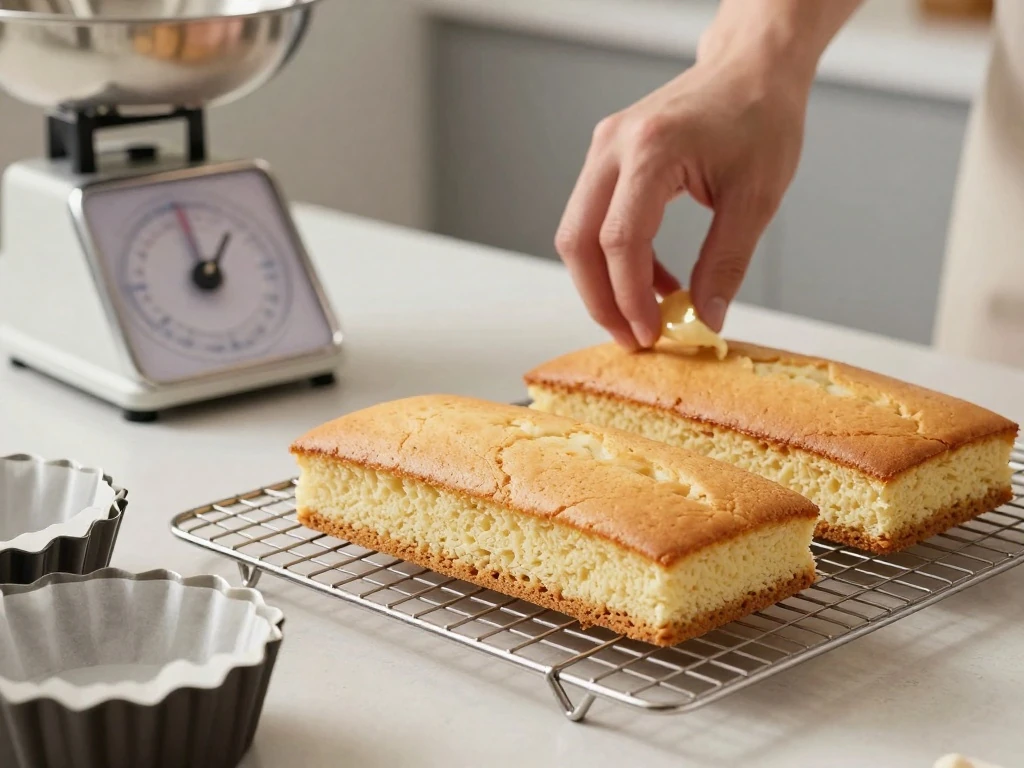
Room-temperature ingredients are one of the easiest ways to improve this cake. Cold milk or eggs can cause the softened butter to firm up into small pieces, leaving the batter less uniform and the baked crumb less even.
Do not skip the parchment on the pan bottoms. Greasing helps the cake release from the sides, while parchment provides extra insurance for the delicate base of each layer.
Mixing technique matters more than speed. Once the flour has been hydrated and no dry streaks remain, stop mixing immediately; a few tiny lumps are preferable to a tough cake caused by excessive stirring.
Keep an eye on the cake during the final minutes of baking because ovens vary. Use the spring-back test and the toothpick test together, and avoid opening the oven repeatedly before the cake has had time to set.
- Use a kitchen scale for the flour whenever possible.
- Divide batter with a scale for matching layers.
- Let the layers cool fully before trimming or frosting.
- Apply a thin crumb coat first if you want especially clean buttercream sides.
- Chill the assembled cake briefly if the frosting becomes difficult to smooth.
Frosting, Storage & Serving
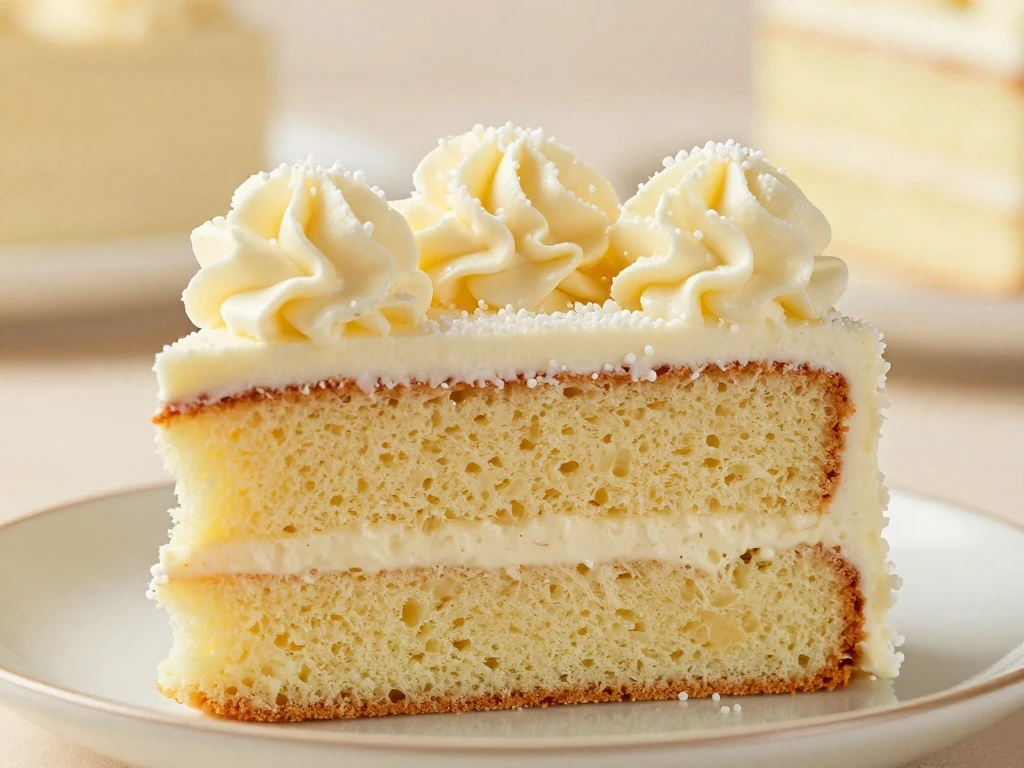
Vanilla buttercream is the standard companion for this cake because it reinforces the vanilla flavor and provides a creamy contrast to the tender crumb. Spread a modest layer between the cakes, then frost the outside with a thin or generous finish according to your preference.
For a neat presentation, place the first layer flat-side up, add an even layer of buttercream, and position the second layer flat-side down. A small offset spatula makes it easier to level the filling and create smooth sides without pressing too firmly on the cake.
Decorate the top with simple buttercream swirls, white sprinkles, shaved white chocolate, or a light dusting of powdered sugar. Keep the decoration restrained so the soft vanilla flavor remains the focus.
Store the frosted cake covered at room temperature if it will be served the same day and the room is cool. If you refrigerate it, let slices sit at room temperature briefly before serving so the buttercream softens and the crumb tastes tender rather than chilled.
The unfrosted layers can be wrapped once completely cool and held until assembly. Always cool the cake fully before wrapping or frosting, since trapped warmth can create condensation and affect the texture.
Common Questions About Vanilla Cake
Can I use milk straight from the refrigerator? Room-temperature milk is strongly recommended because it blends more easily with the softened butter and eggs. Set it out before beginning so the batter stays smooth and emulsifies properly.
Why did my cake turn out dry? Excess flour is a common cause, which is why weighing the 270 grams is helpful. Overbaking can also dry the layers, so begin checking around the stated 30-minute mark and remove them when the toothpick shows clean or moist crumbs.
Can I frost the cake while it is warm? No. Even slightly warm layers can melt or soften buttercream, causing it to slide between the layers and lose its shape.
How many people does this cake serve? One 8-inch, two-layer cake generally serves about 8-12 people, depending on how generously each slice is cut. Narrow celebration slices are ideal when the cake is accompanied by fruit, ice cream, or other desserts.
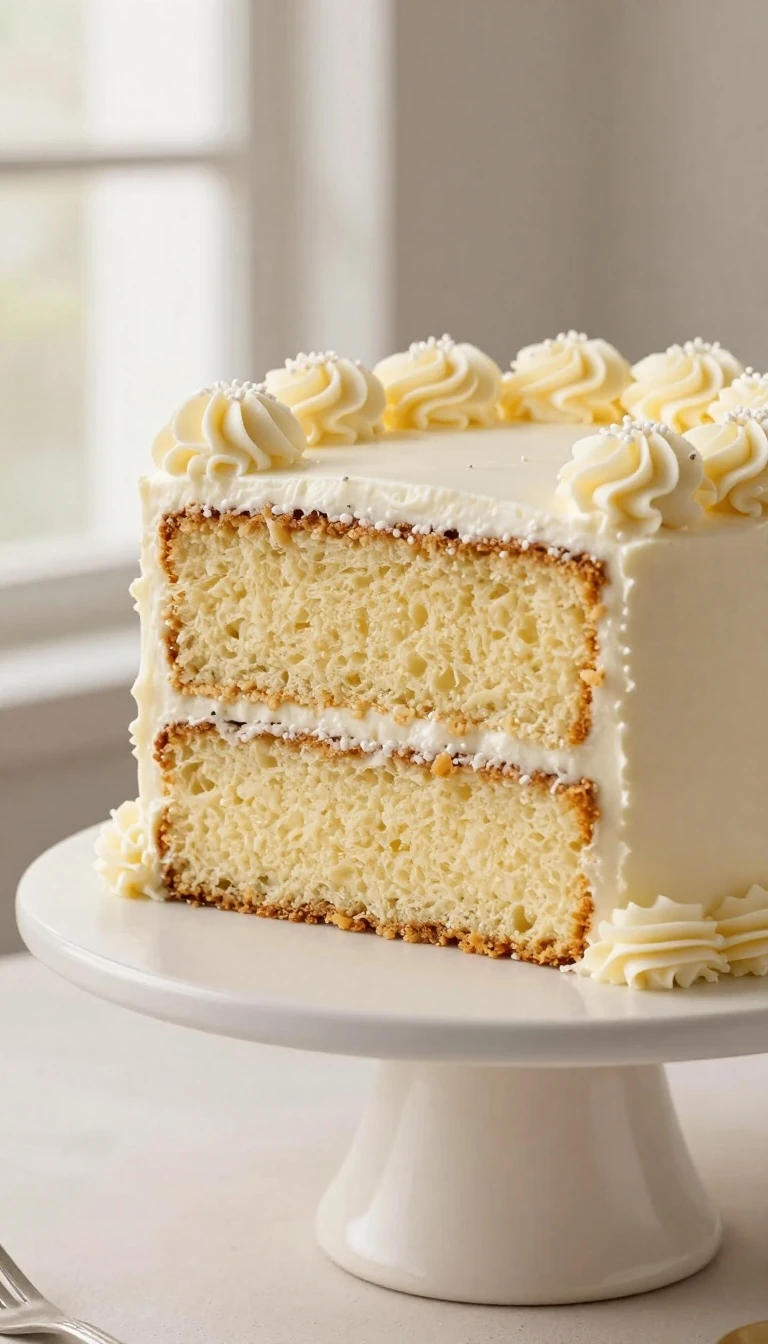
Best Vanilla Cake Recipe
Ingredients
Method
- Heat the oven to 350°F (175°C). Grease two 8-inch round cake pans and line the bottoms with parchment paper.
- Whisk the flour, granulated sugar, baking powder, and salt together in a large bowl until evenly combined.
- Add the softened butter and mix until the dry ingredients resemble fine, moist crumbs.
- In a separate bowl, whisk together the room-temperature milk, vanilla, eggs, and egg yolks.
- Add the liquid mixture to the dry mixture in two or three additions, mixing just until the batter is smooth. Do not overmix.
- Divide the batter evenly between the prepared pans and smooth the tops.
- Bake for 30-35 minutes, until the tops spring back lightly and a toothpick inserted in the centers comes out clean or with a few moist crumbs.
- Cool the cakes in their pans for about 10 minutes. Turn them onto racks, remove the parchment, and cool completely before frosting and assembling.
Notes
Final Thoughts
This best vanilla cake recipe proves that a memorable dessert does not need a long ingredient list or a complicated method. With room-temperature ingredients, careful flour measuring, gentle mixing, and complete cooling, you can create two beautiful layers with a soft, buttery crumb and clear vanilla flavor.
Finish it with classic vanilla buttercream, add a simple decoration, and let the cake stand at room temperature long enough for the frosting to become creamy. Once you cut into the tender layers, this easy recipe is likely to become the vanilla cake you reach for again and again.