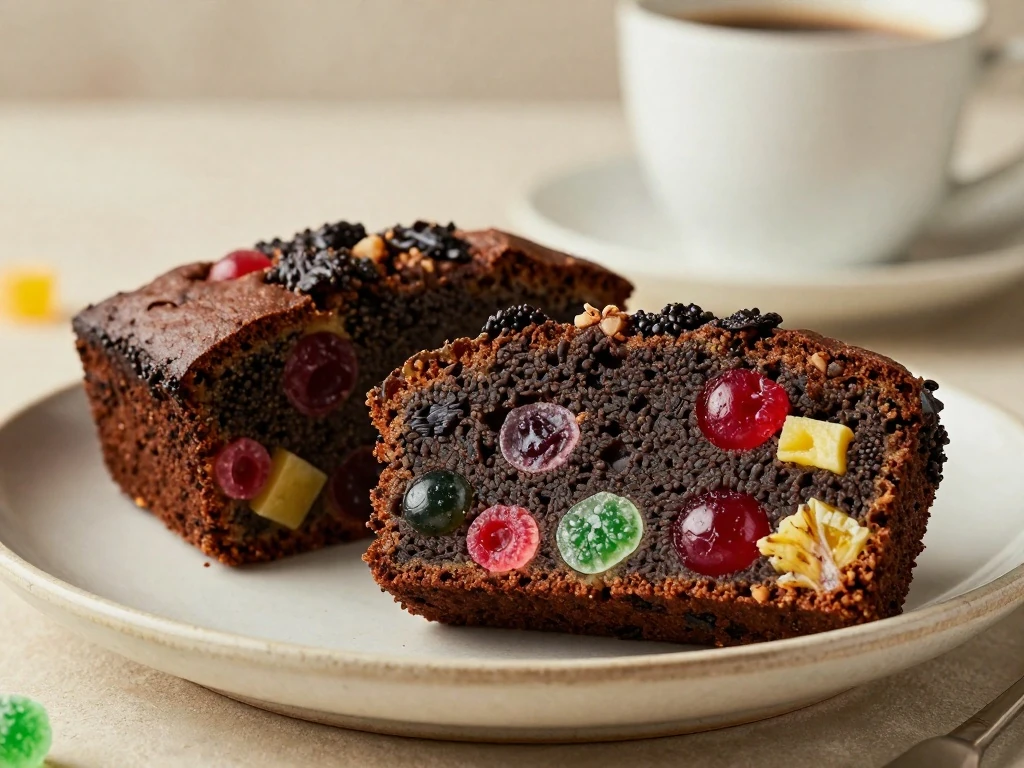
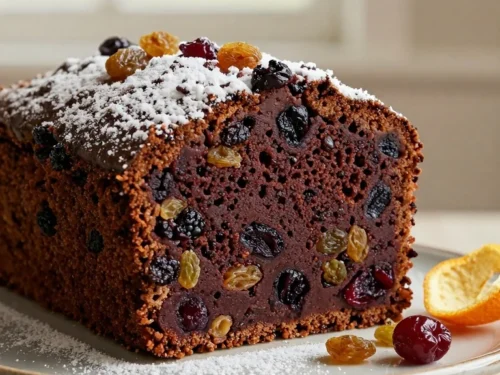
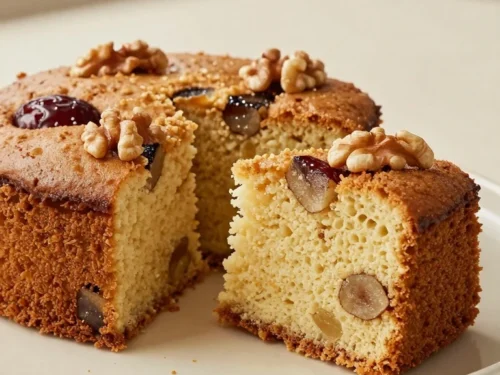
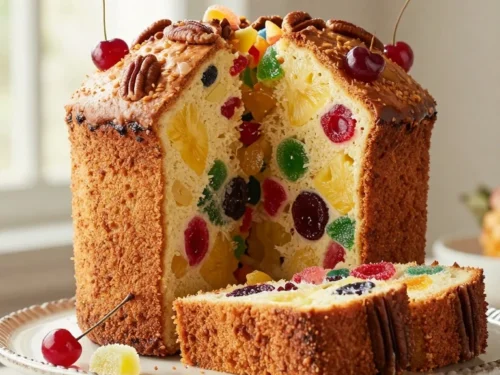
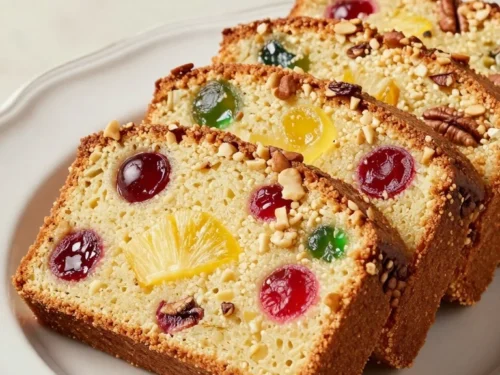
This old fashioned fruit cake recipe makes two moist, richly spiced 9 x 5-inch loaf cakes packed with candied cherries, pineapple, raisins, currants or dates, and pecans or walnuts. The fruit is soaked in brandy, dark rum, or orange juice before being folded into a buttery molasses cake batter, then baked slowly at 300°F (150°C) for about 2 to 2 1/2 hours.
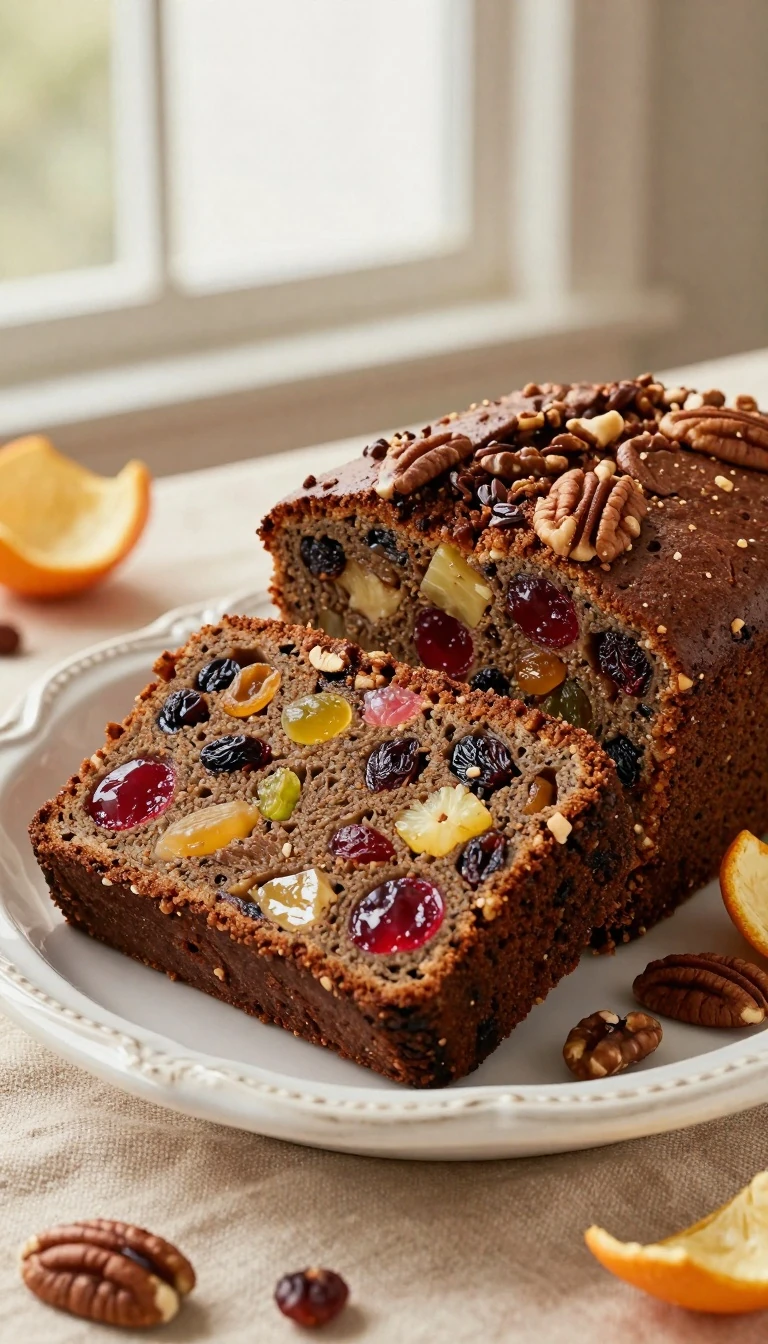
Each slice has a tender, dense crumb with deep brown-sugar flavor, gentle cinnamon and nutmeg warmth, chewy fruit, and crunchy nuts. For the most traditional result, wrap the cooled cakes and let them rest for 3 to 7 days so the flavors become rounder and the texture grows even moister.
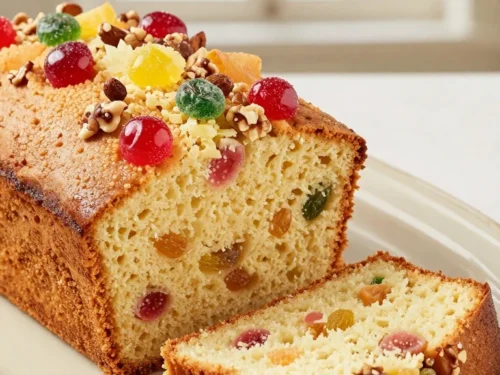
This is the kind of fruit cake that rewards patience. Instead of relying on a thin layer of fruit scattered through a plain sponge, the batter surrounds a generous mixture of candied fruit, dried fruit, and nuts in every slice.
Molasses and brown sugar give the cake its characteristic dark color and rich caramel depth. The spices stay pleasantly gentle, adding holiday warmth without overpowering the fruit or making the cake taste sharp.
The slow bake is especially important because fruit cake is dense and moist. A lower oven temperature gives the center time to cook before the fruit on the edges becomes too dark.
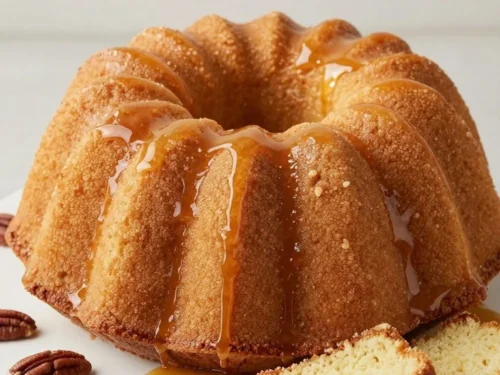
If you enjoy traditional buttery cakes, you may also like this classic old-fashioned pound cake for another heritage-style dessert.
Ingredients You’ll Need
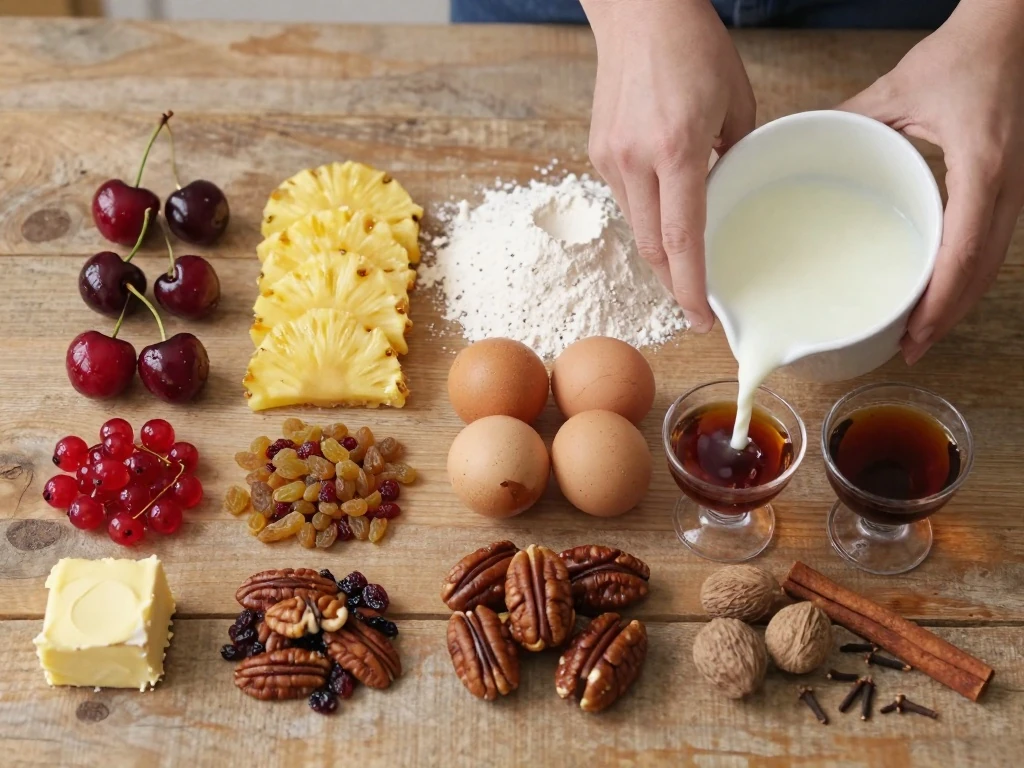
The fruit mixture is flexible within the quantities provided. Mixed candied fruit, cherries, pineapple, raisins, currants, and dates create a colorful combination of chewy textures and bright sweetness, while pecans or walnuts contribute a satisfying crunch.
Fruit: Use 1 pound of mixed candied fruit or fruitcake mix, plus 1 cup each of candied cherries, candied pineapple, raisins, and currants or chopped dates.
Nuts: Choose 1 1/2 cups of chopped pecans or walnuts. Chop them small enough to distribute through the batter, but not so finely that they disappear.
Soaking liquid: Brandy and dark rum offer traditional depth, while orange juice provides bright citrus flavor without alcohol.
Rich batter: Butter, brown sugar, granulated sugar, eggs, molasses, flour, and milk create a sturdy but tender cake.
Spices: Cinnamon, nutmeg, and cloves bring the familiar old-fashioned holiday aroma.
Bring the butter and eggs to room temperature before mixing. Soft butter creams more evenly, and room-temperature eggs blend into the batter without making the mixture look curdled.
Step 1: Start by combining all of the candied fruit, dried fruit, and chopped nuts in a large bowl. Pour the brandy, rum, or orange juice over everything, cover the bowl, and refrigerate or leave it in a cool place overnight so the fruit can absorb the liquid.
Step 2: When an overnight soak is not possible, warm the liquid before pouring it over the fruit. Let the mixture stand for 30 to 60 minutes; this shorter method still softens the fruit and adds moisture.
Step 3: Heat the oven to 300°F (150°C), then grease two 9 x 5-inch loaf pans. Line the bottoms and long sides with parchment, and add a second layer of parchment or brown paper when you want extra protection during the long bake.
Step 4: Whisk the flour, baking powder, baking soda, salt, cinnamon, nutmeg, and cloves in a separate bowl. Combining the leavening agents and spices first helps distribute them evenly through the heavy batter.
Step 5: Beat the softened butter, brown sugar, and granulated sugar until the mixture is visibly lighter and fluffy. Add the eggs one at a time, beating after each addition, then mix in the molasses or dark corn syrup.
Step 6: Add the dry ingredients in alternating additions with the milk or additional brandy. Mix only until no large streaks of flour remain, since excessive mixing can make the cake heavier than necessary.
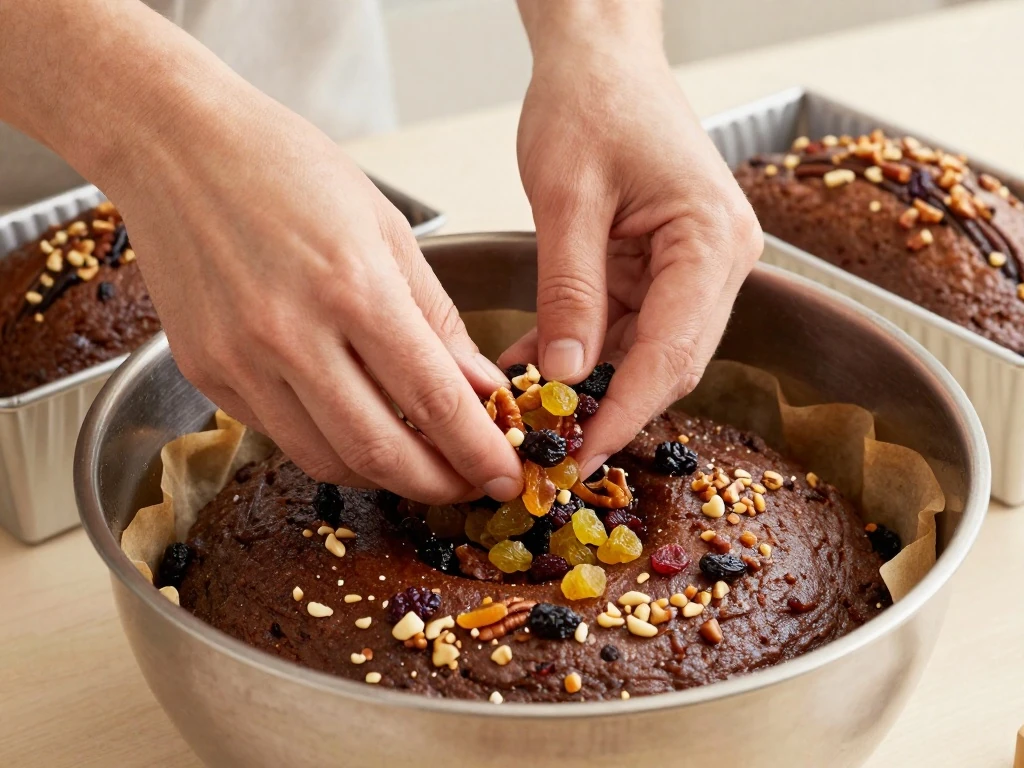
Step 7: Fold the soaked fruit and nuts into the batter using a broad spatula. If the fruit has absorbed every drop of liquid, toss it with a tablespoon or two of flour first so the pieces are less likely to settle at the bottom.
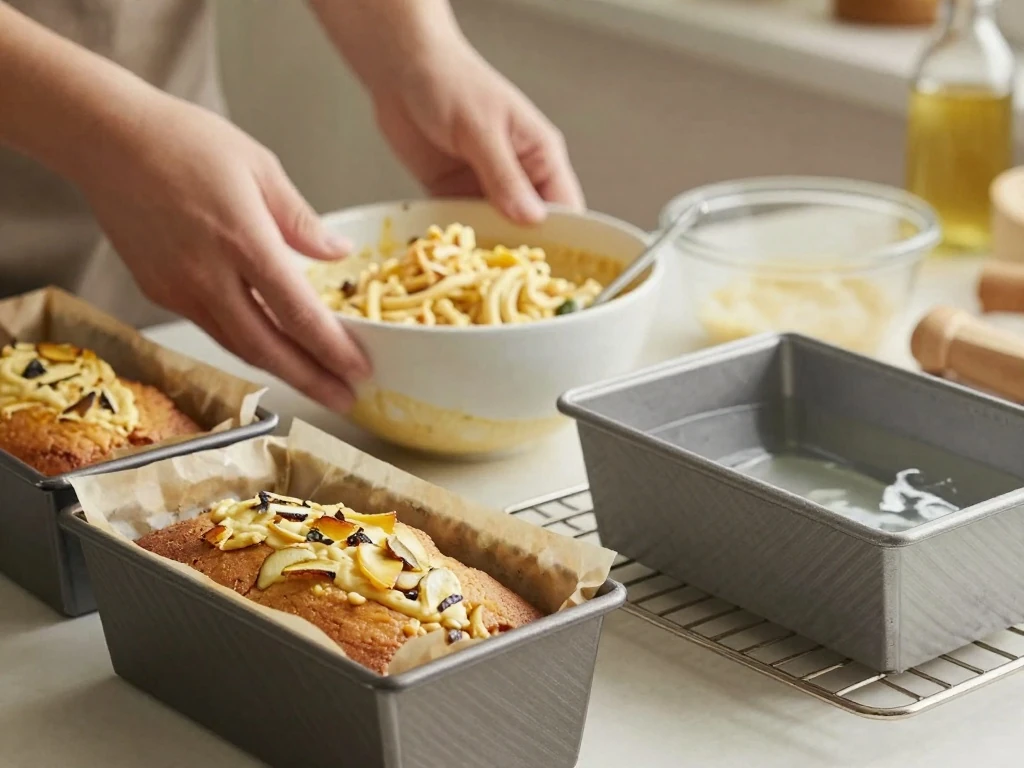
Step 8: Divide the batter evenly between the pans and smooth the tops. Bake for about 2 to 2 1/2 hours, rotating the pans halfway through so both cakes bake evenly.
Step 9: Test the cakes with a skewer in the center. It should emerge with only a few moist crumbs, or the center should reach approximately 195–205°F (90–96°C); a completely wet skewer means the cake needs more time.
Step 10: Let the cakes cool in their pans for 20 to 30 minutes before lifting them onto a rack. Cool them completely for at least 1 hour, then brush with 2 to 4 tablespoons of brandy, rum, or orange juice if desired.
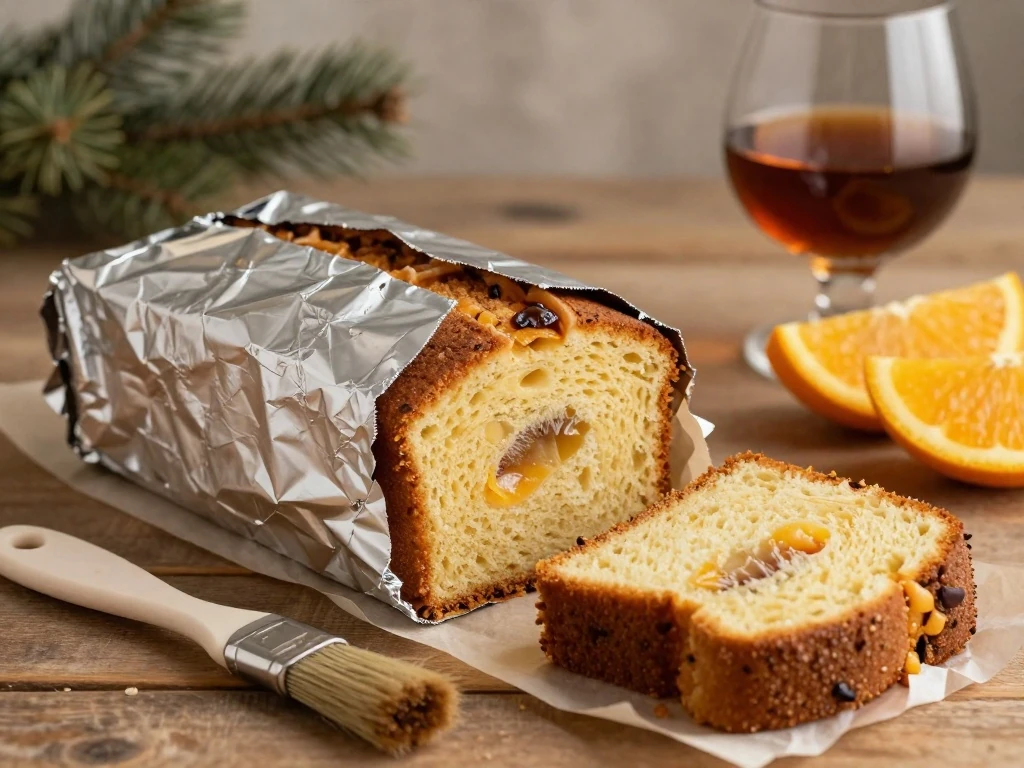
Step 11: Wrap the cakes tightly in parchment and foil. Serve immediately if you cannot wait, but resting the wrapped cakes for 3 to 7 days gives the fruit, spices, and syrupy crumb time to develop a more rounded flavor.
Pro Tips for a Moist Fruit Cake
Line the pans thoroughly, especially the long sides and bottom. Fruit cake spends a long time in the oven, and parchment helps prevent the edges from becoming too dark before the center is finished.
If your oven runs hot or your previous fruit cakes have dried out, place a shallow pan of water on the lower oven rack. The added moisture helps moderate the oven heat during the long baking time.
Do not rush the creaming step: Light, fluffy butter and sugar help create a more delicate crumb.
Use the skewer and temperature together: The skewer should show only a few moist crumbs, while the center should reach approximately 195–205°F.
Protect the top: Loosely cover the cake with parchment or foil if the surface browns too quickly.
Cool before brushing: Liquor or juice is easier to control when the cake has set and is no longer hot.
Slice with a serrated knife: Gentle sawing helps keep the fruit and nuts in the cake instead of pulling them out.
Do not worry if the batter looks unusually crowded with fruit. That generous mixture is the defining quality of this dessert, and a sturdy spatula is better than an electric mixer for the final folding.
Storage, Maturing, and Serving
Once completely cool, wrap each cake in parchment and then foil. Keep the wrapped cakes in a cool place for several days or weeks, brushing them lightly with brandy or rum every 1 to 2 weeks if you want a traditional matured fruit cake.
A resting period of at least 3 to 7 days is recommended even when you do not plan to mature the cakes for several weeks. The crumb becomes moister, the fruit tastes less separate from the batter, and the spices become more balanced.
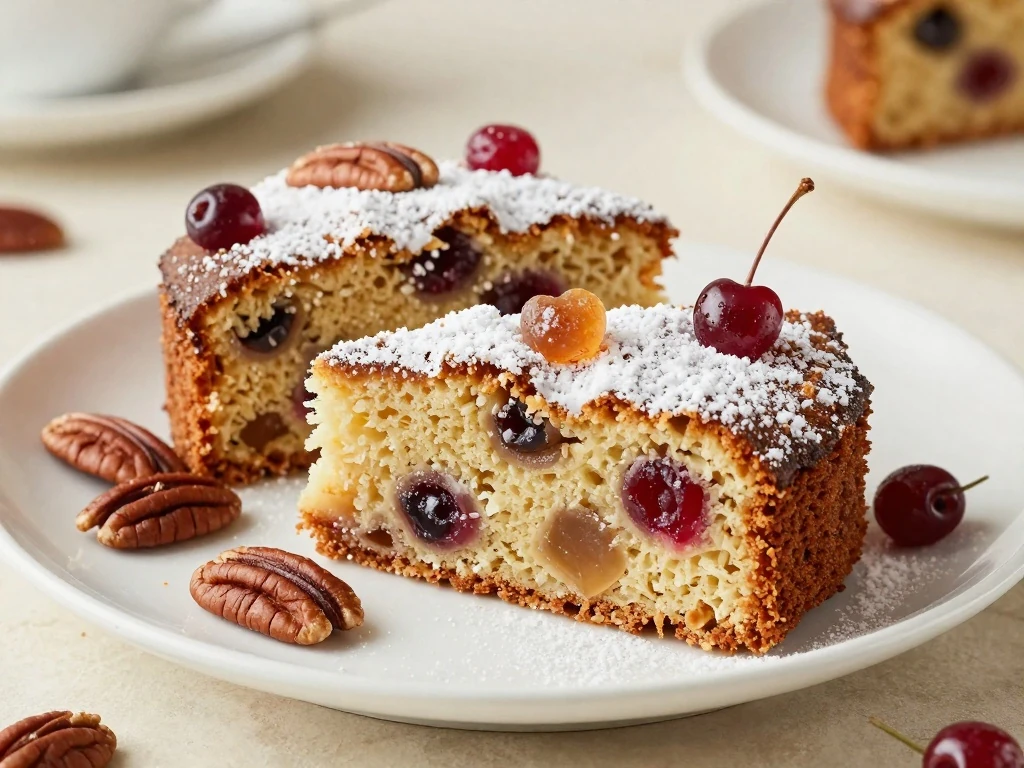
For serving, cut thin or medium slices and offer them at room temperature with coffee, black tea, or a small glass of brandy. A little softened butter, sharp cheddar, or lightly sweetened whipped cream can also complement the dark fruit and molasses flavor.
If you need a less involved version for a busy holiday schedule, try this easy fruit cake recipe as a quicker alternative.
Common Questions
Can I use orange juice instead of alcohol? Yes. Orange juice works for both the soaking liquid and the optional finishing brush, giving the cake a fresh citrus note while keeping it alcohol-free.
Can I bake one large cake? Yes, the recipe can be baked as one large tube cake. The exact baking time may vary with the pan depth, so rely on the moist-crumb skewer test and the approximate center temperature rather than the clock alone.
Why did the fruit sink? Very wet fruit can settle in a dense batter. If the soaked fruit has absorbed all the liquid, add a tablespoon or two of flour to the fruit before folding it into the batter, and distribute it gently but thoroughly.
Why is low-temperature baking necessary? The cake contains a large amount of fruit and nuts, which can brown quickly. Baking at 300°F gives the dense middle time to cook while reducing the risk of burned edges.
Old Fashioned Fruit Cake
A traditional dark fruit cake made with brandy-soaked candied fruit, raisins, nuts, molasses, brown sugar, and warm spices. This recipe makes two standard loaf cakes or one large tube cake.
1pound (450 g)Mixed candied fruit or fruitcake mix
1cup (150 g)Candied cherries, halved
1cup (150 g)Candied pineapple, chopped
1cup (150 g)Raisins
1cup (150 g)Currants or chopped dates
1 1/2cups (170 g)Pecans or walnuts, chopped
1/2cup (120 ml)Brandy, dark rum, or orange juice for soaking
Cake Batter
1cup (225 g)Unsalted butter, softened
1cup (200 g)Packed light or dark brown sugar
1/2cup (100 g)Granulated sugar
4largeLarge eggs, room temperature
1/2cup (120 ml)Molasses or dark corn syrup
3cups (375 g)All-purpose flour
1teaspoonBaking powder
1/2teaspoonBaking soda
1/2teaspoonSalt
1teaspoonGround cinnamon
1/2teaspoonGround nutmeg
1/4teaspoonGround cloves
1/2cup (120 ml)Milk or additional brandy
Finishing
2-4tablespoons, optionalBrandy, rum, or orange juice for brushing
Method
Step-by-Step
Combine the mixed candied fruit, cherries, pineapple, raisins, currants or dates, and chopped nuts in a large bowl. Pour over 1/2 cup brandy, dark rum, or orange juice, cover, and soak overnight when possible.
If you are short on time, warm the soaking liquid and pour it over the fruit mixture. Let it stand for 30 to 60 minutes before continuing.
Heat the oven to 300°F (150°C). Grease two 9 x 5-inch loaf pans and line the bottoms and long sides with parchment, adding another layer of parchment or brown paper if desired.
Whisk the flour, baking powder, baking soda, salt, cinnamon, nutmeg, and cloves together in a medium bowl. Set the dry mixture aside.
Cream the softened butter with both sugars until light and fluffy. Beat in the eggs one at a time, then mix in the molasses or dark corn syrup.
Add the dry ingredients alternately with the milk or additional brandy, mixing only until the batter is combined. Avoid overmixing so the finished cake remains tender.
Fold the soaked fruit and nuts into the batter with a sturdy spatula. If the fruit absorbed all of the soaking liquid, toss it with a tablespoon or two of flour before folding it in to help reduce sinking.
Divide the batter between the prepared loaf pans and smooth the tops. Bake for approximately 2 to 2 1/2 hours, rotating the pans halfway through the baking time.
Check for doneness with a skewer; it should come out with only a few moist crumbs, or the center should register approximately 195–205°F (90–96°C). If the tops darken too quickly, loosely cover them with parchment or foil.
Cool the cakes in their pans for 20 to 30 minutes, then lift them out using the parchment and place them on a rack. Cool completely for at least 1 hour before brushing with optional brandy, rum, or orange juice.
Wrap each cooled cake tightly in parchment and foil. Store in a cool place for 3 to 7 days before serving, or mature it for several weeks while brushing lightly with liquor every 1 to 2 weeks.
Notes
Use brandy or dark rum for a traditional mature fruit cake, or orange juice for a family-friendly alcohol-free version. Keep the cakes thoroughly wrapped, and allow them to rest at least 3 to 7 days for a moister texture and fuller flavor.
Final Thoughts
This old fashioned fruit cake recipe is made for slow baking, careful wrapping, and generous slices. The combination of soaked fruit, crunchy nuts, butter, molasses, and warm spices creates a classic dessert with a dense but tender texture and a flavor that improves after resting.
Plan ahead when you can, soak the fruit overnight, line the pans well, and give the finished cakes several days to mature. Whether served at a holiday table or wrapped for gifting, these fruit cakes bring the comforting character of a treasured family recipe.