This easy Korean rice cake recipe makes saucy, chewy tteokbokki in about 40 minutes. Simmer Korean cylinder-shaped rice cakes in a savory, spicy-sweet sauce made with gochujang, soy sauce, rice syrup, garlic, and anchovy or vegetable broth, then finish with green onions and sesame seeds.
The finished dish has a wonderfully springy texture and a rich sauce that clings to every rice cake. It is warm, comforting, budget-friendly, and easy to adjust for spice, making it a delicious weeknight meal, snack, or shareable Korean-inspired side dish.
Jump to RecipeWhy You’ll Love This Recipe
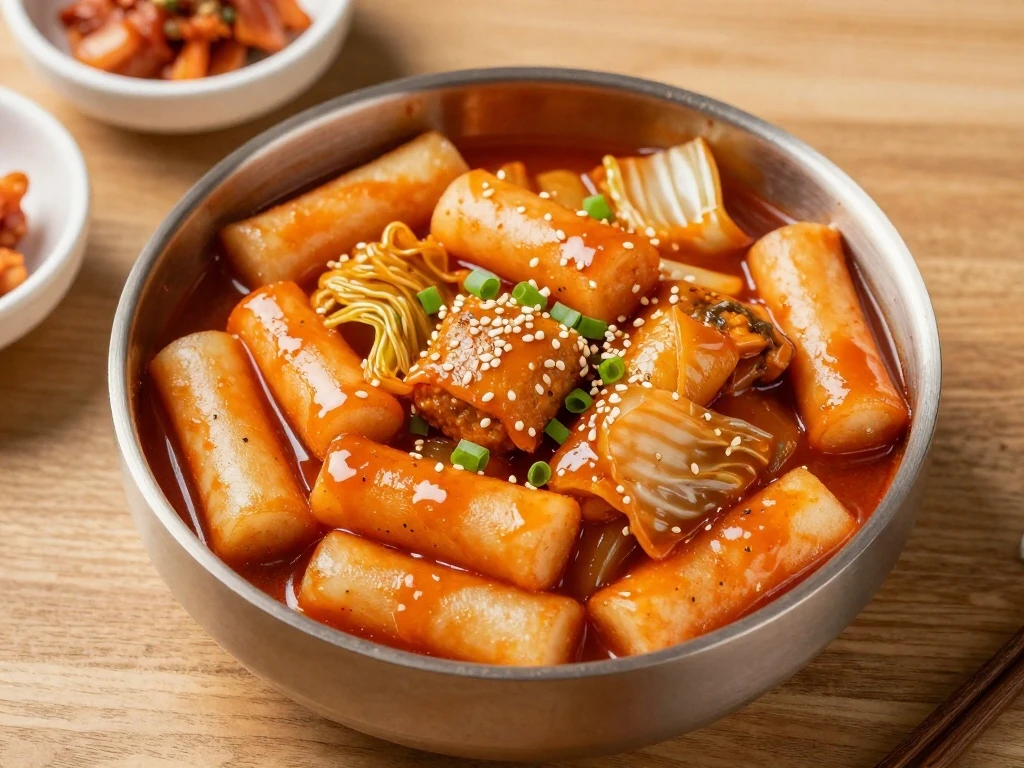
This Korean rice cake recipe is one of the easiest ways to make tteokbokki at home. The sauce comes together in one bowl, the rice cakes cook in a single skillet, and the entire dish is ready without complicated techniques.
Tteokbokki is loved for its contrast of textures and flavors. The rice cakes are soft, chewy, and pleasantly springy, while the sauce is savory, sweet, garlicky, and spicy with a deep fermented flavor from gochujang.
The recipe is also flexible enough for nearly any kitchen. You can use fresh, refrigerated, or frozen Korean rice cakes, choose fish cakes or vegetables, and adjust the chili level to suit children or spice-loving diners.
- Fast: Dinner is ready in roughly 40 minutes.
- One-pan friendly: The rice cakes and sauce cook together.
- Customizable: Add eggs, ramen, cabbage, mushrooms, or cheese.
- Comforting: The thick sauce makes every bite warm and satisfying.
Ingredients You’ll Need
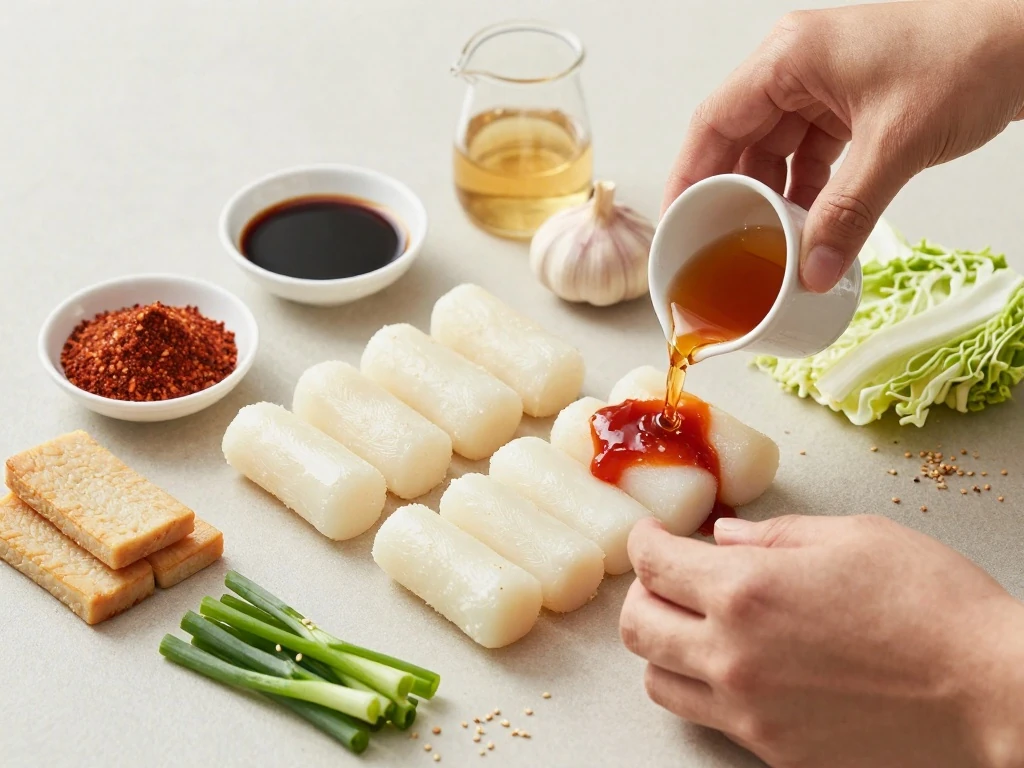
The most important ingredient is Korean garaetteok, which are short, thick rice cakes shaped like cylinders. Look for them in the refrigerated or frozen section of an Asian grocery store, usually labeled rice cake sticks, tteok, or garaetteok.
Gochujang supplies the fermented chili flavor and a smooth, savory base. Gochugaru adds a cleaner pepper aroma and extra heat, but you can reduce it or leave it out if you prefer a milder sauce.
Rice syrup gives the sauce its characteristic shine and gentle sweetness. Corn syrup works well as a substitute, while honey can be used in a smaller amount because its flavor is stronger.
Traditional tteokbokki often uses anchovy broth, but low-sodium vegetable broth is a convenient alternative. Fish cake adds a tender, savory bite, although sliced mushrooms, tofu puffs, or extra cabbage make excellent meat-free additions.
- Use low-sodium soy sauce so you can control the final salt level.
- Choose rice cakes that smell fresh and have no dry cracks.
- Keep green onions and sesame seeds ready for a fresh finish.
How to Make It Step-by-Step
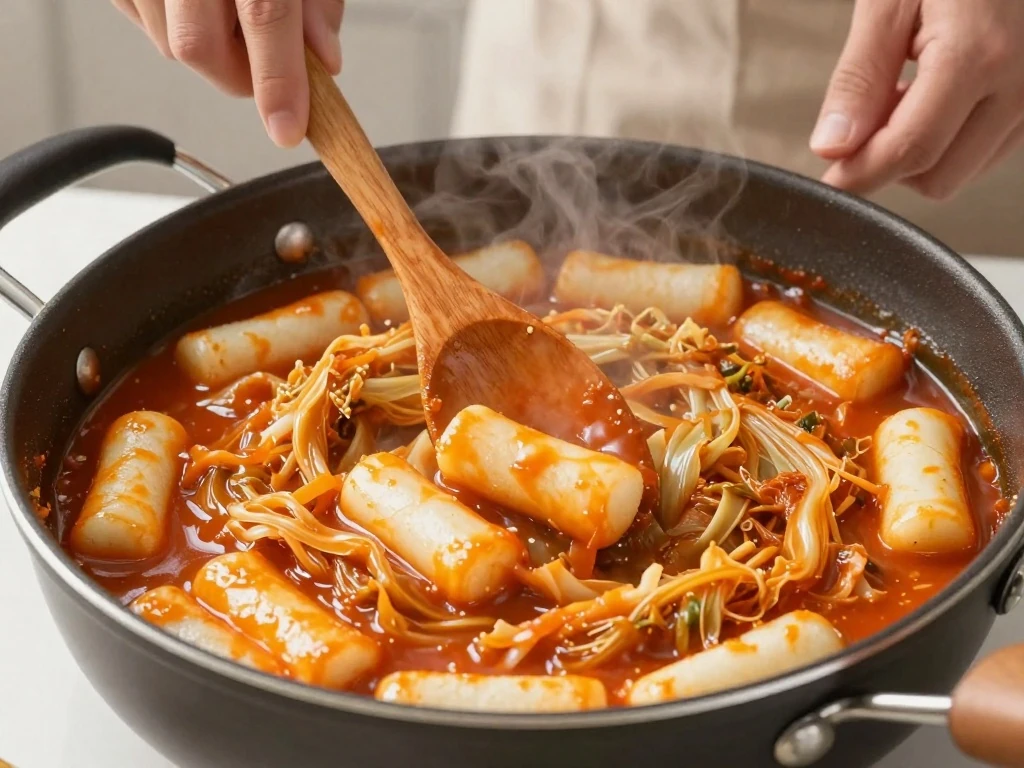
Step 1: Prepare the rice cakes by soaking refrigerated or frozen pieces in warm water for 10 to 15 minutes. Drain them well before cooking, especially if they are frozen, because excess water can thin the sauce.
Step 2: Mix the gochujang, gochugaru, soy sauce, rice syrup, sugar, and garlic in a small bowl. This quick sauce mixture prevents uneven pockets of paste and makes it easier to season the broth from the start.
Step 3: Add the broth to a wide skillet or shallow pot and bring it to a gentle boil. Stir in the sauce mixture, scraping the bottom lightly with a wooden spoon until the red pepper paste dissolves.
Step 4: Add the rice cakes and chopped cabbage to the simmering sauce. Stir gently to separate the rice cakes, then cook uncovered for 8 to 10 minutes so they begin absorbing the seasoned broth.
Step 5: Add the sliced fish cakes and continue cooking for 8 to 12 minutes. Stir from time to time, using a gentle folding motion rather than vigorous scraping so the rice cakes keep their shape.
Step 6: Watch the consistency as the sauce reduces. It should become thick, glossy, and spoon-coating, but it should still flow slowly around the rice cakes instead of becoming dry or pasty.
Step 7: Taste the dish before serving and make small adjustments. Add broth if the sauce is too thick, sugar if it needs balance, or a little gochujang if you want deeper chili flavor.
Step 8: Turn off the heat and fold in the green onions. Rest the tteokbokki for 2 minutes, then garnish it with sesame seeds and serve while hot.
Pro Tips for Chewy Rice Cakes
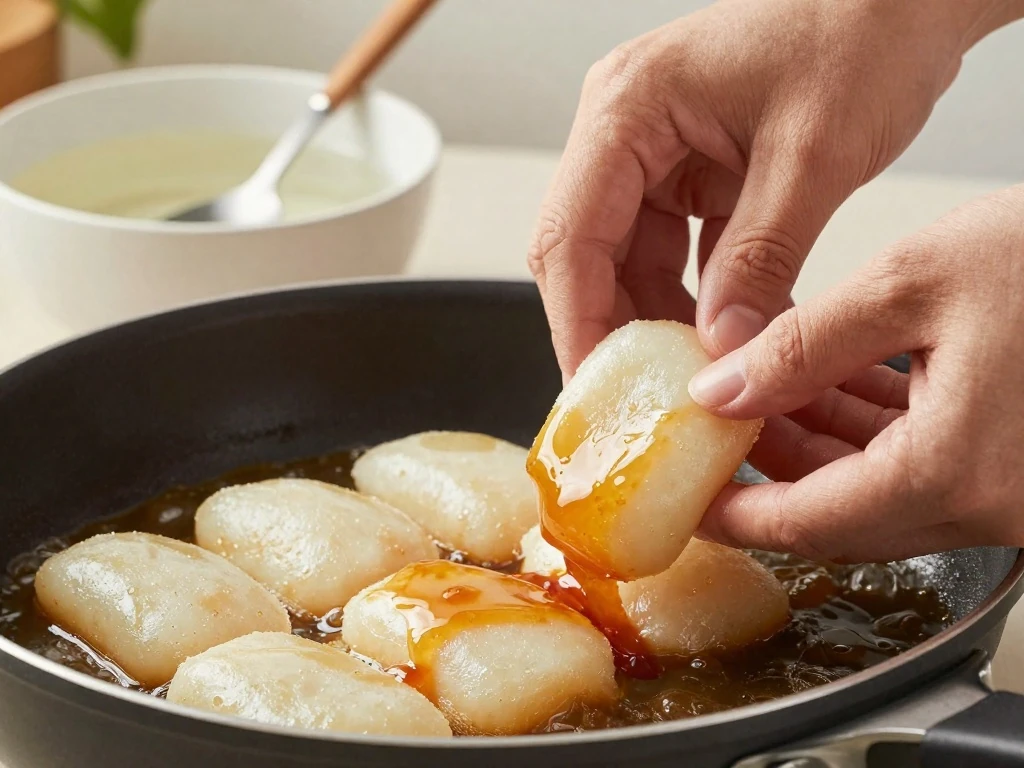
Do not skip soaking frozen rice cakes. A short soak removes surface ice and gives the center time to warm gradually, which helps the pieces cook tenderly without becoming hard in the middle.
Use a wide pan instead of a narrow saucepan when possible. More surface area allows the liquid to reduce evenly, and it gives you enough room to stir without crushing the rice cakes together.
Keep the heat at medium or medium-low once the sauce begins to simmer. A hard boil can make the outside of the rice cakes too soft before the sauce reaches the right thickness.
If your rice cakes are especially thick, add a few extra minutes of cooking time. The best test is to bite into one piece; it should be tender all the way through while still offering a pleasant chew.
For a balanced sauce, taste after the rice cakes have cooked because they absorb seasoning as they soften. A sauce that seems strong at the beginning may taste just right after reduction and absorption.
Easy Variations and Add-Ins
Boiled eggs are a classic addition and make this dish more filling. Add peeled eggs during the final 5 minutes of simmering so they warm through and pick up some of the red sauce.
For a quick rabokki, add one packet of instant ramen noodles during the last 3 to 4 minutes. You may need another half cup of broth because the noodles absorb liquid quickly.
Cheese tteokbokki is rich and satisfying. Sprinkle shredded mozzarella over the finished rice cakes, cover the pan for 1 to 2 minutes, and let the cheese melt into a soft topping.
Vegetables bring color and freshness to the dish. Try napa cabbage, carrots, mushrooms, zucchini, or thinly sliced onions, adding firm vegetables early and delicate vegetables near the end.
To make the recipe less spicy, reduce the gochugaru first and replace one tablespoon of gochujang with extra broth. For more heat, add a small amount of finely chopped fresh chili near the end of cooking.
Serving Suggestions
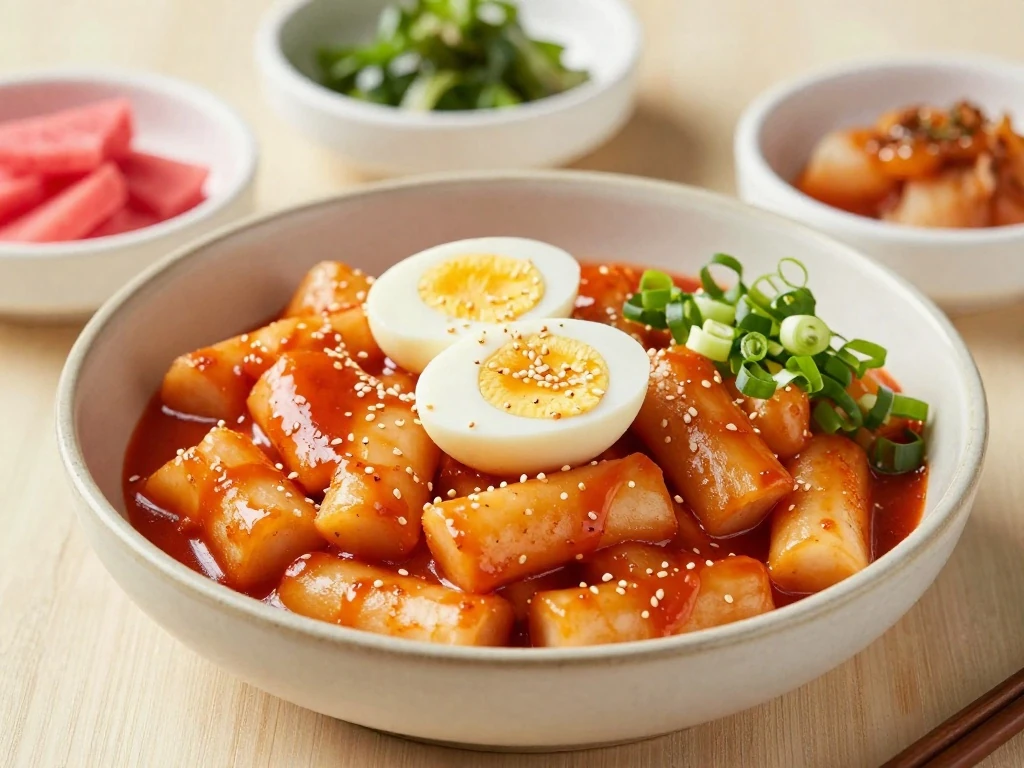
Serve tteokbokki in shallow bowls so the sauce is easy to scoop with each bite. It is delicious with metal chopsticks, a spoon for extra sauce, or toothpicks for a casual snack-style presentation.
A simple side of steamed rice can soften the heat and turn the dish into a larger meal. Korean-style cucumber salad, pickled radish, or lightly dressed greens also provide a crisp contrast to the tender rice cakes.
For a party, keep the cooked rice cakes warm in a wide pan and offer extra green onions, sesame seeds, boiled eggs, and shredded cheese. Add a little broth if the sauce thickens too much while standing.
Storage and Reheating
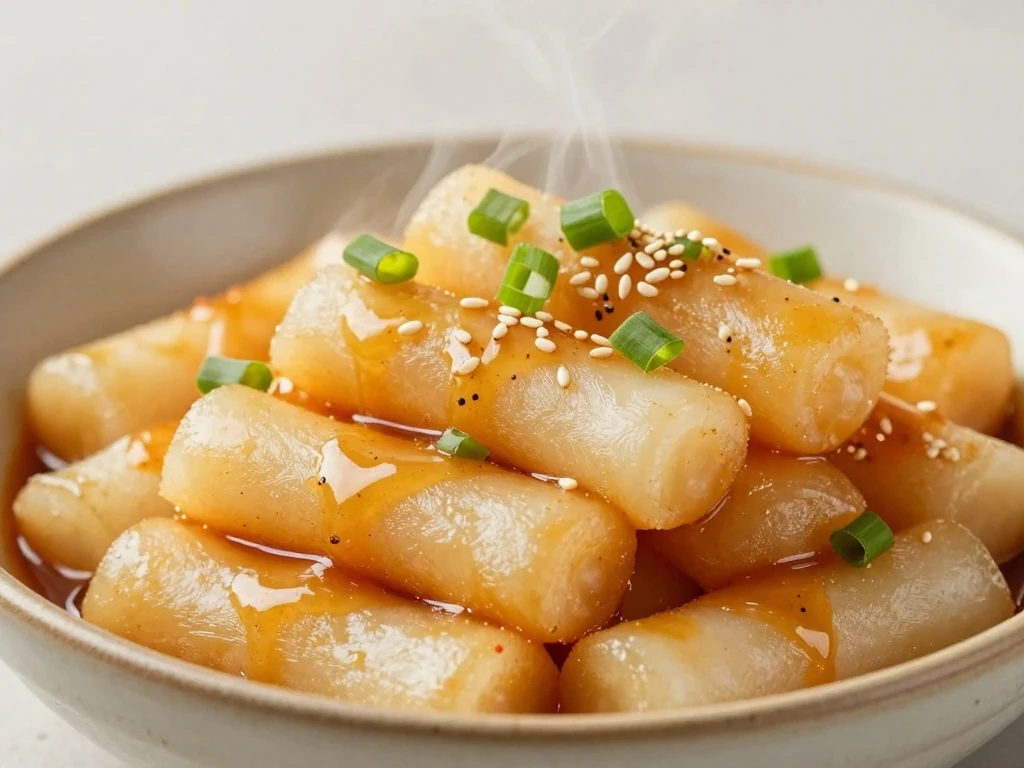
Allow leftovers to cool briefly before transferring them to an airtight container. Refrigerate for up to 3 days, remembering that the sauce will thicken considerably as it chills.
To reheat on the stovetop, place the rice cakes in a skillet with 2 to 4 tablespoons of water or broth. Warm them over medium-low heat, stirring gently until the sauce loosens and the rice cakes become soft again.
You can also microwave a portion in a covered, microwave-safe bowl. Heat in 30-second intervals, stir between intervals, and add a splash of water if the sauce looks dry.
Freezing cooked tteokbokki is not ideal because the rice cakes can become tough or crumbly after thawing. If you need to freeze ingredients, freeze the uncooked rice cakes separately and prepare the sauce fresh.
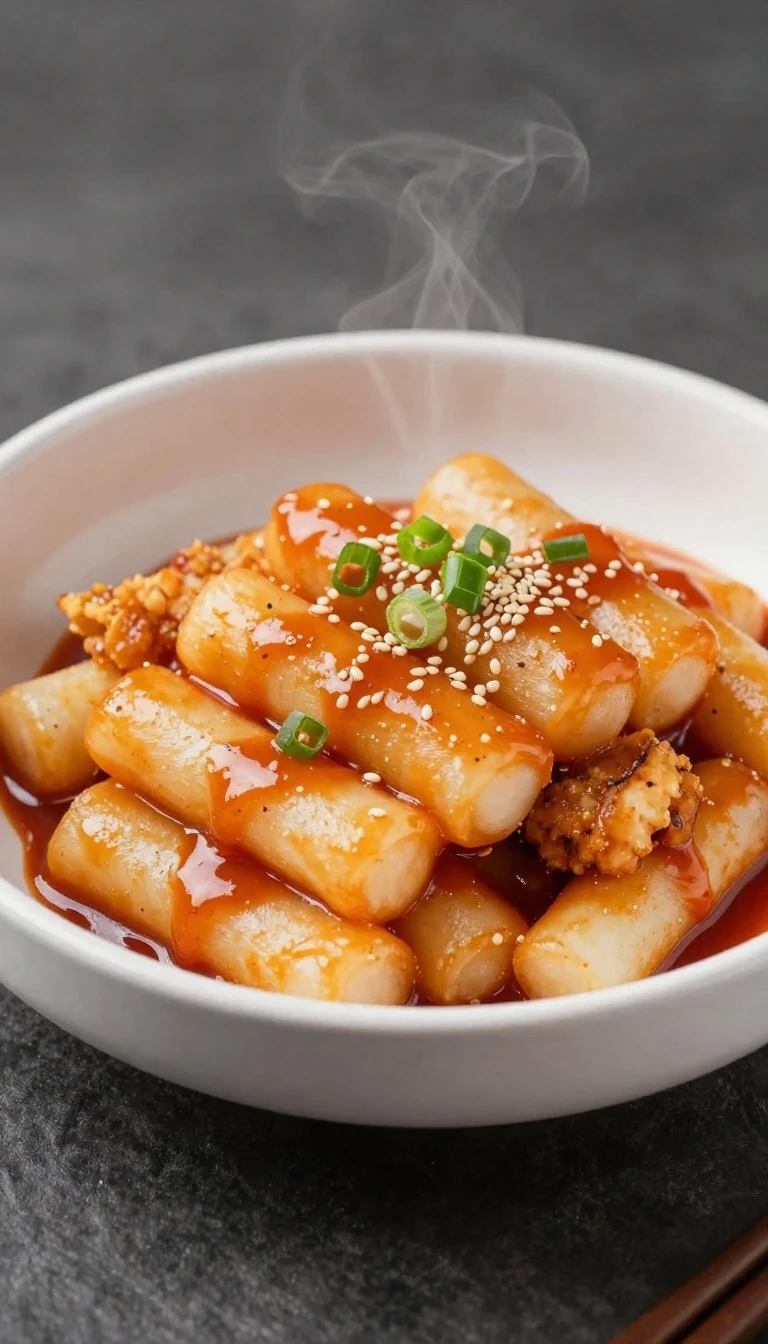
Easy Korean Rice Cake Recipe (Tteokbokki)
Ingredients
Method
- If the rice cakes are refrigerated or frozen, place them in warm water for 10 to 15 minutes, then drain. This softens the outside and helps the rice cakes cook evenly without splitting.
- Whisk the gochujang, gochugaru, soy sauce, rice syrup, sugar, and minced garlic in a small bowl. Mixing the sauce first distributes the seasonings evenly through the broth.
- Pour the broth into a wide skillet or shallow pot and bring it to a gentle boil. Stir in the prepared sauce and cook for 2 minutes so the garlic and pepper flavors begin to bloom.
- Add the rice cakes and cabbage to the seasoned broth, stirring carefully to coat them. Simmer uncovered for 8 to 10 minutes, stirring every few minutes so the sauce does not settle on the bottom.
- Add the sliced fish cakes and continue simmering for another 8 to 12 minutes. The rice cakes are ready when they are soft and chewy in the center and the sauce has thickened enough to cling to a spoon.
- Taste the sauce and adjust it with a little more sugar for sweetness, gochujang for heat, or broth if it has become too thick. Keep the pan at a gentle simmer because vigorous boiling can make the rice cakes overly soft.
- Turn off the heat and stir in most of the green onions. Let the tteokbokki stand for 2 minutes so the sauce thickens slightly while the fresh onion flavor remains bright.
- Spoon the Korean rice cakes into serving bowls and finish with the remaining green onions and toasted sesame seeds. Serve immediately while the sauce is glossy and the rice cakes are warm and springy.
Notes
Final Thoughts
This easy Korean rice cake recipe brings the comforting flavor of tteokbokki to your kitchen with simple ingredients and straightforward steps. The combination of chewy garaetteok, glossy gochujang sauce, tender fish cakes, and fresh green onion creates a meal that feels special without requiring advanced cooking skills.
Start with the basic recipe, then make it your own with boiled eggs, ramen noodles, vegetables, or melted cheese. Once you learn the ideal sauce thickness and gentle simmer, homemade Korean rice cakes can become a dependable favorite for quick dinners, cozy snacks, and casual gatherings.