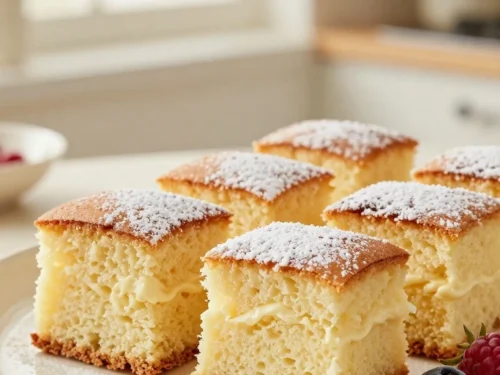
This easy Castella Cake Recipe makes a tender Japanese-style sponge with only six eggs, sugar, bread flour, honey, and hot water. The cake bakes in an 8-inch square pan at 160°C/320°F for 45–55 minutes, then rests until moist, springy, and easy to slice.
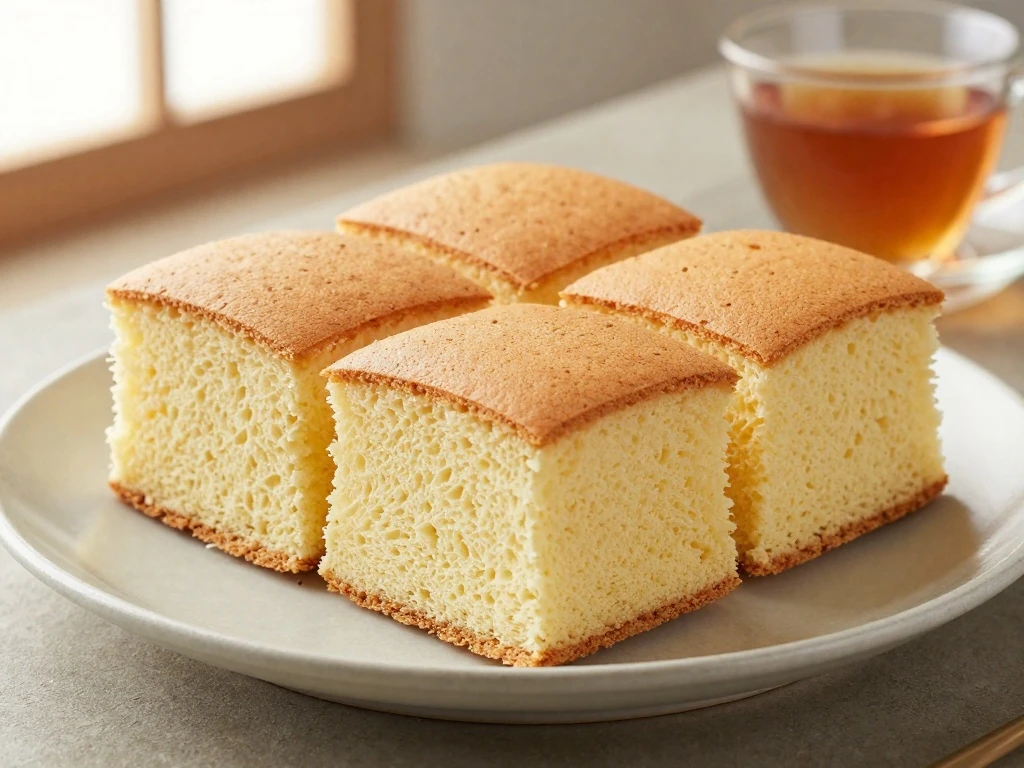
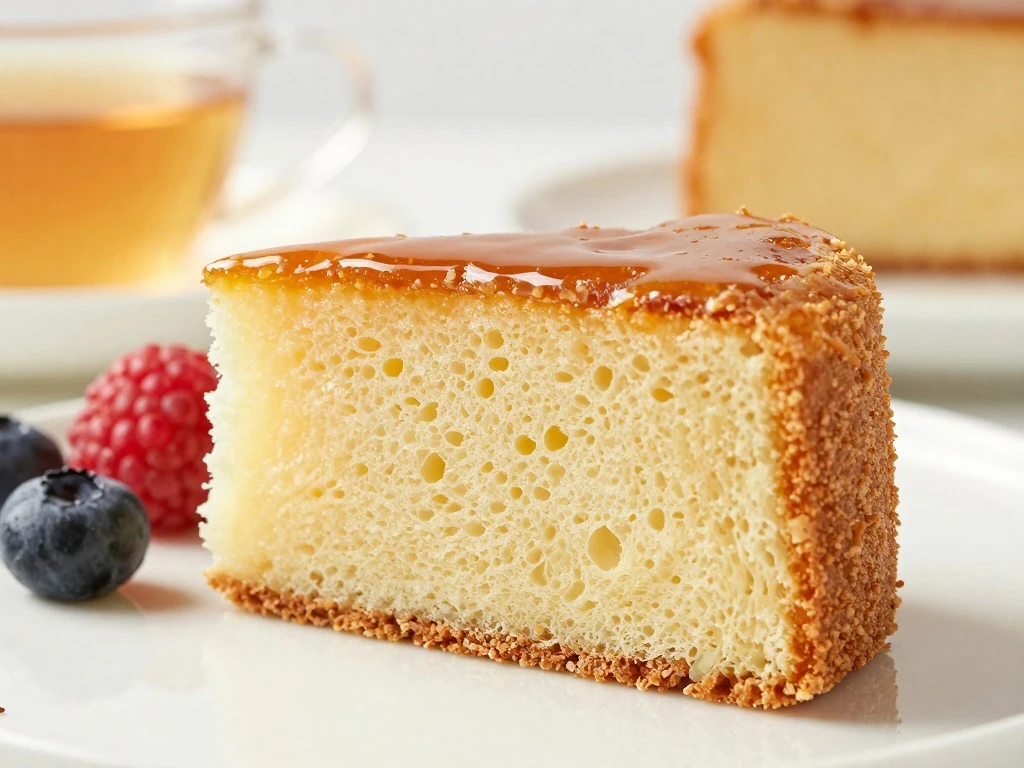
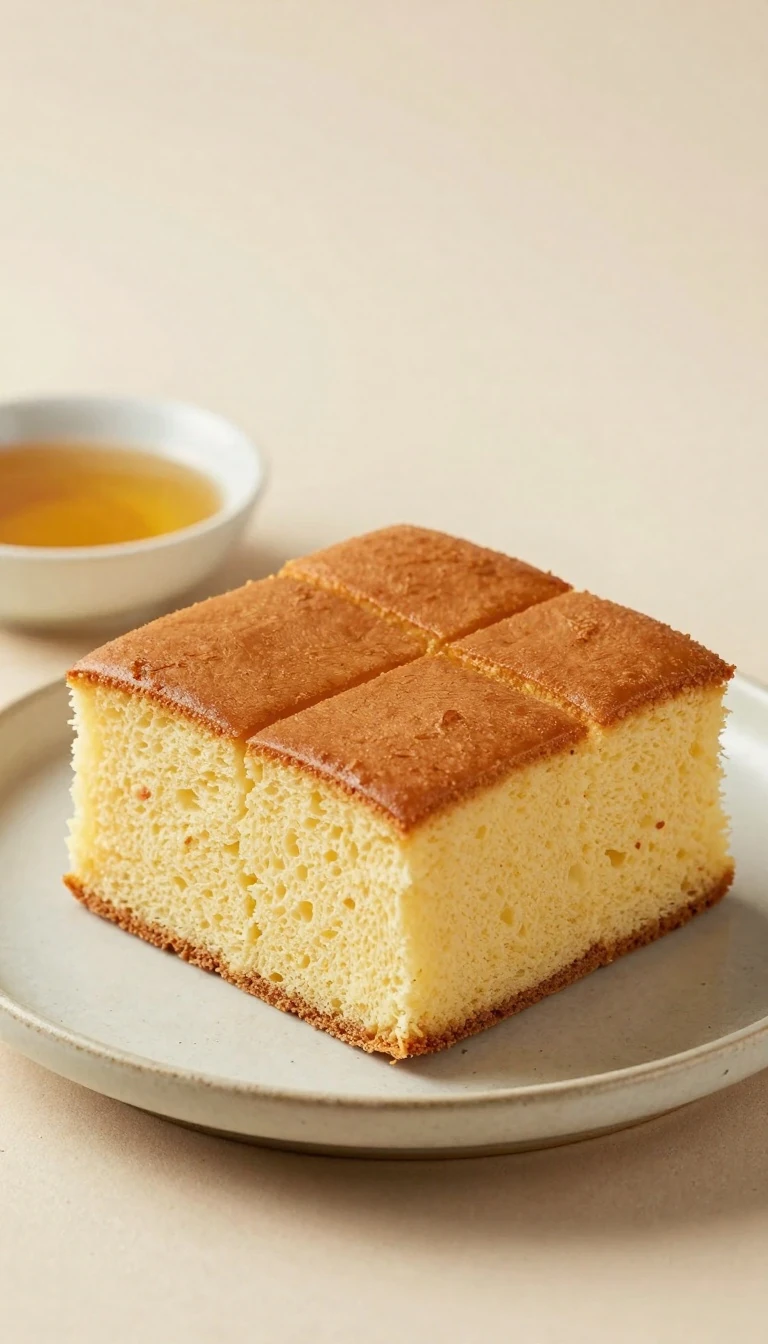
Castella has a deeply golden top, a delicate honey aroma, and a pleasantly chewy crumb that sets it apart from ordinary sponge cake. It contains no baking powder, so the airy texture comes from properly whipped eggs and sugar rather than a chemical leavener.
This Castella cake is an excellent choice when you want a beautiful homemade dessert without butter, oil, or baking powder. The ingredient list is short, but the finished cake tastes wonderfully rich because eggs provide body, sugar adds tenderness, and honey brings a warm floral sweetness.
The texture is the real highlight. Each slice is soft and airy at first bite, followed by a gentle springiness and a fine, slightly chewy crumb from the bread flour.
Simple ingredients: Everything is easy to find in a well-stocked kitchen.
No baking powder: Whipped eggs create the cake’s structure.
Beautiful finish: The top becomes deeply golden while the interior stays pale and tender.
Make-ahead friendly: A long rest improves the texture and makes slicing neater.
If you enjoy light, egg-based cakes, our sponge cake guide is another useful recipe to keep nearby when planning a simple afternoon bake.
Ingredients You’ll Need
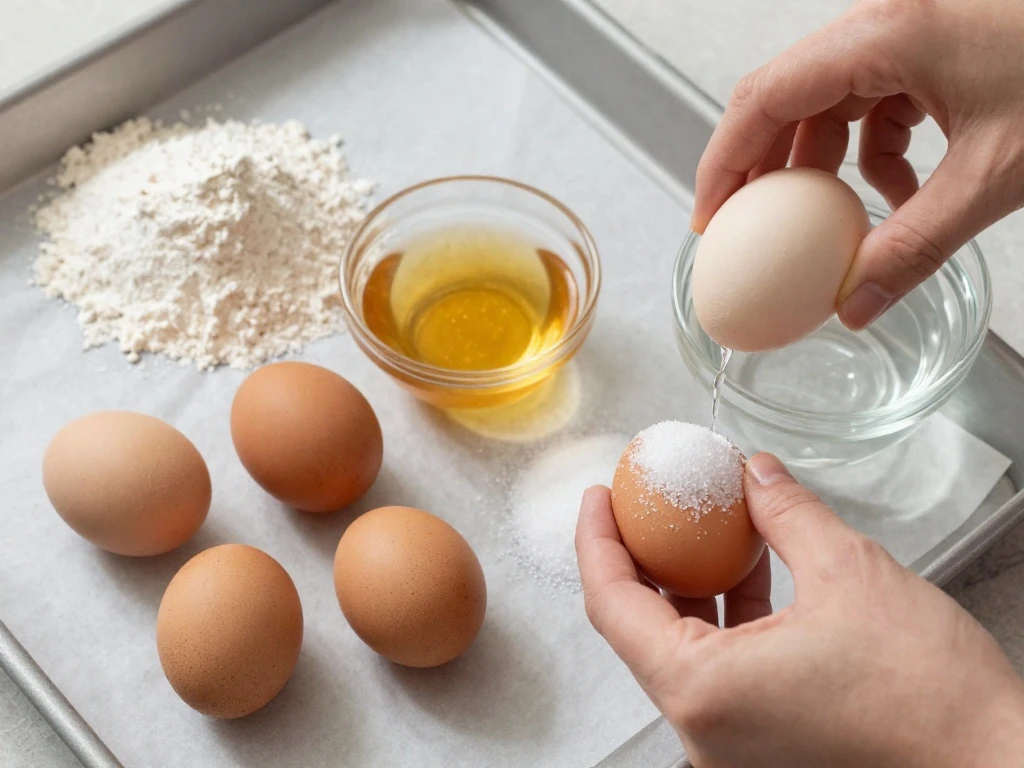
You need six large eggs, 200 grams of granulated sugar, 200 grams of sifted bread flour, two tablespoons of honey, and two tablespoons of hot water. Room-temperature eggs are preferred because they whip more readily and produce a fuller foam.
Bread flour is important in this version. Its higher protein content gives Castella the characteristic springy, lightly chewy texture that distinguishes it from a very soft European sponge.
Eggs: Use large eggs and bring them to room temperature when possible.
Sugar: Regular granulated sugar dissolves into the warm egg mixture and supports a stable foam.
Bread flour: Sift it before measuring or use the stated 200-gram quantity after sifting.
Honey: Honey gives the cake its recognizable aroma and gentle caramel note.
Hot water: Mixing it with honey creates a smooth liquid that distributes easily through the batter.
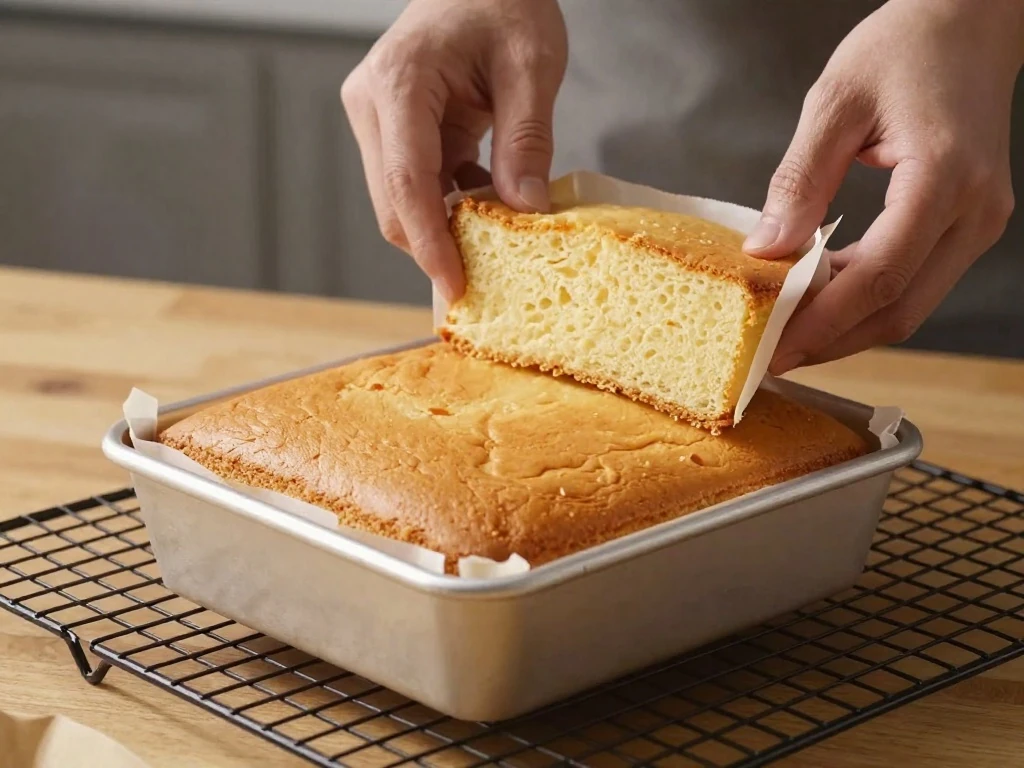
Prepare the parchment before beginning so the batter can go straight into the pan. Leave the paper taller than the pan sides; those extra edges act as useful handles when the cake is ready to remove.
How to Make It Step-by-Step
Step 1: Line an 8-inch/20-cm square pan with parchment, making sure the paper covers the base and rises above the sides. Preheat the oven to 160°C/320°F so it reaches the correct temperature while you mix the batter.
Step 2: Stir the honey with two tablespoons of hot water until the mixture is smooth and loose. This small step matters because thick honey can cling to the bowl and distribute unevenly if added directly.
Step 3: Put the eggs and sugar in a large heatproof bowl and set it over warm water. Whisk until the mixture feels slightly warm, then beat on high speed for 5–7 minutes, watching for a very pale, thick foam that leaves ribbons on the surface.
Step 4: Add the diluted honey to the egg mixture and mix on low speed only until combined. Keep the mixer gentle at this stage so the air created during whipping stays in the batter.
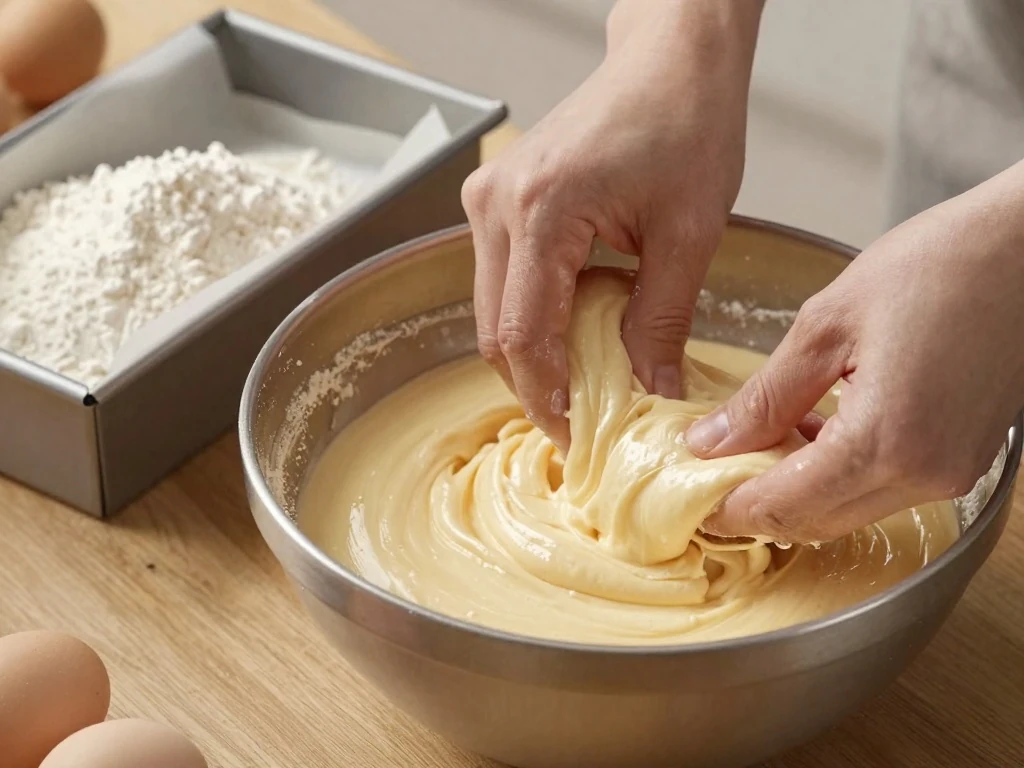
Step 5: Add the sifted bread flour in two or three additions. Fold carefully, or use the mixer on low speed for a short time, stopping immediately when no dry streaks remain.
Step 6: Pour the batter into the prepared square pan. Tap the pan lightly on the counter once or twice to remove large air pockets, but do not repeatedly bang it or stir the batter after it is in the pan.
Step 7: Bake for approximately 45–55 minutes at 160°C/320°F. The cake is ready when its surface is deeply golden and a skewer inserted into the center comes out clean.
Step 8: Remove the cake from the pan while it is still warm, using the parchment handles. Wrap it tightly in plastic wrap or seal it in an airtight container, then cool completely before refrigerating and slicing.
How to Get a Light, Springy Texture
The eggs and sugar are the foundation of this cake, so do not rush the whipping stage. The mixture should be substantially paler and thicker than when you started, and a lifted beater should leave ribbons that sit briefly on the surface before disappearing.
Warming the bowl over water helps the sugar dissolve and encourages the eggs to whip efficiently. The water should be warm rather than boiling, and the bowl should sit securely above the water without its base touching the surface.
Flour must be handled with care. Sifting removes lumps, while adding it gradually makes folding easier; mixing past the point where the flour disappears can deflate the foam and produce a heavy or sunken cake.
For another family-friendly baking idea with a soft crumb, you can also try our easy banana cake. It uses a different method, but it is just as welcoming for a relaxed weekend kitchen project.
Baking, Cooling, and Resting Tips
Castella can look finished before the center is fully baked, so rely on both color and the skewer test. The top should be a rich golden brown, while the inserted skewer should come out clean rather than coated with wet batter.
As soon as the cake comes out, lift it from the pan. Wrapping it while warm helps retain moisture, which is especially valuable because the cake contains no butter or oil to keep the crumb supple.
Allow at least one to two hours for cooling and resting before serving. Overnight chilling gives the neatest slices because the crumb becomes more settled and moist, making it easier to cut cleanly without tearing.
Use a sharp serrated knife and trim the four sides if you want a polished presentation. The trimmed pieces are still delicious with coffee, tea, or a small spoonful of fruit preserves.
Serving Ideas and Easy Variations
Serve Castella in simple rectangular pieces so its golden top and fine interior remain visible. It needs very little decoration: a light dusting of powdered sugar is optional, though the classic cake is often enjoyed plain.
The honey flavor pairs nicely with black tea, green tea, coffee, or fresh berries. For a dessert plate, add sliced strawberries or a few orange segments without covering the cake’s delicate crumb.
Published easy versions sometimes use a smaller formula of four eggs, 100 grams of sugar, 100 grams of bread or cake flour, two tablespoons of honey, and one tablespoon of milk or water. Those versions are designed for smaller pans and generally bake for about 30–40 minutes, so they should not be substituted directly for this 8-inch cake.
Some variations replace the hot water with milk or add one tablespoon of mirin. These adjustments change the flavor and texture, but they are not essential to making this dependable honey Castella.
If you are preparing a dessert table with several homemade cakes, our easy king cake recipe offers a festive contrast to this understated Japanese sponge.
Storage and Slicing
Keep the completely cooled cake tightly wrapped or sealed in an airtight container. Refrigeration is optional, but it is useful when you want to rest the cake overnight or keep the slices firm and tidy.
Before serving a chilled cake, let it sit briefly at room temperature if you prefer a softer bite. Always use a clean, sharp knife, wiping the blade between cuts for smooth edges.
For the best texture: Rest the wrapped cake for several hours, preferably overnight.
For clean slices: Chill before trimming and cutting.
For freshness: Keep the cake protected from air in plastic wrap or an airtight container.
Easy Castella Cake
A classic Japanese-style honey sponge cake with a golden top and springy, slightly chewy crumb. Resting the wrapped cake before slicing gives it the best moisture and texture.
Line an 8-inch/20-cm square pan with parchment, leaving the paper higher than the sides so the baked cake can be lifted out. Preheat the oven to 160°C/320°F.
Stir the honey and hot water together in a small bowl until completely smooth and fluid. Set the mixture aside while you prepare the egg foam.
Place the eggs and sugar in a large heatproof bowl and set it over warm water. Whisk until slightly warm, then beat with an electric mixer on high for about 5–7 minutes, until very pale, thick, and ribbon-like.
Add the diluted honey and mix on low speed just until incorporated. Avoid prolonged mixing because the egg foam is the cake's main source of lift.
Add the sifted bread flour in two or three additions, folding gently or mixing on low speed only until no dry flour remains. Stop as soon as the batter looks uniform to prevent knocking out the trapped air.
Pour the batter into the lined pan and tap the pan lightly on the counter to release large air bubbles. Smooth the surface only if necessary, since excessive handling can reduce the cake's volume.
Bake at 160°C/320°F for approximately 45–55 minutes, until the top is deeply golden and a skewer inserted in the center comes out clean. Remove the cake from the pan while it is still warm.
Wrap the warm cake tightly in plastic wrap or place it in an airtight container. Cool completely, then refrigerate if desired; trim the sides before cutting and serving.
Notes
Beat the eggs and sugar until genuinely thick and ribbon-like, sift the flour, and fold gently. Resting the wrapped cake for several hours, preferably overnight, improves moisture and makes slicing cleaner.
Final Thoughts
This easy Castella Cake Recipe proves that a short ingredient list can produce an exceptionally memorable dessert. The key is not complicated equipment or decoration; it is creating a strong egg-and-sugar foam, folding in the sifted bread flour gently, and giving the finished cake time to rest.
Once sliced, the cake offers exactly what makes Castella special: a bronzed, honey-scented top, a soft interior, and a pleasant springy chew. Bake it a day ahead for the best results, then serve plain alongside tea for a simple treat that feels both comforting and special.