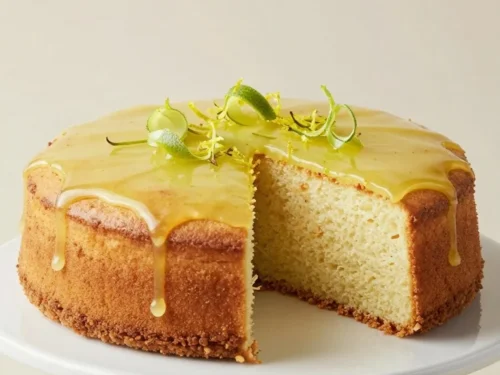
This moist lemon cake recipe makes one tender 20 x 10 cm (8 x 4 in) loaf with a buttery crumb, fresh lemon zest, and a tangy sugar-and-lemon drizzle. It takes just 15 minutes to prepare, bakes for 35–40 minutes, and yields approximately 10 slices of classic lemon drizzle cake.
The secret to its irresistible texture is adding the drizzle while the cake is still warm, allowing the lemon syrup to travel deep into the crumb. As it cools, the lemon and sugar topping forms a lightly crisp crust over a soft, fragrant cake that is perfect with tea, coffee, or an afternoon snack.
Jump to RecipeWhy You’ll Love This Recipe
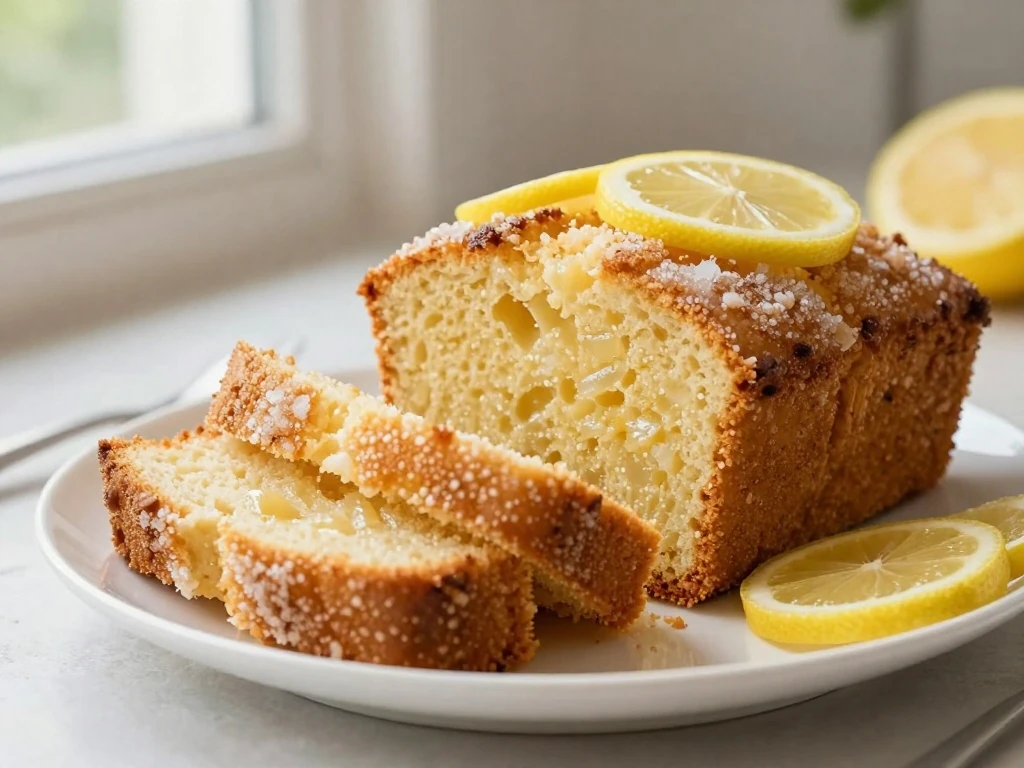
This loaf has everything a good lemon cake should offer: a soft buttery center, bright citrus fragrance, and a sweet-tart topping that crackles gently as you bite into it. The flavor is fresh rather than heavy, making it suitable for breakfast, afternoon tea, dessert, or a simple bake-sale table.
The method is wonderfully straightforward because it uses the classic creaming approach. Beating the butter, sugar, and lemon zest first creates a light base, while the eggs, self-rising flour, baking powder, and milk bring the batter together without requiring complicated techniques.
If you enjoy citrus desserts with a more dramatic soaking effect, you can also browse this lemon poke cake idea for another zesty treat. This loaf, however, keeps the flavor focused and the ingredient list comfortably short.
Ingredients You’ll Need
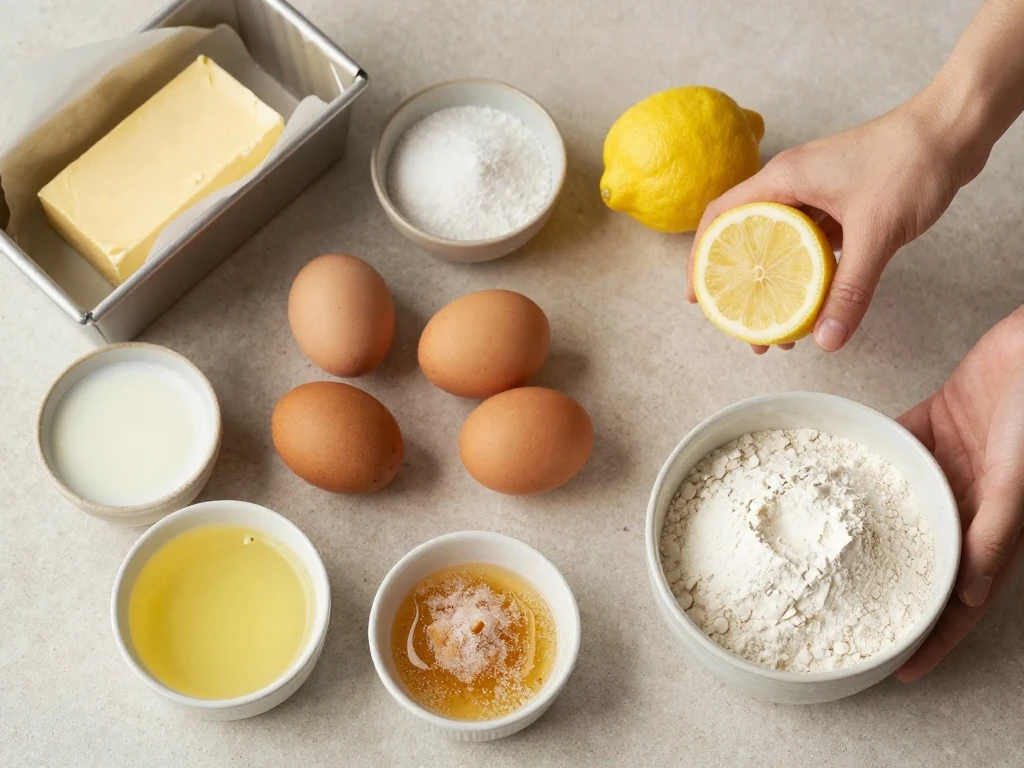
Choose fresh ingredients for the cleanest lemon flavor and the best crumb. The lemon zest goes directly into the butter and sugar, so grate only the colorful outer peel and avoid the bitter white pith beneath it.
- Unsalted butter: Softened butter creams smoothly with the sugar and gives the cake its rich, tender texture.
- Caster or superfine sugar: Its fine crystals dissolve easily while the butter is beaten, producing a smooth batter.
- Large eggs: Eggs add structure, moisture, and richness. Room-temperature eggs blend more easily into the butter mixture.
- Fresh lemons: Use the zest of two lemons in the batter and 45–60 ml of juice for the drizzle.
- Self-rising flour and baking powder: Together, they give the loaf enough lift for a light, satisfying slice.
- Milk: Four tablespoons loosen the batter and help keep the baked crumb moist.
- Drizzle sugar: The 85 g of granulated or caster sugar balances the lemon juice and creates the delicate crust on top.
For another fruit-based bake with a naturally rich, tender texture, you may also like this moist date cake. It is a lovely alternative when you want something warmer and more caramel-like.
How to Make It Step-by-Step
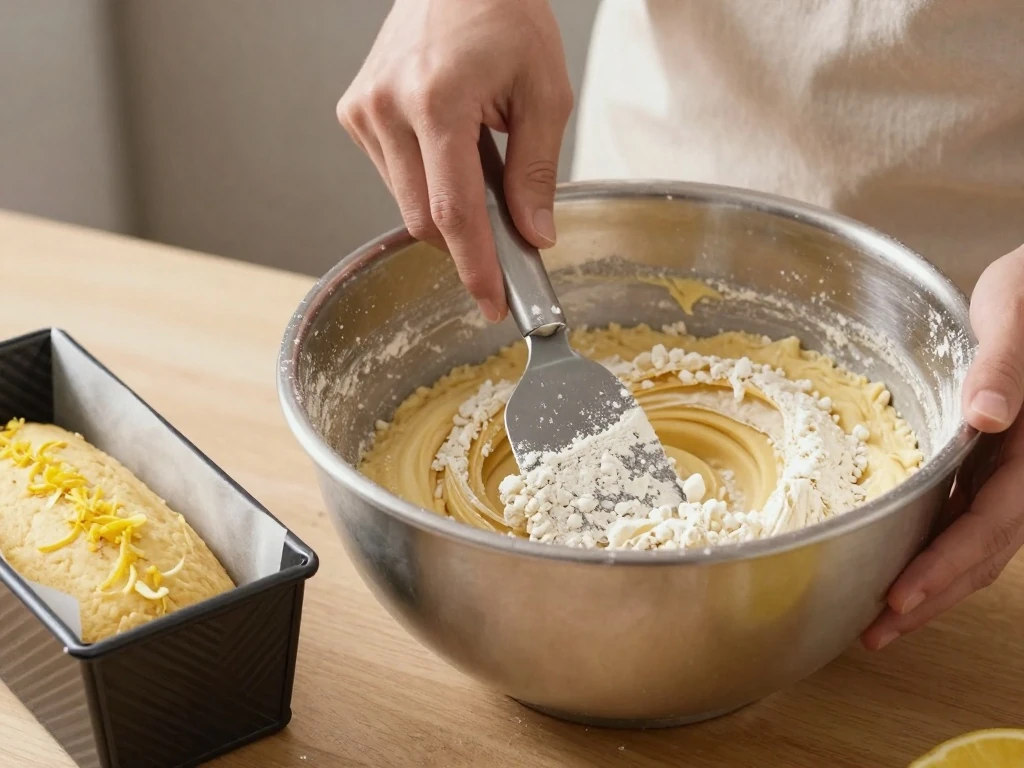
Step 1: Heat the oven to 180°C (350°F), or 160°C (320°F) for a fan or convection oven. Line a 20 x 10 cm (8 x 4 in) loaf tin with baking parchment, making sure the base and long sides are covered so the cake releases easily.
Step 2: Place the softened butter, caster or superfine sugar, and finely grated zest of two lemons in a large mixing bowl. Beat until pale and fluffy, scraping the bowl once or twice so the zest and butter are evenly blended.
Step 3: Add the four eggs one at a time, beating well after each addition. If the mixture starts to curdle or looks uneven, add a spoonful of the measured flour and continue mixing until it comes together.
Step 4: Fold in the self-rising flour and baking powder with a spatula or large metal spoon. Add the milk and stir only until no obvious streaks of dry flour remain, since too much mixing can make the cake dense.
Step 5: Spoon the batter into the lined tin and smooth the top. Bake for 35–40 minutes, checking near the end with a skewer inserted into the center; it should come out clean or show only a few moist crumbs.
Step 6: While the loaf is in the oven, combine the fresh lemon juice and 85 g of granulated or caster sugar in a small bowl. Use 45–60 ml of juice, depending on how strongly citrusy you want the topping to taste.
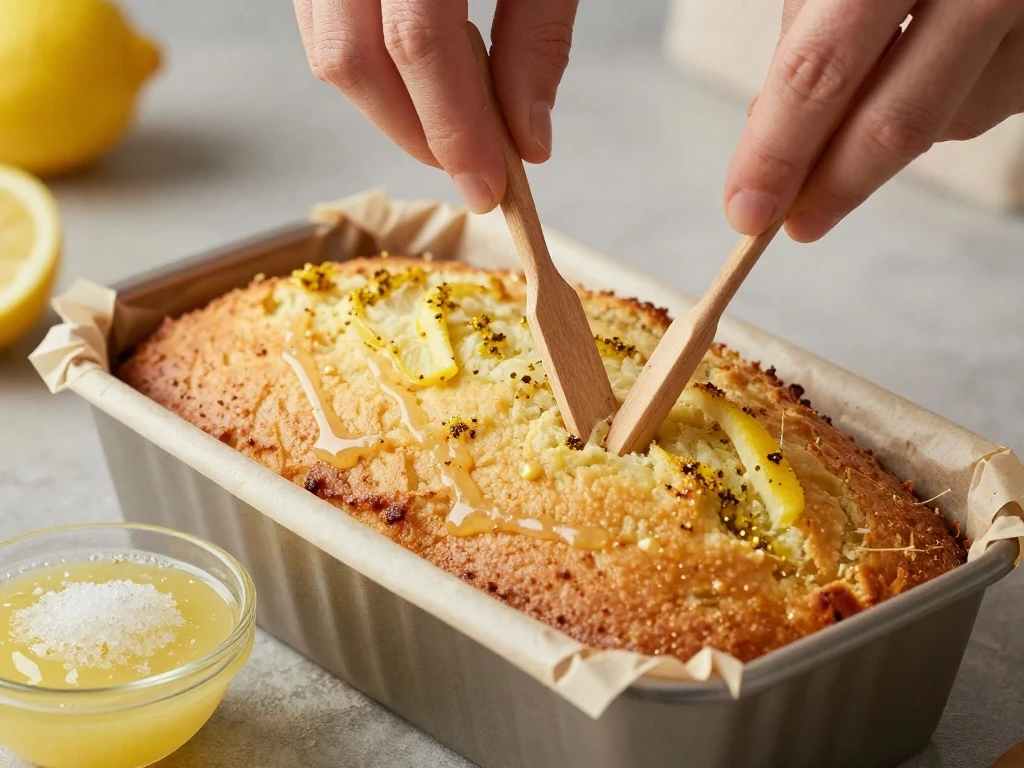
Step 7: Let the cake rest in its tin for about 5 minutes after baking. Pierce the warm surface all over with a skewer or cocktail stick, making holes deep enough for the drizzle to move into the crumb without breaking through the base.
Step 8: Slowly spoon the lemon mixture over the loaf, distributing it from edge to edge. Give the juice time to sink in rather than pouring it all in one place, then leave the cake to cool completely before slicing.
Pro Tips for a Moist Lemon Loaf
Room-temperature butter is soft enough to beat into a fluffy mixture, while room-temperature eggs are less likely to make the batter split. If you have forgotten to set out the eggs, place them briefly in lukewarm water, then dry them before using.
Grate the lemons before squeezing them because whole lemons are easier to zest. A fine grater gives you delicate zest that disperses through the batter instead of leaving large, chewy pieces.
Do not skip the five-minute rest before piercing the cake, but do not wait until it is cold either. Warm cake accepts the drizzle far better, which is what gives each slice its moist, lemony center and lightly crisp top.
Use the skewer test in the center rather than judging only by the color of the edges. The cake is ready when the skewer comes out clean or with a few moist crumbs; a completely wet skewer means it needs more baking time.
Serving Ideas and Pairings

Serve slices plain to let the buttery lemon flavor shine, or add a spoonful of lightly whipped cream for a softer dessert. Fresh berries, such as raspberries or blueberries, also bring a pleasant contrast to the sweet-tart drizzle.
For afternoon tea, cut the loaf into ten even slices and arrange them on a simple platter with thin lemon slices. The cake is especially good alongside black tea, Earl Grey, or freshly brewed coffee.
If you are preparing a dessert table with several classic bakes, this moist carrot cake can sit beside the lemon loaf as a warmly spiced companion. The two cakes offer very different flavors while sharing the same comforting homemade style.
Storage and Slicing Advice
Cool the cake completely before slicing so the crumb has time to set and the drizzle can finish forming its delicate crust. Use a sharp serrated knife and a gentle sawing motion for neat slices that do not compress the loaf.
Store the cooled cake in an airtight container at room temperature. Keeping it covered helps protect the moist texture, while the lemon flavor remains fresh and fragrant for serving later.
If the cake seems firm after standing, let it sit at room temperature for a short while before serving. Avoid cutting the entire loaf until needed, since the unsliced cake retains moisture better than individual pieces.
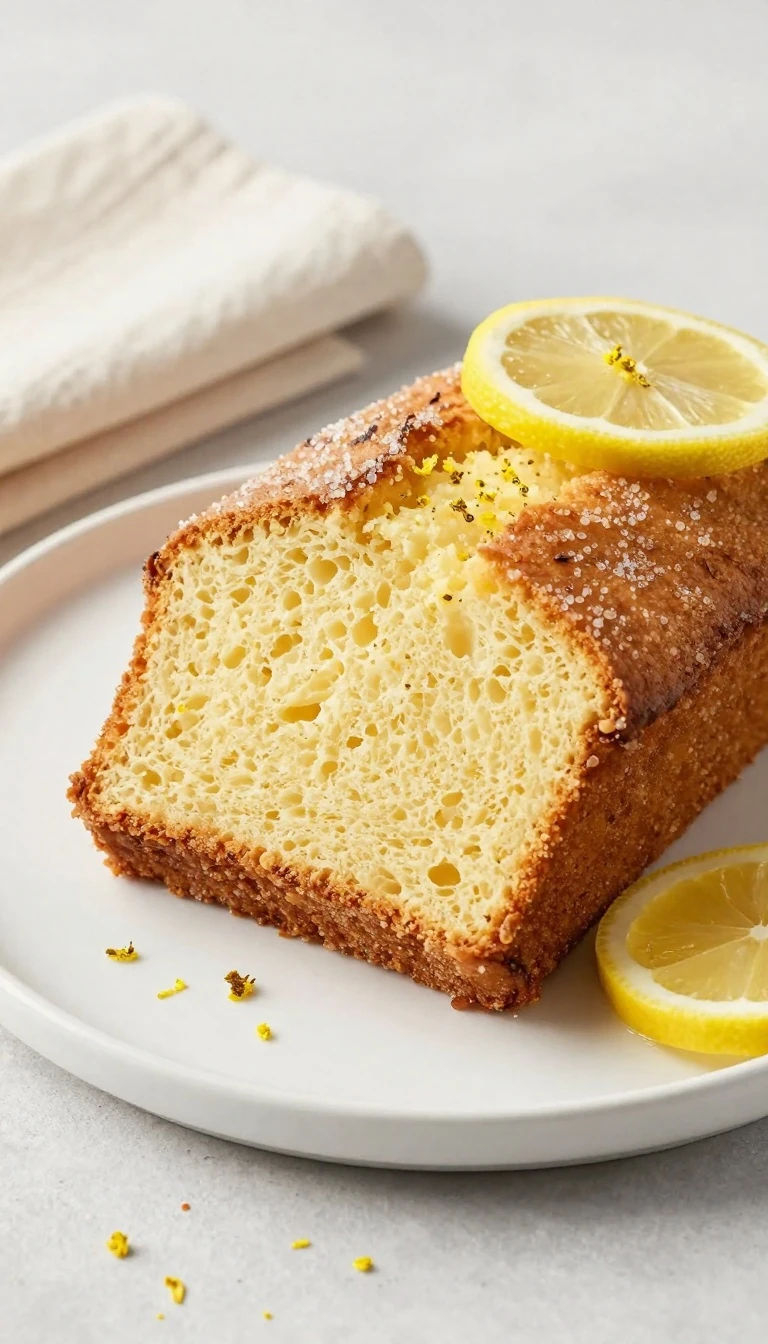
Moist Lemon Cake Recipe
Ingredients
Method
- Heat the oven to 180°C (350°F), or 160°C (320°F) for a fan or convection oven. Line a 20 x 10 cm (8 x 4 in) loaf tin with baking parchment, leaving a little overhang to make lifting the finished cake easier.
- Beat the softened butter, caster sugar, and finely grated zest of two lemons until the mixture looks pale and fluffy. This step adds air to the batter and distributes the lemon fragrance throughout the cake.
- Add the eggs one at a time, beating well after each addition. If the batter begins to look curdled, mix in a spoonful of the measured flour before adding the next egg.
- Fold in the self-rising flour and baking powder, then stir in the milk. Mix only until the ingredients are evenly combined, taking care not to overmix once the flour has been added.
- Transfer the batter to the prepared loaf tin and smooth the surface with a spatula. Bake for 35–40 minutes, until golden and a skewer inserted in the center comes out clean or with a few moist crumbs.
- While the cake bakes, mix 45–60 ml of fresh lemon juice with 85 g of granulated or caster sugar. Stir until the juice coats the sugar; it does not need to become a fully cooked syrup.
- Leave the baked cake in the tin for about 5 minutes, then pierce it all over with a skewer or cocktail stick. Slowly spoon the lemon drizzle over the warm surface, pausing so it can soak into the holes and crumb.
- Cool the cake completely in the tin before lifting it out and slicing. Waiting allows the crumb to settle and gives the lemon-and-sugar topping time to form its characteristic slightly crisp crust.
Notes
Final Thoughts
This moist lemon cake recipe is a dependable classic that rewards simple ingredients and careful timing. The butter and lemon zest create a fragrant base, the milk keeps the crumb soft, and the warm lemon drizzle works its way into every slice before setting into a delicate sugary crust.
For the best result, use room-temperature ingredients, mix gently after adding the flour, and spoon the drizzle over the cake while it is still warm. Once completely cool, slice the loaf and enjoy its bright fruit flavor with tea, coffee, fresh berries, or a little cream.
Whether you are baking for guests or simply want a cheerful homemade treat, this ten-serving lemon loaf is easy to prepare and wonderfully satisfying. Its balance of buttery richness, fresh citrus, and gentle sweetness makes it a recipe worth returning to throughout the year.