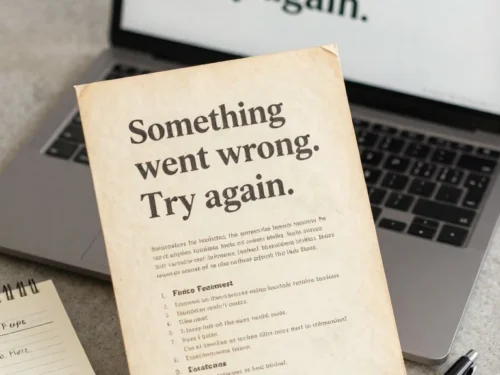
There is no reliable recipe for “Something went wrong. Try again.” The phrase appears to be an error message rather than the name of a recognizable published dish, so accurate ingredients, quantities, preparation instructions, cooking times, serving information, and nutrition details cannot be provided from the title alone.
Because no actual dish has been identified, there is also no trustworthy taste description to share. Do not begin cooking from a guessed ingredient list; send the intended recipe title, source URL, or a screenshot of the page, and the recipe can then be summarized accurately.
Jump to RecipeWhy This Recipe Needs Clarification
Recipe development depends on specific information. A useful recipe title normally connects to a defined set of ingredients, measured quantities, preparation instructions, cooking temperature, cooking duration, serving yield, and often storage guidance.
“Something went wrong. Try again.” does not provide those details. It reads like a technical message shown when a webpage, recipe card, search result, or image fails to load.
That distinction matters in the kitchen. A missing quantity can change the texture of a cake, the salt level of a soup, the hydration of dough, or the setting ability of a custard.
Guessing the intended dish could also create an allergy or food-safety problem. A recipe that appears to be a cake may require eggs, dairy, wheat, nuts, or another ingredient that cannot be safely assumed.
For that reason, the responsible answer is not to invent a recipe. The responsible answer is to identify the missing source and work from the original information.
If you are browsing for a dependable dish while locating the missing page, you can browse the recipe collection for other clearly identified ideas.
What Information Is Missing
The supplied title does not establish what kind of food was intended. It could refer to a dessert, bread, main course, side dish, drink, sauce, or simply a page that failed to display its real title.
No ingredient list is available, so there is no accurate way to state whether the dish needs flour, sugar, vegetables, meat, grains, fruit, dairy, eggs, spices, oil, or any other component.
No quantities are available either. Even familiar ingredients cannot be assigned sensible measurements without knowing the intended yield and style of the dish.
Preparation details are also absent. There is no dependable information about chopping, whisking, kneading, marinating, blending, resting, chilling, proofing, or assembling.
Cooking details are missing as well. The correct oven setting, stovetop heat, appliance type, cooking time, and doneness test all depend on the actual recipe.
Finally, there is no verified information about servings, calories, allergens, substitutions, leftovers, freezing, or reheating. Those fields should remain unknown instead of being filled with attractive but unsupported numbers.
How to Identify the Intended Recipe

Start with the page where the message appeared. Look at the browser history, saved bookmarks, social media post, email, text message, or search result that led you there.
If the page address is still visible, copy the complete URL. A source link is often enough to distinguish an error page from the recipe page it was meant to display.
If you saw the recipe on a phone or computer, take a screenshot that includes the visible title, image, address bar, or surrounding page text. Even a partial screenshot may reveal a key ingredient or phrase.
Search any memorable wording in quotation marks. A phrase from the introduction, a distinctive ingredient, or a caption can be more useful than searching the error message itself.
Check whether the page loaded incompletely. Refreshing once, opening it in a private window, or trying a different browser may restore the recipe card, but do not assume that a blank page contains cooking directions.
When requesting help, provide the intended title if you know it, the source URL if available, and a screenshot if possible. Mention whether you need ingredient measurements, method instructions, timing, nutrition, substitutions, or storage advice.
For a point of comparison, a clearly named dessert such as this moist vanilla cake guide has an identifiable subject, while the supplied phrase does not.
Why Guessing Could Ruin the Dish
Recipes are systems rather than loose suggestions. Changing one measurement can affect moisture, structure, seasoning, browning, tenderness, or the time required for the center to cook.
In baking, precision is especially important. Flour absorbs liquid, leaveners affect rise, sugar influences tenderness and browning, and eggs can contribute both structure and moisture.
In savory cooking, the same issue appears in a different form. The quantity of liquid determines whether a dish becomes a soup, stew, sauce, or dry mixture, while salt and acid can shift the entire flavor balance.
Cooking temperature cannot be safely invented either. A low oven, hot skillet, pressure cooker, slow cooker, and air fryer produce very different results even when they use similar ingredients.
Food safety makes unsupported timing a serious concern. Meat, poultry, seafood, eggs, and leftovers require appropriate handling and doneness checks, none of which can be inferred from an error message.
Substitutions are not automatically harmless. Replacing wheat flour, dairy, eggs, gelatin, nuts, or soy may change the chemistry of the recipe and may still be unsafe for someone with an allergy.
Even the serving count matters. A quantity suitable for two people may be inadequate for a family, while doubling a recipe can require changes to pan size, cooking time, or batch management.
What to Send for an Accurate Recipe
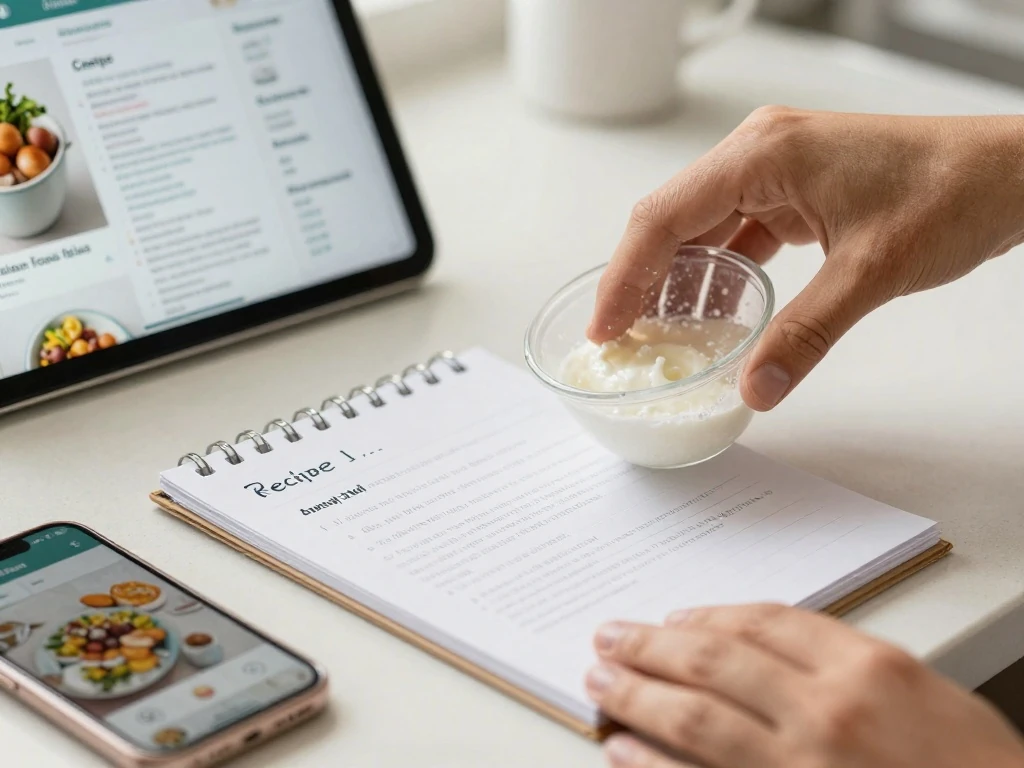
The best next step is to provide one reliable piece of identifying information. The intended recipe title is useful, but a direct source URL or screenshot is even better when the title is uncertain.
- Recipe title: Include the complete wording, including descriptive terms such as quick, one-pot, chocolate, gluten-free, or slow-cooker.
- Source URL: Copy the full web address rather than only the website name.
- Screenshot: Include the recipe card, visible ingredients, page title, or any surrounding text.
- Context: Say where you found it, such as a blog, video, social post, newsletter, or search page.
- Specific request: Explain whether you want a summary, formatted recipe card, ingredient conversion, cooking guidance, or troubleshooting.
If the screenshot contains personal information, crop or cover it before sharing. The useful portions are the recipe title, ingredients, instructions, image, and source details.
If you intended a white celebration cake, for example, identify that clearly and consult a named source such as this white cake recipe guide rather than treating an error message as a method.
What Can Be Confirmed Right Now
At this stage, only a few facts can be stated confidently. The supplied title is “Something went wrong. Try again.”, the requested category is Easy, and the phrase does not identify a verified published recipe.
There is no reliable ingredient list associated with the supplied text. There are no dependable amounts, preparation steps, cooking times, serving details, calorie figures, or chef tips to reproduce.
That means the correct recipe-card fields for ingredients, timing, servings, and calories must remain unavailable. Leaving them blank is more useful than presenting invented information that could lead to a poor result or an unsafe meal.
Once the source is supplied, the missing information can be organized into a clear recipe. That review should include the ingredient groups, exact measurements, preparation order, temperature, cooking or chilling time, yield, nutrition if published, and practical notes.
The final recipe should also preserve the source’s intent. A title can sometimes be corrected, a broken image can be identified, and unclear wording can be explained, but none of those tasks should be replaced by guessing.
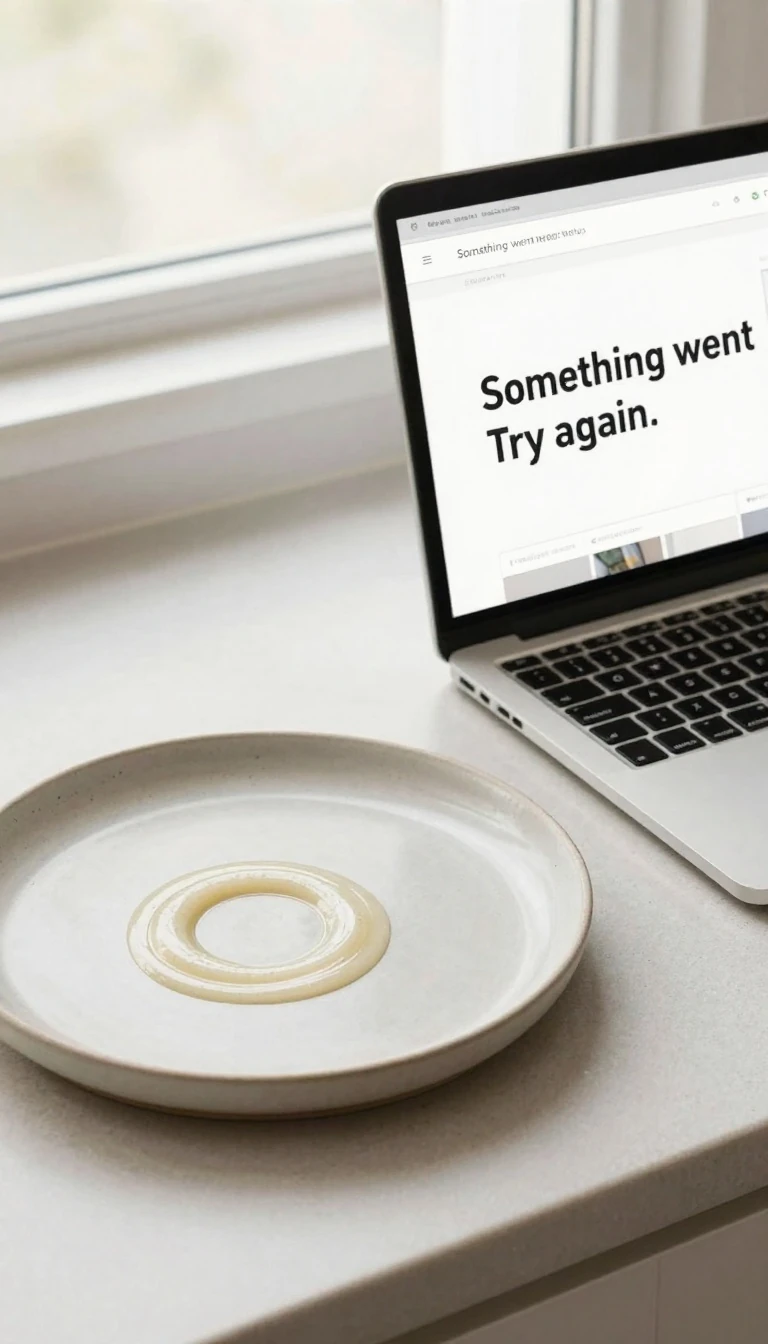
Something went wrong. Try again.
Method
- No cooking instructions are available because the supplied title does not identify a verified recipe. Please provide the intended recipe name, source URL, or a screenshot before preparing the dish.
Notes
Final Thoughts
“Something went wrong. Try again.” is not enough information to cook a real recipe. It appears to be an error message, and there is no reliable published ingredient list, measurement set, method, or timing connected to it.
The safest and most accurate solution is to provide the actual recipe name, source URL, or a screenshot of the page. With that information, the recipe can be checked and presented with precise ingredients, clear steps, verified timing, and useful kitchen guidance.
Until then, keep this entry as a troubleshooting note rather than a cooking instruction. A dependable recipe should tell you what to use, how much to use, what to do, and how to know when the food is ready.