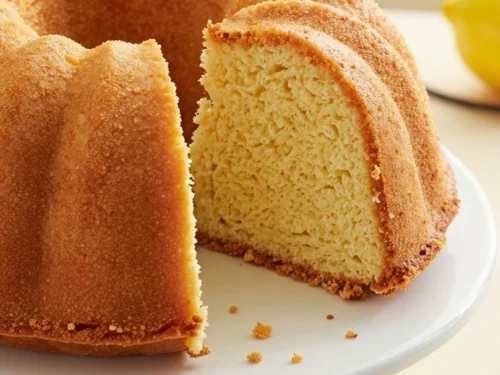
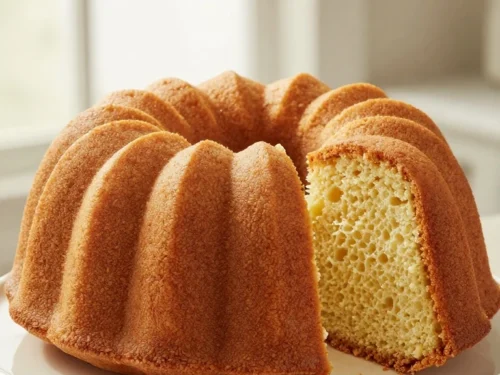
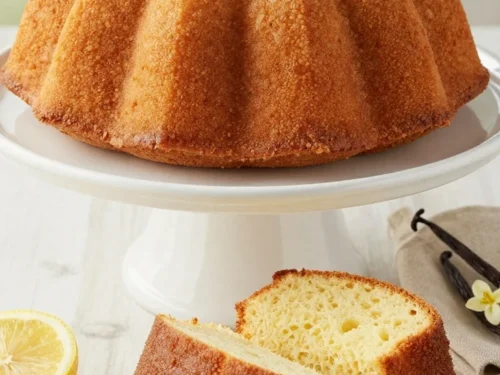
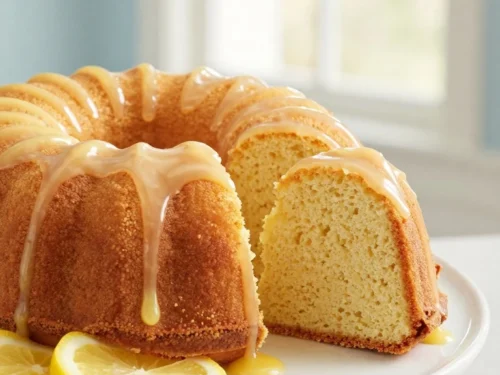
This easy Crunchy Top Pound Cake Recipe makes one tall 10-inch Bundt or tube cake with a crisp, sugary crust and a tender, buttery center. The key is coating the thoroughly greased pan with 2 to 3 tablespoons of granulated sugar before adding the batter, then baking the cake at 325°F for 70 to 85 minutes.
Every slice has the classic flavor of butter, vanilla, and sweet milk, with a delicate crackly edge that contrasts beautifully with the fine pound-cake crumb. Allow about 20 to 25 minutes for preparation, 70 to 85 minutes for baking, and roughly 1 hour for complete cooling before serving.
Jump to RecipeWhy You’ll Love This Recipe
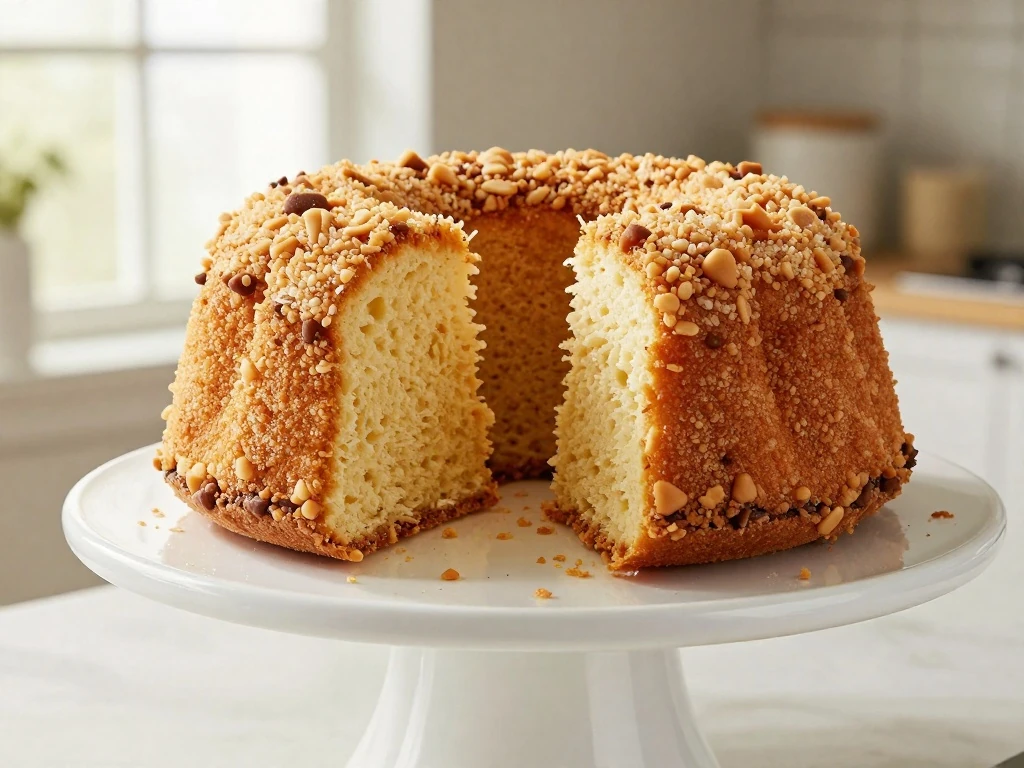
This cake is made from familiar pantry ingredients, but the finished texture feels special. The sugar-coated pan forms a thin, crisp crust around the outside while the inside stays soft, moist, and finely textured.
It is also an excellent make-ahead dessert. Bake it for a weekend gathering, afternoon coffee, a holiday table, or an easy family treat, then serve it plain or with fresh fruit.
The flavor is classic and balanced rather than overly rich. Butter provides depth, vanilla adds warmth, and whole milk keeps the crumb pleasantly tender.
If you enjoy traditional cakes with a rich butter flavor, our old-fashioned pound cake is another lovely recipe to keep in your baking collection.
Ingredients You’ll Need
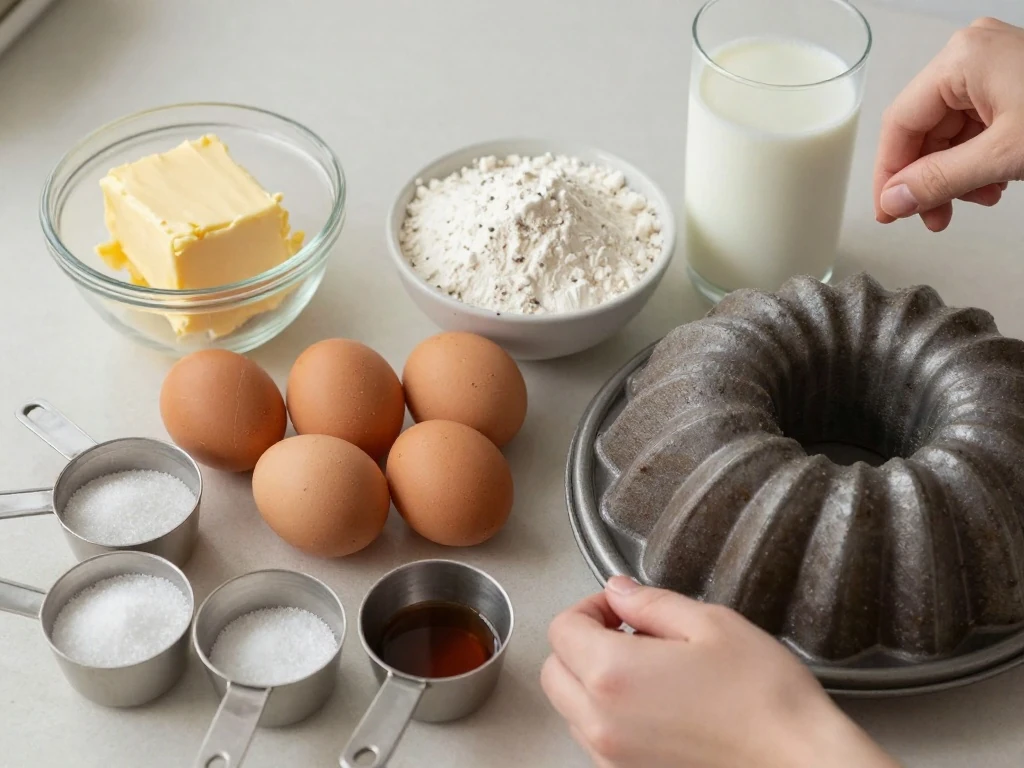
The ingredient list is straightforward, but each item has an important role. Softened butter must be beaten thoroughly with the sugar so the batter begins with plenty of air, while room-temperature eggs help the mixture stay smooth.
- Butter: Use 1 cup of unsalted butter, softened to room temperature. It creates the cake’s rich flavor and tender texture.
- Sugar: Two cups sweeten the batter, while another 2 to 3 tablespoons coat the greased pan and create the crunchy exterior.
- Eggs: Six large room-temperature eggs provide structure, richness, and moisture.
- Flour: Three cups of all-purpose flour form the cake’s foundation.
- Leavening and salt: One teaspoon of baking powder gives the cake a little lift, and 1/2 teaspoon of salt keeps the sweetness balanced.
- Milk and vanilla: Whole milk softens the crumb, and 2 teaspoons of vanilla give the cake its familiar bakery-style aroma.
Measure the flour carefully, preferably by spooning it into measuring cups and leveling the tops. Too much flour can make the finished cake heavier and drier than intended.
How to Make It Step-by-Step
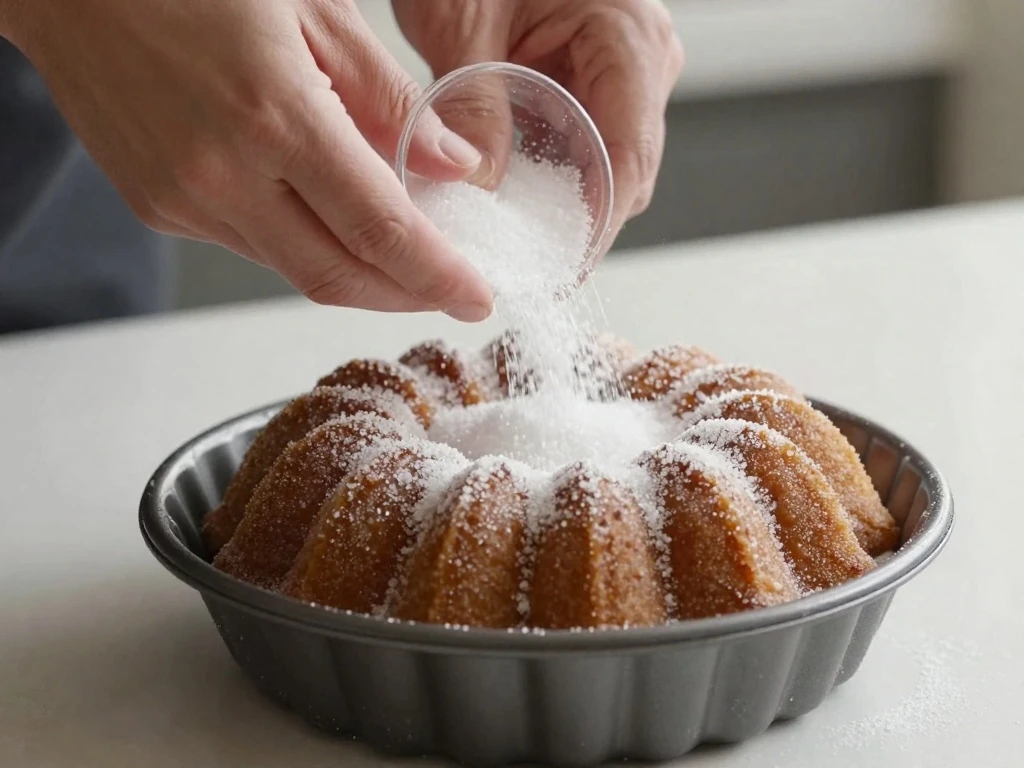
Step 1: Heat the oven to 325°F (165°C), then thoroughly grease a 10-inch tube or Bundt pan. Sprinkle 2 to 3 tablespoons of granulated sugar into the pan and tilt it in every direction until the sugar covers the bottom and sides.
The sugar coating is the defining detail of this recipe. Try to distribute it generously but evenly, especially around the ridges of a decorative Bundt pan where the crust can become especially crisp.
Step 2: Whisk together the all-purpose flour, baking powder, and salt in a medium bowl. This spreads the leavening and salt through the flour before they are added to the wet ingredients.
Set the bowl nearby so the dry ingredients are ready when the butter mixture is creamed. Preparing this mixture first also helps prevent unnecessary mixing later.
Step 3: Place the softened butter and 2 cups of granulated sugar in a large mixing bowl. Beat them for 4 to 5 minutes, until the mixture is very light and fluffy, then add the eggs one at a time, beating well after every addition.
Scrape down the sides and bottom of the bowl as needed. If the mixture looks slightly curdled after an egg is added, keep mixing; the batter will come together as the dry ingredients and milk are incorporated.
Step 4: Add the flour mixture in three additions, alternating with the whole milk in two additions. Begin and end with the flour, mixing just until each addition disappears.
This order helps maintain a stable batter and avoids overworking the flour. Once the final flour addition is incorporated, blend in the vanilla extract just until evenly distributed.
Step 5: Pour the batter into the sugar-coated pan and smooth the surface with a spatula. Tap the pan gently on the counter once or twice to help settle the batter into the ridges, but do not knock out all the air created during creaming.
Place the pan in the preheated oven and bake at 325°F for about 70 to 85 minutes. Avoid opening the oven during the first hour so the cake can set properly.
Step 6: Begin checking the cake near the early end of the baking range because pan shapes and oven temperatures vary. Insert a wooden pick into the thickest part; it should come out clean or with a few moist crumbs, and the center should spring back lightly.
Let the cake cool in the pan for 10 to 15 minutes. Loosen the edges carefully, turn the cake onto a rack, and cool it completely for about 1 hour before cutting.
How to Get the Crunchiest Top
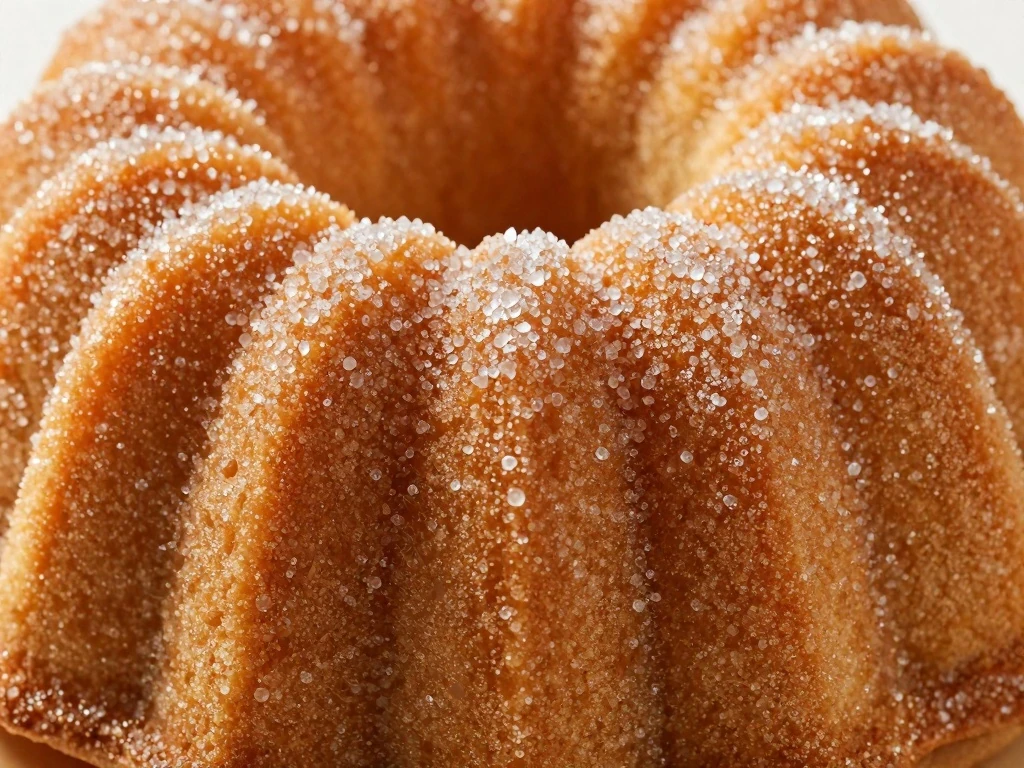
The crunchy top begins before the batter reaches the oven. Grease every surface of the pan thoroughly, then use the full 2 to 3 tablespoons of sugar when a particularly crisp exterior is your goal.
Rotate the pan slowly so the sugar clings to the sides instead of collecting only at the bottom. If your pan has deep decorative grooves, gently shake out any large piles of sugar while leaving a light coating behind.
Keep the oven door closed during the first hour of baking. A sudden drop in temperature can affect the cake’s rise and may leave the center underbaked while the crust is already dark.
Let the cake rest briefly in the pan, but do not leave it there for an extended time. The sugary crust can stick as it cools, so turning the cake out after 10 to 15 minutes gives you the best chance of keeping the exterior intact.
Chef’s Tips for a Tender Crumb
Room-temperature ingredients are one of the simplest ways to improve the texture. Butter, eggs, and milk blend more readily when they are not cold, which helps create a fine, even crumb.
Take your time with the butter and sugar. Four to 5 minutes of beating is not excessive here; the mixture should look noticeably paler, fluffier, and lighter before the eggs go in.
Once flour is added, mix only until combined. Excess mixing develops gluten and can make the cake dense or tough instead of soft and delicate.
Do not rely on baking time alone. Start checking early, since Bundt and tube pans vary in color, shape, capacity, and heat distribution.
For another simple butter-forward bake, you can also try this easy butter cake when you want a smaller, everyday dessert.
Serving Suggestions
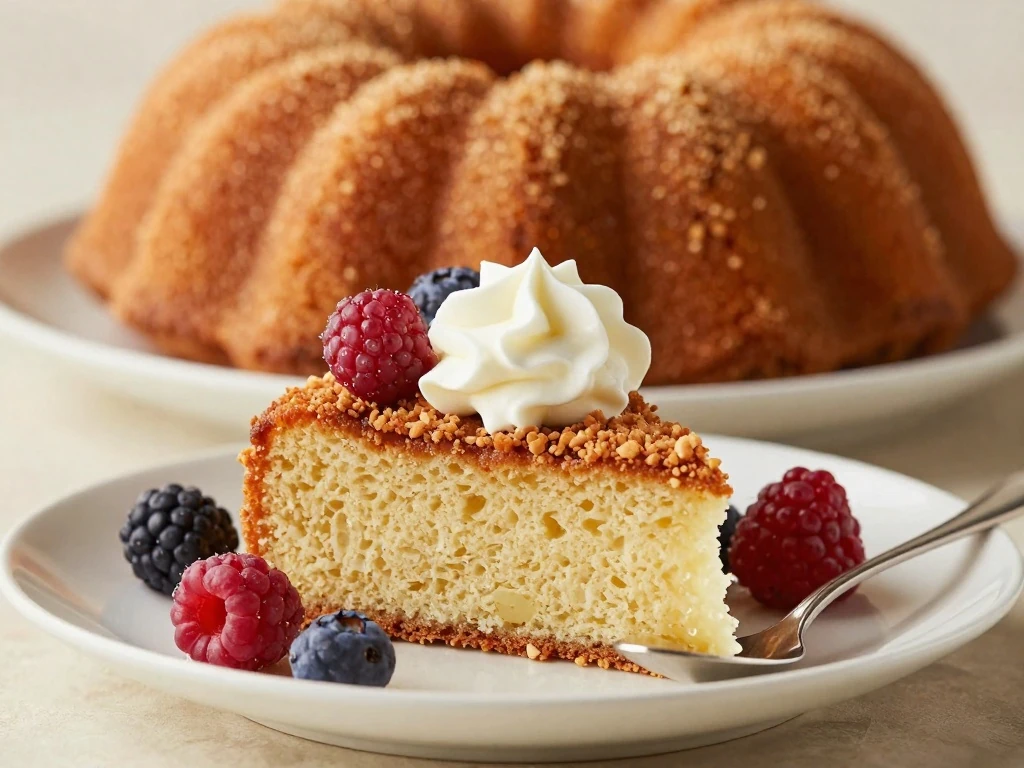
Serve this pound cake in thick slices once it has cooled completely. The crunchy crust is delicious on its own, but a spoonful of whipped cream or lightly sweetened yogurt adds a cool contrast.
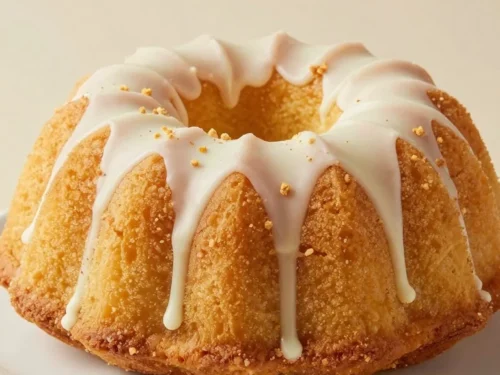
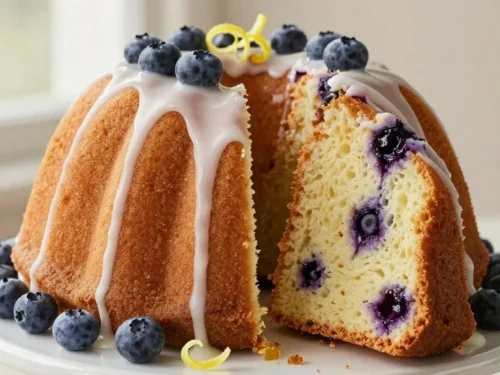
Fresh berries, sliced peaches, or baked apples pair naturally with the vanilla flavor. A dusting of powdered sugar is optional, although it is not necessary because the sugared crust already provides a beautiful finish.
For breakfast or an afternoon snack, serve each slice with coffee, tea, or a glass of cold milk. For dessert, gently warm a slice and add a scoop of vanilla ice cream.
If you like Bundt cakes with fruit, our pineapple upside-down Bundt cake offers a bright, fruity alternative.
Storage and Make-Ahead Advice
Store the completely cooled cake in an airtight container at room temperature for up to several days. Keep it away from humidity when possible, since moisture can soften the crunchy sugar crust.
If you need to prepare it ahead, bake the cake the day before serving and cool it fully before covering it. Leaving the cake whole until serving helps the interior stay moist and protects more of the crisp exterior.
Individual slices can be warmed briefly before serving, but use gentle heat so the crust does not become hard. If freezing, wrap cooled slices securely and thaw them at room temperature before serving.
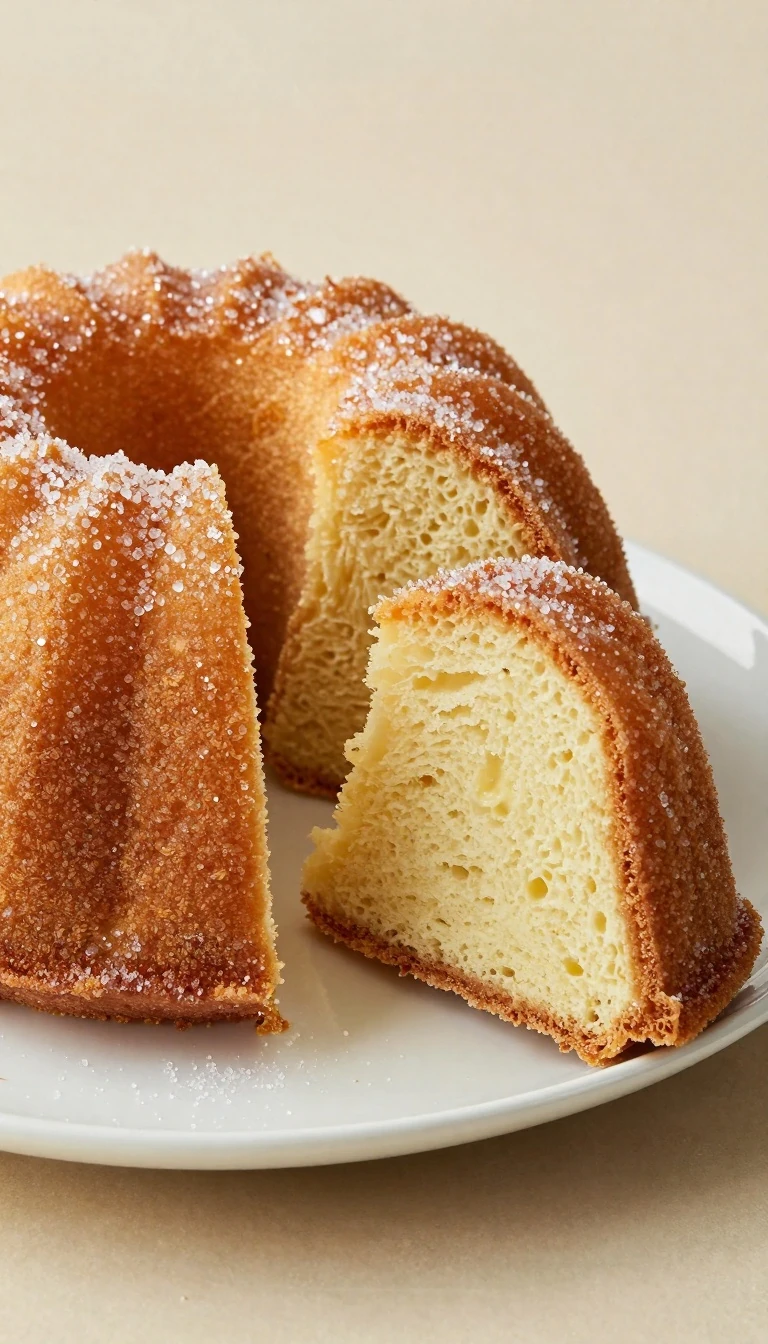
Crunchy Top Pound Cake
Ingredients
Method
- Heat the oven to 325°F (165°C). Thoroughly grease a 10-inch tube or Bundt pan, then sprinkle 2 to 3 tablespoons of granulated sugar inside. Tilt and rotate the pan until the sugar coats the bottom and sides.
- Whisk the flour, baking powder, and salt together in a medium bowl. Set the mixture aside while you prepare the butter base.
- Beat the softened butter and 2 cups of sugar for 4 to 5 minutes, until very light and fluffy. Add the room-temperature eggs one at a time, beating well after each addition and scraping down the bowl as needed.
- Add the flour mixture in three additions, alternating with the milk in two additions. Begin and end with the flour, mixing only until the batter is combined, then blend in the vanilla.
- Pour the batter into the prepared pan and smooth the top. Bake for 70 to 85 minutes, checking until a wooden pick inserted into the thickest part comes out clean or with a few moist crumbs.
- Cool the cake in the pan for 10 to 15 minutes. Loosen the edges, turn the cake onto a rack, and let it cool completely for about 1 hour before slicing.
Notes
Final Thoughts
This Crunchy Top Pound Cake is proof that a small preparation detail can make a familiar dessert wonderfully memorable. The sugar-coated pan creates a golden, crackly shell, while the carefully creamed butter and sugar produce the tender crumb that makes pound cake such a favorite.
Keep the ingredients at room temperature, mix gently after adding the flour, and use the tester rather than the clock as your final guide. With a little patience during cooling, you will have a beautiful 10-inch cake ready to slice for 12 to 16 servings.
Serve it simply or pair it with fruit, cream, or ice cream. Once you taste that crisp sugary edge with the buttery vanilla center, this easy recipe is likely to become a regular part of your baking routine.