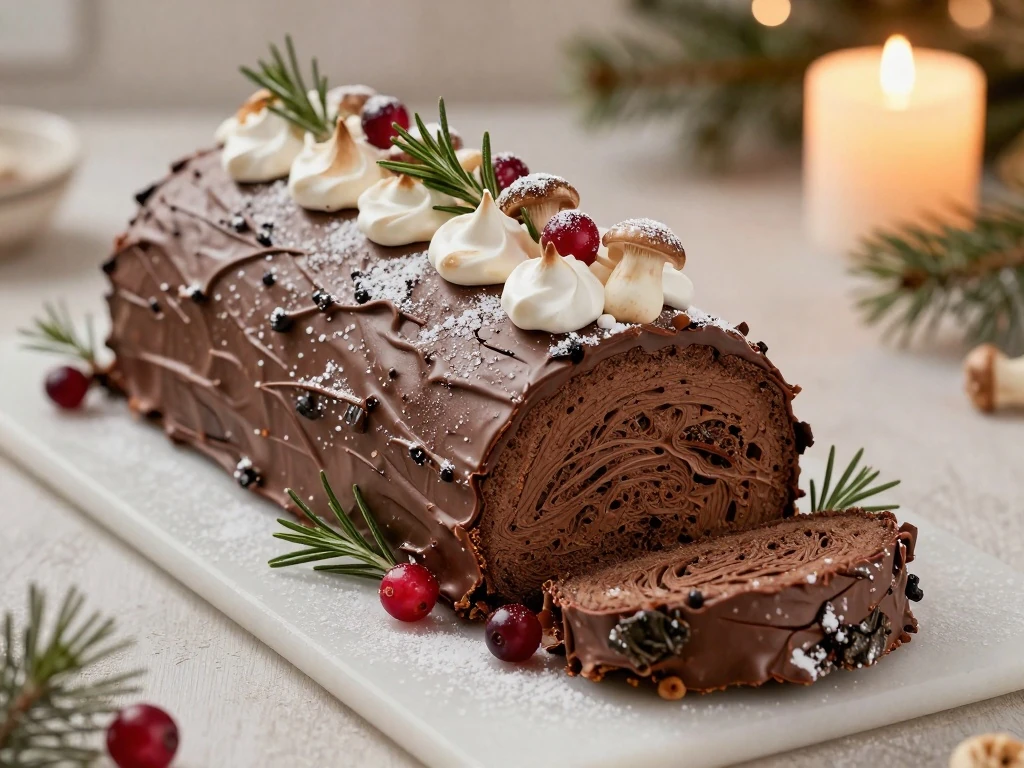
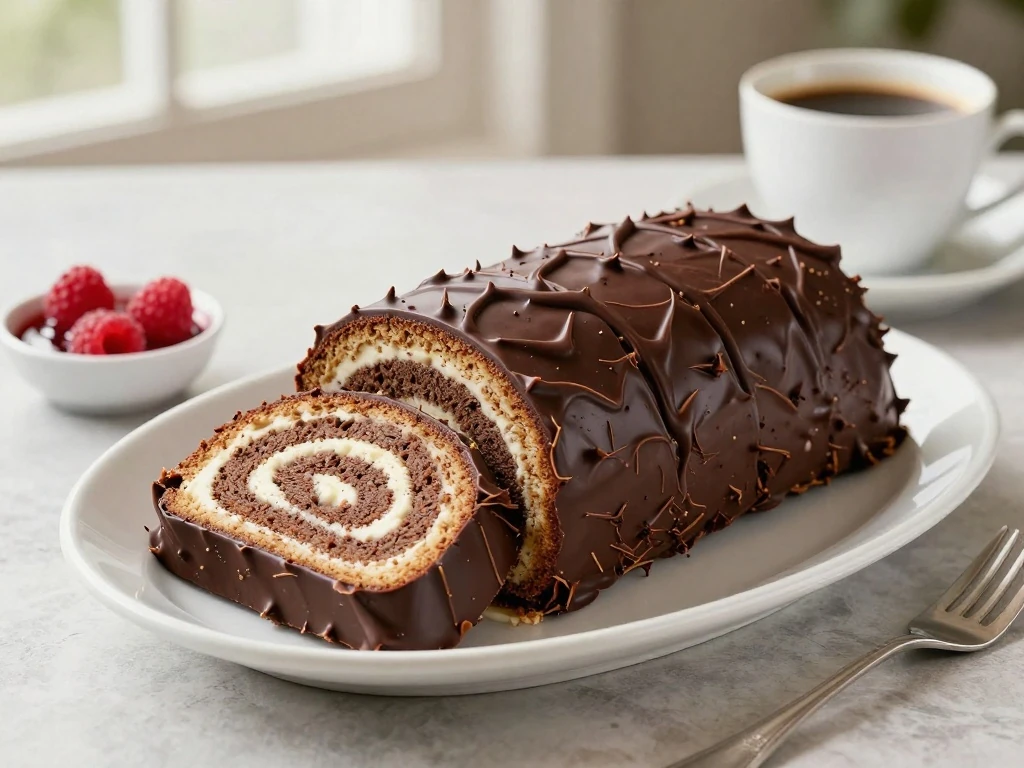
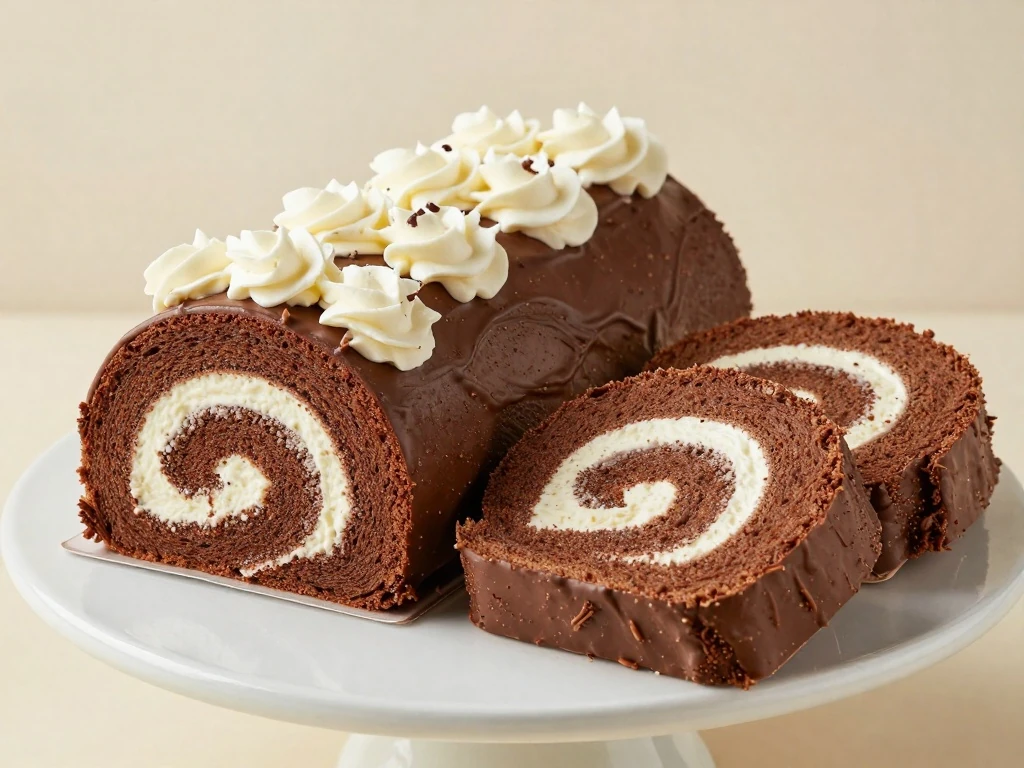
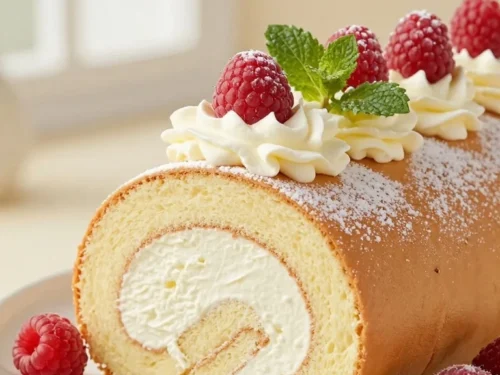
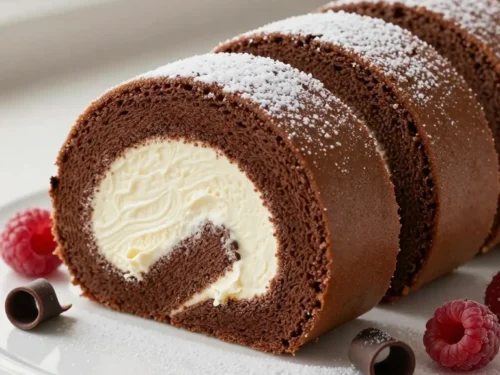
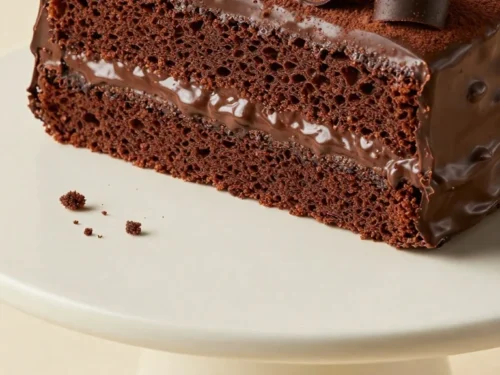
This Classic Yule Log Cake, or Bûche de Noël, is a festive chocolate sponge rolled around softly sweetened whipped cream and finished with a smooth chocolate ganache frosting. The reliable method is to roll the thin sponge in a sugar-dusted towel while it is still hot, cool it completely in that shape, then fill, chill, and decorate it for a beautiful 10–12 serving holiday dessert.
Every slice offers a tender cocoa cake, cloudlike vanilla cream, and rich semisweet or bittersweet chocolate frosting. The bark-like finish, little branch detail, and snowy confectioners’ sugar make this traditional Christmas cake look special without requiring complicated pastry decorations.
This classic Yule log cake brings together the flavors people want in a holiday dessert: deep chocolate, vanilla cream, and a soft, delicate sponge. The contrast between the tender cake and thick ganache makes every bite feel rich without being overwhelmingly heavy.
It also has a wonderfully practical design. Rolling the cake while hot creates a natural curve, while the ganache hides small imperfections and turns the surface into a convincing piece of woodland bark.
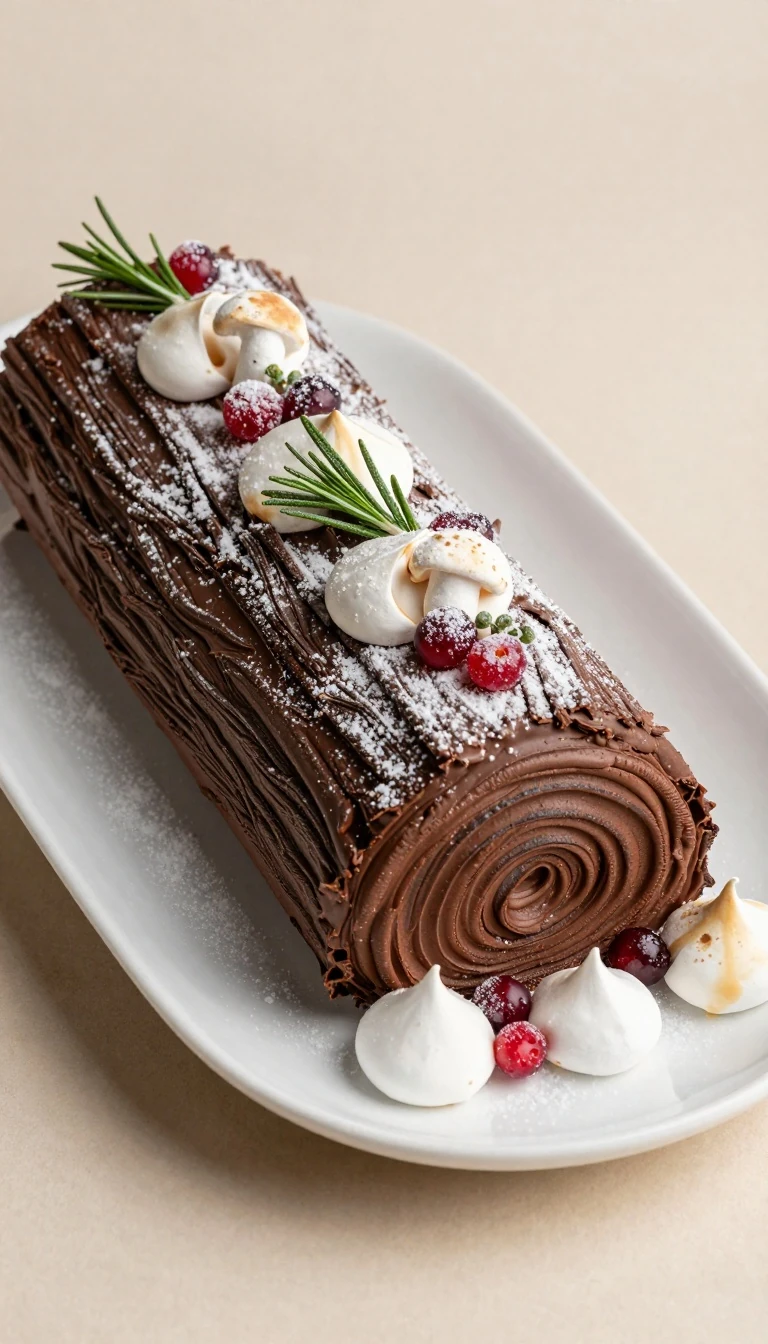
Festive presentation: A fork-textured ganache, powdered sugar, and a small branch make a charming Christmas centerpiece.
Balanced flavor: Unsweetened cocoa in the sponge offsets the sweet whipped cream and chocolate frosting.
Generous yield: One 10 x 15-inch pan produces 10–12 servings.
Make-ahead friendly: The filled cake can chill before the final frosting and decoration.
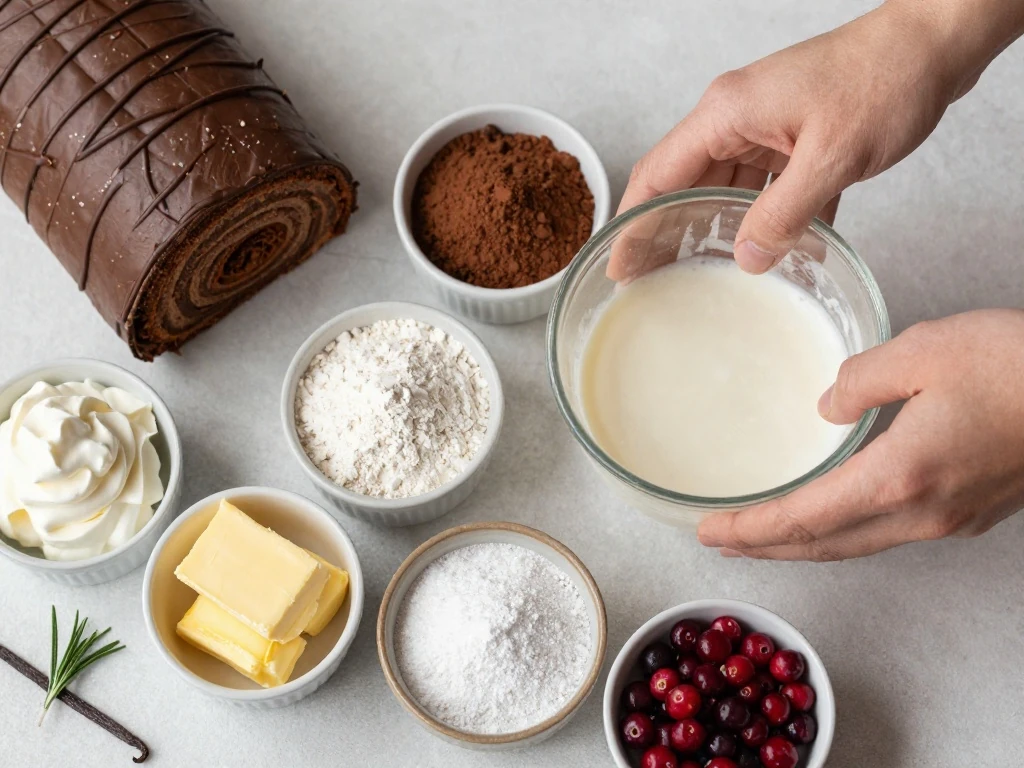
Ingredients You’ll Need
Room-temperature eggs are important for the chocolate sponge because the yolks blend smoothly with the sugar, while the whites whip to a fuller, more stable foam. Separate the eggs carefully, since even a small amount of yolk in the whites can prevent them from reaching glossy peaks.
Use cake flour for a particularly light crumb, or use all-purpose flour if that is what you have available. Natural cocoa powder provides the classic chocolate flavor in this recipe, and semisweet or bittersweet chocolate gives the ganache a pleasantly intense finish.
The whipped filling needs cold heavy cream, confectioners’ sugar, and vanilla. For the ganache, the optional butter adds a smoother texture and a gentle shine, but the frosting works without it as well.
How to Make It Step-by-Step
Step 1: Heat the oven to 350°F (175°C), then line a 10 x 15-inch jelly-roll pan with parchment paper and lightly grease the paper. Prepare the pan before mixing so the airy batter can go straight into the oven.
Step 2: Whisk the six egg yolks with about half of the sugar and the vanilla until the mixture becomes thick, pale, and ribbon-like. This takes a little patience, but the lighter yolk mixture helps create a tender sponge.
Step 3: Sift the flour, cocoa powder, and salt together over a bowl or sheet of parchment. Fold these dry ingredients gently into the yolk mixture, stopping as soon as no large streaks remain.
Step 4: Beat the egg whites until foamy, then add the remaining sugar gradually. Continue beating until medium-stiff, glossy peaks form; the whites should hold their shape but still look smooth rather than dry.
Step 5: Fold the beaten whites into the batter in two or three additions. Use a broad spatula and cut down through the mixture, lifting from the bottom, because preserving the air is what keeps this sponge flexible and light.
Step 6: Spread the batter evenly in the prepared pan, reaching gently into the corners. Bake for 12–15 minutes, watching closely, until the cake springs back lightly when touched and the edges just begin to pull away from the pan.
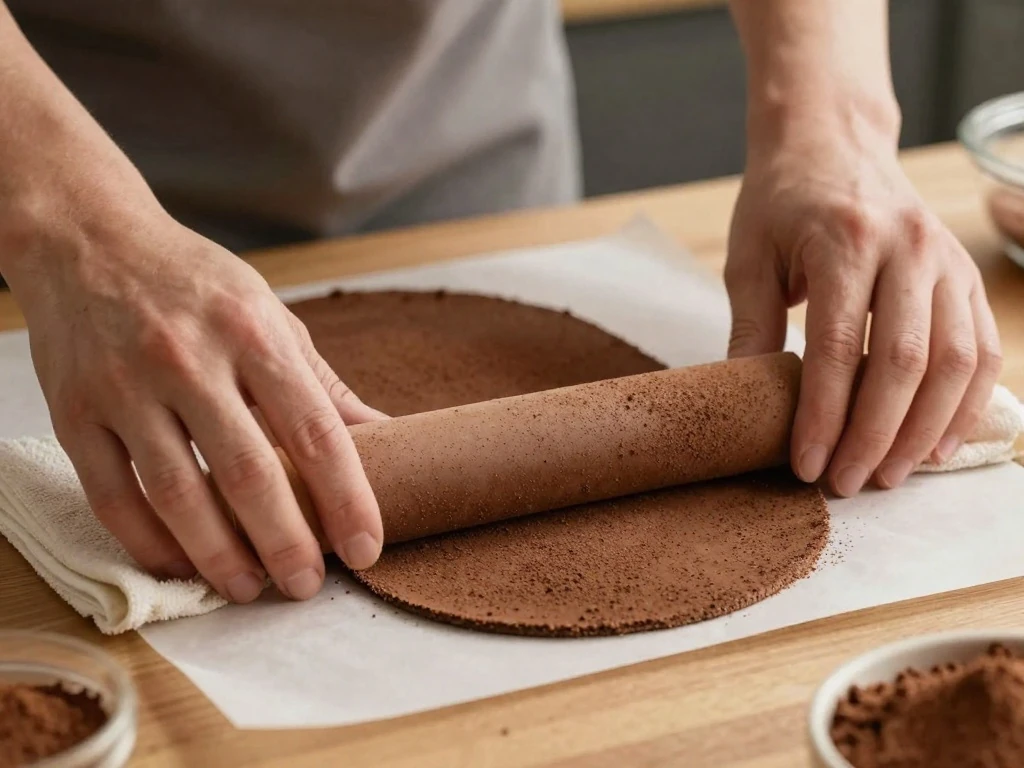
Step 7: While the cake is still hot, generously dust a clean kitchen towel with confectioners’ sugar. Invert the cake onto the towel, peel away the parchment, and trim any firm edges if necessary.
Step 8: Starting at a short end, roll the warm cake tightly inside the towel. Let it cool completely while rolled; this teaches the sponge the shape it needs and helps prevent a split during filling.
Step 9: Make the filling by whipping the cold heavy cream with the confectioners’ sugar and vanilla. Stop when it reaches medium-firm peaks that hold their shape but remain smooth and creamy.
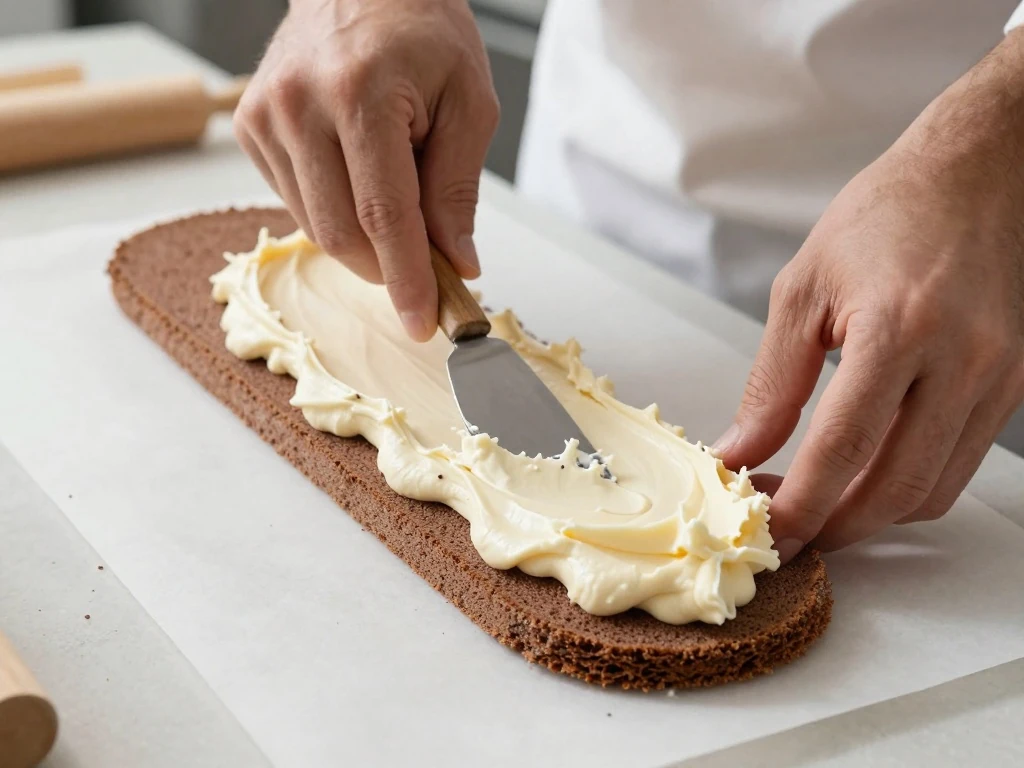
Step 10: Unroll the cooled sponge carefully, then spread the whipped cream evenly over the surface. Leave about a 1/2-inch border around the edges so the filling does not squeeze out excessively as you roll.
Step 11: Roll the cake back up without the towel, keeping the spiral snug but not forceful. Place the cake seam-side down on a serving platter and chill it for at least 30 minutes.
Step 12: To make the ganache, heat the heavy cream until steaming but not boiling. Pour it over the finely chopped chocolate, let it stand for 2–3 minutes, then stir slowly from the center outward until smooth.
Step 13: Mix in the optional butter for a smoother, shinier frosting. Allow the ganache to cool until thick enough to spread; if it is too warm, it may slide off the chilled cake.
Step 14: Frost the log generously, leaving the ends visible if you want to show the spiral. Drag a fork through the ganache to suggest bark, then cut a short diagonal piece from one end and attach it to the side with more ganache for a traditional branch effect.
Pro Tips for a Tender, Crack-Free Sponge
The most important timing rule is to roll the cake immediately after baking. If the sponge cools flat, it loses flexibility and is much more likely to split when rolled later.
Do not overbake it. Even 2–3 extra minutes can dry the thin cake enough to make rolling difficult, so rely on the spring-back test and the edges just beginning to pull away from the pan.
When folding the egg whites, gentle handling matters more than speed. A few small streaks can be folded away, but vigorous stirring will deflate the foam and produce a dense cake that may crack.
Spread the whipped cream in an even layer rather than piling it in the center. The 1/2-inch border gives the filling room to move naturally as the cake is rolled and helps keep the platter tidy.
Decorating and Serving Ideas
Ganache is wonderfully forgiving, so there is no need to make the frosting perfectly smooth. Fork lines running lengthwise create a rustic bark appearance, while a few shorter lines around the attached branch make the log look more natural.
Finish with a light dusting of confectioners’ sugar for a snowy effect. Chocolate shavings add texture, while sugared cranberries and rosemary provide bright color and a festive evergreen detail.
For clean slices, use a sharp knife and wipe the blade between cuts. Serve the cake chilled but allow it to sit briefly at room temperature if you prefer a softer ganache and cream texture.
Storage and Make-Ahead Advice
Because the filling contains whipped cream, store the finished Yule log covered in the refrigerator. It is best enjoyed within a short time while the sponge remains tender and the cream is fresh.
You can prepare the filled, rolled cake and chill it before making the ganache. Frost and decorate closer to serving time for the most attractive bark texture and the crispest confectioners’ sugar finish.
If the ganache becomes too firm while waiting, let it stand at room temperature until spreadable. Avoid reheating the fully decorated cake, since warmth can soften the whipped filling and disturb the carefully shaped log.
Classic Yule Log Cake (Bûche de Noël)
A tender chocolate sponge is rolled with vanilla whipped cream, chilled, and covered in chocolate ganache to create a classic Christmas Yule log cake. It serves 10–12 people from one 10 x 15-inch jelly-roll pan.
6large eggsLarge eggs, separated and at room temperature
3/4cup (150 g)Granulated sugar, divided
1teaspoonVanilla extract
3/4cup (90 g)Cake flour or all-purpose flour
1/4cup (21-25 g)Unsweetened natural cocoa powder
1/4teaspoonSalt
As neededConfectioners' sugar for dusting
Whipped-Cream Filling
1 1/2cups (360 ml)Cold heavy cream
1/3cup (40 g)Confectioners' sugar
1teaspoonVanilla extract
Chocolate Ganache Frosting
8ounces (225 g)Semisweet or bittersweet chocolate, finely chopped
1cup (240 ml)Heavy cream
2tablespoons (28 g)Unsalted butter, optional
Decoration
As desiredConfectioners' sugar, cocoa powder, chocolate shavings, sugared cranberries, or rosemary
Method
Step-by-Step
Heat the oven to 350°F (175°C). Line one 10 x 15-inch jelly-roll pan with parchment paper and lightly grease the parchment.
Whisk the egg yolks with about half of the granulated sugar and the vanilla until thick, pale, and ribbon-like.
Sift the flour, cocoa powder, and salt together. Fold the dry ingredients gently into the yolk mixture.
Beat the egg whites until foamy, gradually add the remaining sugar, and continue beating until medium-stiff, glossy peaks form.
Fold the beaten egg whites into the batter in two or three additions, using a gentle motion so the mixture stays airy.
Spread the batter evenly in the prepared pan. Bake for 12–15 minutes, until the cake springs back lightly and the edges just begin to pull away.
While the cake is hot, dust a clean kitchen towel generously with confectioners' sugar. Invert the cake onto the towel, remove the parchment, and trim firm edges if needed.
Starting at a short end, roll the cake tightly in the towel. Let it cool completely while rolled so the sponge sets its shape and is less likely to crack.
Whip the cold heavy cream with the confectioners' sugar and vanilla until it holds medium-firm peaks.
Carefully unroll the cooled cake and spread the whipped cream evenly over the surface, leaving about a 1/2-inch border. Roll it back up without the towel.
Place the filled cake seam-side down on a serving platter and chill for at least 30 minutes.
Heat the ganache cream until steaming but not boiling. Pour it over the chopped chocolate, let it stand for 2–3 minutes, then stir until smooth and mix in the butter if using.
Cool the ganache until it is thick enough to spread, then frost the entire log. Drag a fork through the frosting to create bark-like lines.
For a branch effect, cut a short diagonal piece from one end and attach it to the side of the log with ganache. Dust lightly with confectioners' sugar and decorate before serving.
Notes
Do not overbake the sponge; even 2–3 extra minutes can make it dry and prone to cracking. Roll it immediately after baking while it is flexible. Chill the finished cake before slicing, and keep leftovers refrigerated.
Final Thoughts
This Classic Yule Log Cake is a lovely project for a Christmas gathering because it combines straightforward ingredients with a dramatic finished appearance. The key is not complicated decoration; it is the warm roll, careful folding, and close attention to the short baking time.
Once the cake is chilled and covered in bark-textured ganache, a little confectioners’ sugar and a few seasonal garnishes complete the scene. Bring the platter to the table whole, then slice through the chocolate spiral so everyone can see the tender sponge and creamy vanilla center.
Make it as written for a traditional Bûche de Noël, or use the decorating ideas to give your own holiday style to the log. Either way, this dessert offers a rich, memorable finish to a festive meal and serves 10–12 guests generously.